The Golden Duo of Industrial Lifting: Electric Hoists and Overhead Cranes
In modern production workshops, warehouses, docks, or construction sites, a common scene unfolds before our eyes: massive steel beams span the ceiling of a facility, supporting a steel "trolley" suspended beneath them. This mechanism effortlessly lifts materials weighing several tons with stability, precisely transporting them to their designated locations. Behind this highly efficient operation lies the seamless collaboration between the electric hoist and the overhead crane. As the "golden duo" of the industrial lifting sector, their combined application has dramatically enhanced both the efficiency and safety of material handling operations. This article will provide an in-depth analysis of the comprehensive application of this partnership—covering equipment definitions, configuration types, operational scenarios, and maintenance procedures.
I. Understanding the Core Equipment: Electric Hoists and Overhead Cranes
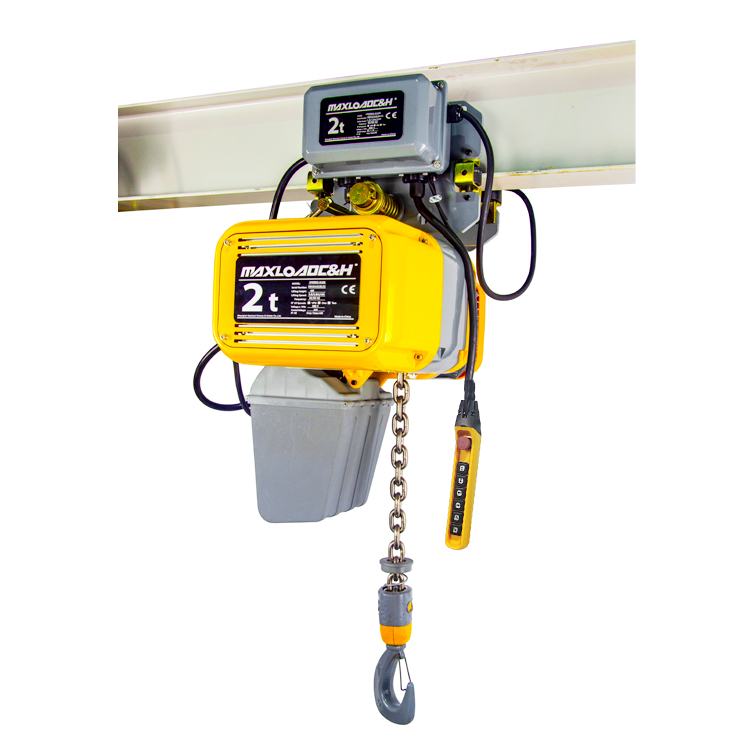
An electric hoist is a compact, lightweight lifting device that integrates the lifting mechanism, transmission system, and either a wire rope drum or a load chain sprocket into a single unit. Characterized by its compact structure and relatively low self-weight, it offers a wide range of lifting capacities. Electric hoists are primarily categorized into two types: wire rope hoists and chain hoists. Among these, the wire rope hoist is the most widely utilized due to its smooth operation and exceptional durability; its core components include the motor, reducer, wire rope drum, hook, and steel wire rope.
The "overhead crane"—often referred to as a "bridge crane" in industry terminology—constitutes a complete material handling system. The main body of the crane consists of a bridge structure that spans across elevated rails mounted on opposite sides of the workshop. The electric hoist serves as the lifting mechanism, mounted upon this bridge structure and capable of traversing laterally along it. Simply put, the electric hoist provides the power for "vertical lifting," while the crane's trolley and bridge drive mechanisms facilitate "horizontal movement"; together, this combination allows them to access and cover every point within a rectangular workspace.
II. Typical Configurations of the Golden Duo
In practical applications, the combination of electric hoists and overhead cranes is highly flexible and diverse, designed to meet the specific requirements of various operational environments:
Single-Girder Crane: This represents the most common configuration. The crane utilizes a single main girder, along the lower flange of which the electric hoist—mounted on a trolley frame—travels. This combination features a simple structure and easy installation, making it suitable for applications involving relatively light loads and modest spans.
Double-Girder Cranes: When lifting loads are heavy or operations are frequent, a double-girder overhead crane is the superior choice. This type of crane features two main girders, along which the hoisting trolley travels. This structural design offers high rigidity, making it well-suited for environments involving heavy loads and intensive operations.
Suspension Cranes: In this configuration, an electric hoist is suspended from an I-beam track, which is mounted directly beneath the factory roof trusses. This layout conserves floor space and offers exceptional flexibility, making it ideal for material handling tasks at individual workstations within assembly lines.
III. Analysis of Comprehensive Application Scenarios
The combination of electric hoists and overhead cranes has permeated nearly every industrial sector; their application scenarios can be broadly categorized as follows:
1. Mechanical Manufacturing and Processing
In mechanical manufacturing workshops, this pairing is responsible for handling raw blanks—from their retrieval in the material warehouse to their placement on the production line—as well as for flipping and transferring large workpieces during the machining process. By utilizing electromagnetic chucks or specialized lifting fixtures, they can efficiently transport steel components and sheet metal, thereby significantly reducing the physical strain associated with manual labor. For instance, in certain heavy machinery workshops, the integration of intelligent control systems featuring electronic anti-sway functions allows for the automatic suppression of load oscillations during transport, resulting in faster handling speeds and more precise positioning.
2. Warehousing, Logistics, and Docks
In warehouses and freight yards—particularly within the steel and timber markets—electric hoists are utilized in conjunction with gantry cranes to rapidly execute the loading, unloading, and stacking of bulk cargo. An innovative application in this field is the "Crane-Mounted Electric Cable Reel." Technicians have adapted electric hoists to serve this purpose by mounting a reeling mechanism alongside the lifting hoist on the same crane girder. This modification enables the crane to perform a dual function—not only lifting heavy loads but also coiling and deploying electrical cables—thereby achieving multi-purpose functionality and resolving the time-consuming and labor-intensive challenges associated with manual cable management.
3. Metallurgy and High-Temperature Environments
In steel smelting workshops, the operating environment is characterized by extremely high temperatures and heavy dust concentrations. Furthermore, the loads being transported often consist of molten steel—reaching temperatures of over a thousand degrees—or glowing-hot steel billets; consequently, these conditions impose exceptionally stringent requirements regarding the safety and reliability of the equipment. Electric hoists and overhead cranes specifically designed for the metallurgical industry must possess an exceptionally high safety factor and utilize heat-resistant cables as well as motors with enhanced protection ratings. One steel plant, for instance, successfully resolved the logistical challenges associated with transporting alloys and other bulky items required for converter production by independently designing and installing an auxiliary electric hoist system. This initiative not only alleviated the lifting burden on the main-line overhead cranes but also reduced crane operating costs and minimized the frequency of hazardous lifting operations.
4. Civil Engineering and Bridge Construction
In precast component factories or at bridge construction sites, gantry cranes—working in conjunction with electric hoists—are tasked with the lifting and transport of precast beams and steel reinforcement cages. They are even deployed in specialized applications, such as the inverted jack-up welding of oil storage tanks and the structural remediation of tunnel shafts.
IV. Key Points for Safe Operation and Maintenance
Although the combination of electric hoists and overhead cranes significantly boosts production efficiency, safety must always remain the top priority, given that these operations involve working at heights and lifting heavy loads. The following are several critical principles that must be strictly adhered to:
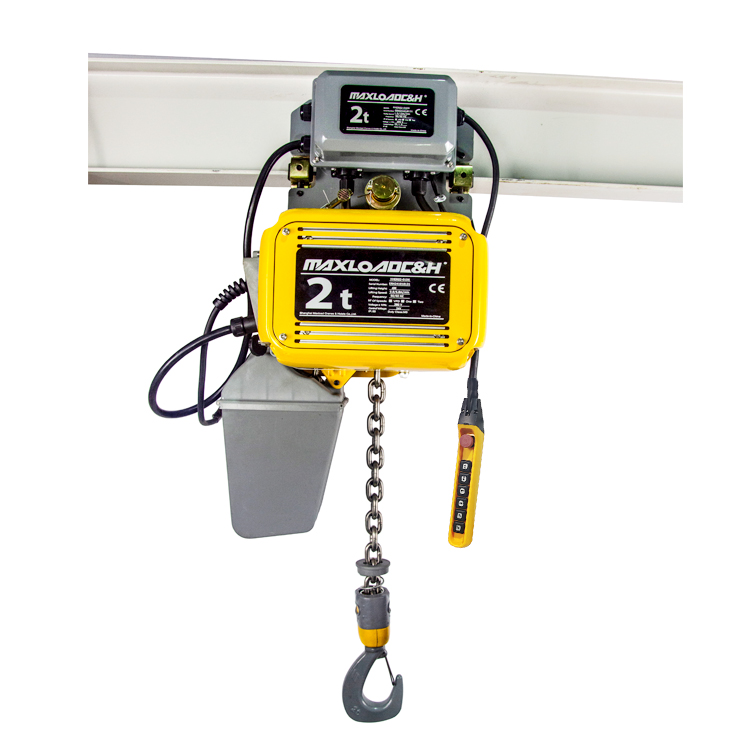
Strict Prohibition Against Overloading: Every piece of equipment bears a clearly marked nameplate indicating its rated lifting capacity; operating the equipment beyond this load limit is the primary cause of structural failure and catastrophic accidents.
Standardized Operation: Operators must undergo professional training and obtain certification before being authorized to operate the equipment. "Side-pulling" or "angled lifting"—specifically, using the electric hoist to drag objects embedded in the ground or to pull heavy loads that are unable to slide freely—is strictly prohibited.
Inspection of Limit Devices: The upper and lower limit switches serve as critical safety mechanisms designed to prevent the lifting hook from striking the hoist body (over-hoisting) or descending too far. Operators must not intentionally use these limit switches as a routine means of stopping the hoist; furthermore, it is mandatory to ensure that when the lifting hook is at its lowest limit position, there remain at least two full wraps of steel wire rope securely wound around the drum.
Daily Inspection and Maintenance:
Steel Wire Ropes: The wire ropes must be inspected frequently for signs of broken strands, abrasion, kinking, or overlapping coils, and must be kept properly lubricated.
Brakes: The braking system serves as the final line of defense against falling loads; it is imperative to ensure that the brakes are responsive and reliable. Before lifting particularly heavy or hazardous loads, the load should first be slowly raised just 100–200 mm off the ground to test and verify the reliability of the braking system.
Tracks and Conductor Systems: Ensure that the running tracks are free of foreign objects or obstructions, and verify that the cable sliding lines or flexible cable entry systems are free of damage.
V. Technological Development Trends
With the advancement of Industry 4.0, electric hoists and overhead cranes are also undergoing significant technological innovation:
Intelligentization: Intelligent control systems are becoming increasingly widespread.
For instance, the zero-speed hovering function prevents hook slippage; inching and micro-speed functions facilitate the precise alignment of bolt holes during the assembly of large workpieces; and 5G-enabled remote control allows operators to work safely away from hazardous-handling solutions that integrate mechanical engineering, electronics, and intelligent control systems. From components weighing just a few tons to massive loads weighing hundreds of tons, their reliable application underpins the smooth and efficient operation of modern industry. Proper equipment selection, standardized operation, and meticulous maintenance remain the indispensable keys to maximizing the performance of this "golden duo."
 0086 156 1824 5535
 0086 156 1824 5535