Flexible Combinations, Efficient Material Handling
In modern industrial production, the efficiency of material handling directly impacts an enterprise's production capacity and operational costs. Whether in heavy-duty machining workshops or precision assembly lines, a wide variety of lifting equipment can be observed. Among these, the electric hoist—serving as the core lifting mechanism—is frequently paired with jib cranes and overhead cranes to form a comprehensive material handling solution. This article will delve into the technical characteristics and application scenarios of these three components, as well as how to scientifically select and combine them based on specific operational conditions.
I. The Core Power Source: Classification and Characteristics of Electric Hoists
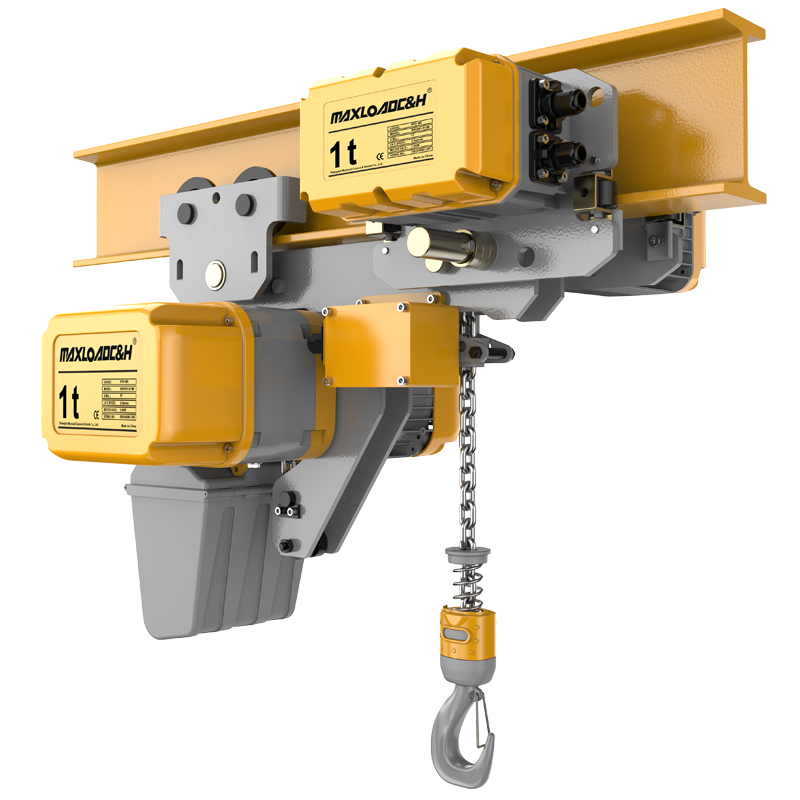
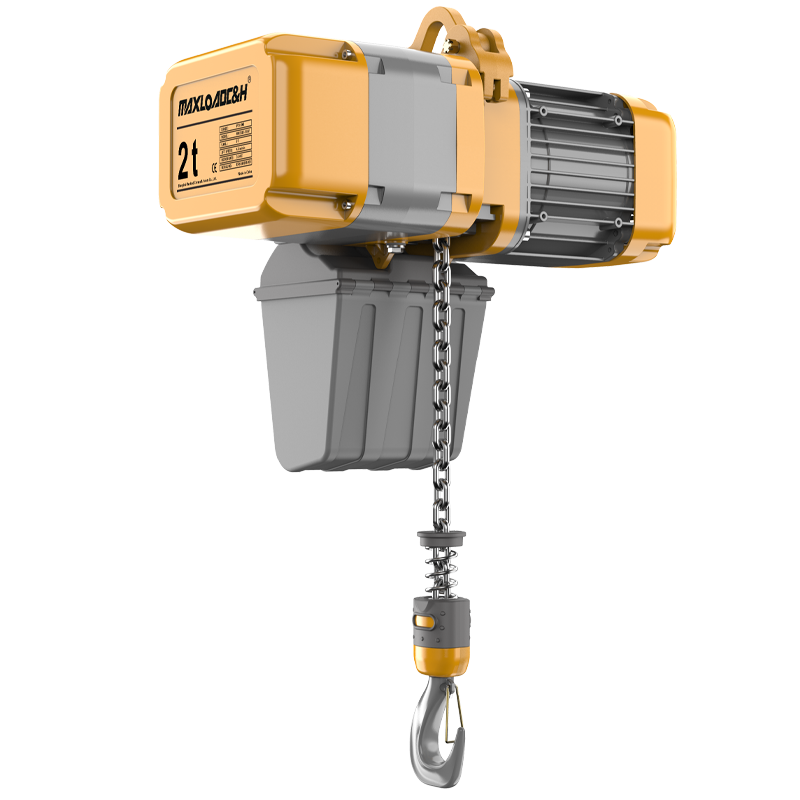
An electric hoist is a compact, light-duty lifting device that integrates components such as an electric motor, a reducer, a drum or sprocket, and a lifting hook; it serves as the core working mechanism for various types of cranes. Based on their structural design and operating principles, electric hoists are primarily categorized into the following two types:
Wire Rope Electric Hoists: This is currently the most widely utilized type. It employs a steel wire rope as its flexible lifting medium, offering advantages such as high lifting heights, a compact structure, light weight, and a small footprint. Its reducer typically features a hard-toothed gear design, ensuring a long service life and high mechanical efficiency. Electric Chain Hoists: As the name suggests, this type utilizes a lifting chain as its load-bearing component. Chain hoists are smaller in size and require less headroom, making them particularly well-suited for environments with limited space. Furthermore, due to the inherent flexibility of the chain, when paired with a jib crane, they can often adapt more flexibly to changes in lifting angles.
II. Precision and Flexibility: The "Single-Pillar Support" of Jib Cranes
A jib crane—also known as a slewing crane—is a lifting machine characterized by its relatively simple structure. Its most distinctive feature is its fan-shaped or circular operational coverage area, making it ideally suited for short-distance, high-frequency, and intensive lifting tasks.
Based on their installation methods and structural configurations, jib cranes are primarily classified into the following types:
Column-Mounted Jib Cranes: This is the most common type. The vertical column is securely anchored to a concrete foundation using anchor bolts, while the horizontal jib arm rotates around the column, typically offering a rotation range of 180° to 360°. The electric hoist travels linearly along the I-beam track of the jib arm, enabling precise, point-to-point positioning of the load. This structural configuration is suitable for placement in a corner of a workshop, adjacent to a machine tool, or alongside a production line workstation, providing independent lifting services for a single workstation.
Mobile Jib Crane: This is a highly flexible piece of equipment. It features a mobile mechanism equipped with universal casters mounted on the base of its column; it can even be secured via an interface to a vehicle chassis or a cross-bay transfer cart. A counterweight is typically positioned at the opposite end to maintain balance. It can be freely relocated to any work site as needed without occupying permanent floor space, making it particularly suitable for locations not covered by overhead cranes—such as construction sites, warehouse loading zones, or equipment maintenance areas.
Wall-Mounted Jib Crane: To further conserve floor space, the crane's column is mounted directly onto a load-bearing wall or structural column within the facility, with the jib extending outward to perform lifting operations. This configuration is frequently utilized in narrow corridors or along production lines situated adjacent to walls.
III. Traversing the Workshop: Large-Span Coverage via Overhead Cranes
Overhead cranes—also known as bridge cranes—constitute the primary material-handling equipment within a workshop. They traverse the length of the facility along elevated runways via large wheels mounted at both ends of the bridge structure, while a trolley travels laterally across the main girder; this combined movement allows the crane to cover a vast, rectangular operational area.
Based on their main girder structure and load-bearing capacity, overhead cranes are typically categorized as follows:
Single-Girder Overhead Crane: Comprising a single main girder, this type typically employs an electric hoist as its lifting trolley, which travels along the lower flange of the I-beam girder. Double-Girder Overhead Crane: Composed of two main girders, this type features a lifting trolley that travels along rails mounted atop the girders. Double-girder cranes offer superior load-bearing capacity, greater stability, and a higher duty classification, making them ideal for lifting heavy-tonnage loads, oversized or elongated objects, or for performing frequent, high-speed lifting operations.
IV. Collaborative Application: Choosing the "Golden Duo"
In actual production environments, these three types of lifting equipment are not mutually exclusive; rather, they possess complementary strengths. A well-planned combination of these tools can maximize material-handling efficiency.
Selection Based on Operational Area and Frequency
Point-to-Point Operations: If lifting operations are confined to a single, fixed workstation—for instance, loading and unloading materials for a specific machine tool, or supplying components to a single station on an assembly line—then selecting a column-mounted jib crane represents the most economical and practical solution. Operators can effortlessly rotate and transfer heavy loads between material bins and machinery without having to wait for the scheduling of an overhead crane.
Line-based Operations: If long-distance transport covering the entire workshop is required—for instance, moving materials from the raw material zone to the processing zone, and subsequently to the finished goods zone—overhead cranes serve as the primary workhorse. This is particularly true in multi-span workshops; if materials need to flow between adjacent spans, standard overhead cranes cannot typically operate directly across the span boundaries. Traditionally, the solution involved relying on ground-based forklifts for transfer. However, a recent innovative design—the retractable electric suspended crane—utilizes a telescopic beam mechanism to enable the electric hoist to traverse across zones. This directly eliminates transport barriers between adjacent workshops and reduces the costs associated with secondary handling.
Selection Based on Spatial and Environmental Characteristics
Low-Ceiling Buildings or Temporary Sites: For older factory buildings with limited headroom or temporary outdoor work sites, installing standard bridge cranes is often infeasible. In such cases, mobile jib cranes or small gantry cranes paired with electric hoists become the optimal choice. These units feature simple structures, are easy to install, and are not constrained by the height limitations of the facility.
Areas Surrounding Precision Equipment: In metrology rooms or adjacent to precision machining equipment, self-supporting cranes or small jib cranes are frequently employed to ensure precision and prevent vibration interference. These systems can even be integrated with the primary machinery via safety interlocks, ensuring that the precision equipment remains in a safe position while workpieces are being hoisted, thereby preventing potential collisions.
Selection Based on Load Characteristics and Safety Requirements
Overload Protection: Regardless of the type of lifting equipment involved, the load capacity of the electric hoist must be strictly matched to the rated load capacity of the crane structure. Overloading practices—such as pairing a "large crane with a small hoist" or a "small crane with a large hoist"—are strictly prohibited.
Specialized Environments: In flammable or explosive environments—such as those found in the chemical or paint industries—explosion-proof electric hoists equipped with flameproof features must be selected, and the overall explosion-proof rating of the unit must comply with the specific requirements of the zone. Similarly, when hoisting molten metal in the metallurgical industry, specialized metallurgical hoists equipped with safety brakes are mandatory, and their working classification must meet the M5 or M6 standards.
V. Key Points for Routine Maintenance and Management
The stable operation of any equipment relies on meticulous maintenance. Inspection and Lubrication: For electric hoists, regularly inspect the wire ropes for signs of wear or broken strands, and check chains for wear and elongation. Weekly lubrication and maintenance must be performed on hooks, pulleys, wheels, and speed reducers. Before the operation, it is imperative to verify that the limit switches are responsive and reliable; operating the equipment with a malfunctioning limit switch is strictly prohibited.
Track and Foundation Maintenance: For jib cranes, regularly inspect the column anchor bolts for looseness and ensure that the concrete foundation remains free of cracks. For overhead cranes, inspect the rail clamping bolts, as well as the rails themselves, for wear and proper levelness.
Operational Protocols: Operators must undergo professional training and strictly adhere to the "Ten Prohibitions of Lifting." Angled pulling or lifting is strictly forbidden; this practice not only damages the wire rope of the electric hoist but also generates a massive overturning moment on the entire jib or crane structure, constituting an extremely hazardous operation.
Conclusion
The combination of electric hoists, jib cranes, and overhead cranes forms a three-dimensional network for modern industrial material handling. With their precision and flexibility, jib cranes effectively fill the coverage gaps of overhead cranes in localized areas; meanwhile, overhead cranes—characterized by their wide spans and high load capacities—shoulder the critical responsibility of mainline logistics, while the electric hoist serves as the "heart of power" within this system. When planning equipment, enterprises should scientifically and rationally integrate these various devices—based on their specific production processes, spatial layouts, and budgets—to achieve the objectives of safe, efficient, and cost-effective material flow.
 0086 156 1824 5535
 0086 156 1824 5535