How to Transform Material Handling Efficiency in the Workshop
In modern manufacturing, warehousing, and maintenance workshops, the efficiency of material handling directly determines the flow speed of the entire production line. If the bridge crane solves the problem of handling heavy loads over long spans, then the combination of a jib crane and an electric hoist can be described as the "golden duo" for workstation-specific,精细化 operations. This combination, known for its flexibility, efficiency, and small footprint, is becoming the preferred solution for countless businesses looking to enhance local handling efficiency.
I. What is a JIB Crane?
Before delving into applications, it is necessary to clarify the definitions of these two core pieces of equipment and their collaborative relationship.
A jib crane, also known as a slewing crane, primarily consists of a column, a slewing arm, and supporting structures. Its most significant feature is that the jib can rotate around the column by ±180 degrees or even 360 degrees, covering a circular working area.
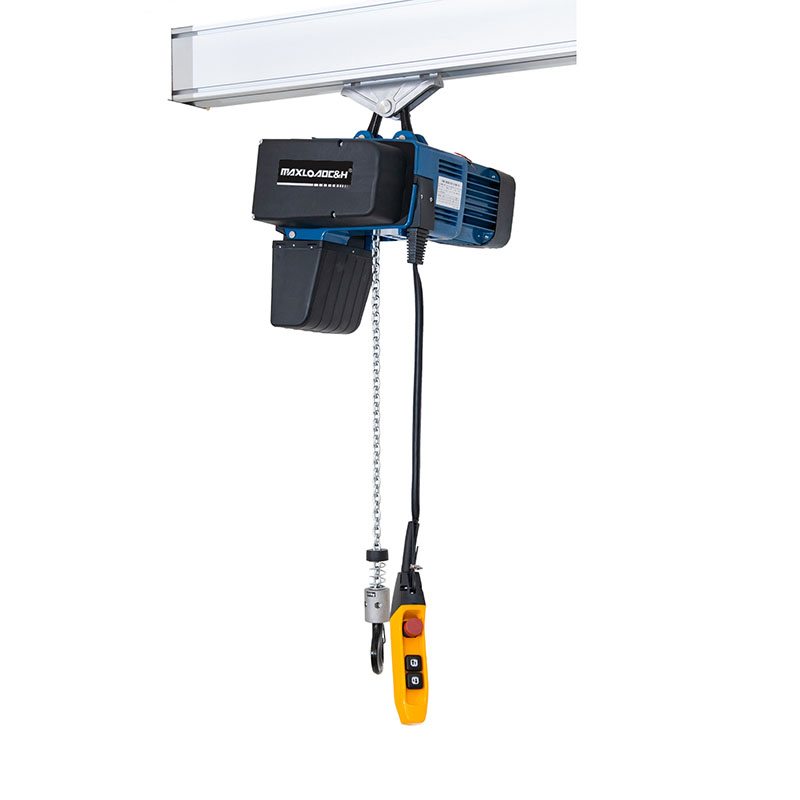
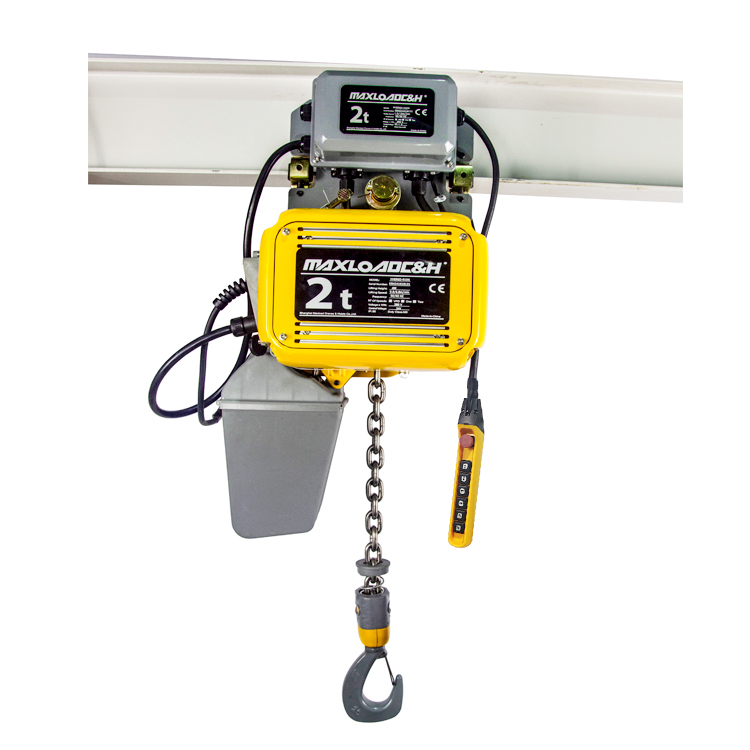
An electric hoist is a lifting device installed on the rail of the jib beam. It is powered electrically to achieve vertical lifting of heavy loads. Depending on the duty class, electric hoists are typically divided into two types: chain electric hoists and wire rope electric hoists.
In practical applications, the electric hoist is mounted on the I-beam rail of the jib crane and moves horizontally using a manual or electric trolley. The combination of the two forms a complete solution capable of three-dimensional handling within a circular space.
II. Core Advantages: Why Does It Become a Workstation Standard?
Compared to large bridge cranes or bulky forklifts, the combination of a jib crane and an electric hoist offers irreplaceable advantages in specific scenarios.
1. Ultimate Space Utilization
In industrial plants where space is at a premium, space equates to cost. The jib crane uses a floor-mounted column, occupying minimal floor area. Yet, its working range can cover the entire circular area with the column as its center and the jib length as its radius. This characteristic of "small footprint, large coverage" allows it to be perfectly integrated alongside existing production lines without affecting the main logistics thoroughfares.
2. Precise Point-of-Operation Handling
For large lifting equipment, they often seem like overkill and are cumbersome to operate for high-frequency, short-distance workstation handling. With an electric hoist paired with a jib crane, the operator can achieve millimeter-precise load positioning by manually pushing the jib or using a remote control. Whether loading/unloading workpieces next to a CNC machine or aligning precision components on an assembly line, this combination provides excellent controllability.
3. Efficient Work Rhythm
Electric hoists typically have lifting speeds designed between 4-8 meters per minute. Coupled with the fast slewing speed of the jib, a complete handling cycle often takes only a few tens of seconds. Compared to manual handling or using pallet jacks, this equipment significantly reduces the physical strain on workers, freeing operators from heavy manual labor so they can focus on core technical tasks, thereby improving the overall output efficiency of the workstation.
4. Significant Cost-Effectiveness
Compared to bridge cranes that require track installation and factory reinforcement, the procurement, installation, and subsequent maintenance costs for a jib crane and electric hoist combination are relatively low. It does not require extensive modifications to the plant's building structure; only basic concrete foundation requirements need to be met for installation. The return on investment period is typically within one year.
III. Analysis of Typical Application Scenarios
This combination of equipment is highly versatile, penetrating nearly every corner of industrial manufacturing. Below are several typical application scenarios:
Machining Workshops
Next to lathes, milling machines, or machining centers, heavy blanks or finished parts often need to be lifted. Traditional manual handling is not only dangerous but also risks damaging the workpiece surface. By installing a jib crane between two machine tools, the operator can easily lift workpieces weighing from several tens to over a hundred kilograms from a pallet to the machine table using the electric hoist suspended from the jib end. This entire process can be completed by one person without waiting for a crane operator or auxiliary staff, significantly enhancing the autonomous working capability of the machine operator.
Mold Repair and Assembly
The mold industry is one of the most mature areas for jib crane applications. Mold disassembly, repair, and turnover all require precise lifting. Installing a jib crane above the mold repair station, paired with an electric hoist featuring inching functionality, allows maintenance personnel to accurately close or open molds. Because the jib can rotate freely, various sides of the mold can be easily oriented towards the operator, avoiding the awkwardness of frequently moving the overhead crane or workpiece common in traditional lifting methods.
Assembly Lines
On assembly lines in industries such as automotive parts, electric motors, pumps, and valves, jib cranes are often used for material replenishment between workstations or for assisting in the press-fitting of precision components. For example, in an electric motor assembly line, the electric hoist is used to lift the stator and precisely insert it into the housing via the jib's rotation. This vertical insertion precision is unmatched by forklifts.
Warehouse Loading and Docks
At warehouse loading bays or yards, a wall-mounted jib crane paired with an electric hoist can efficiently handle truck loading and unloading. For small warehouses without loading docks, this equipment provides a low-cost, high-efficiency loading solution.
IV. Key Factors for Selection and Configuration
To fully leverage the effectiveness of this equipment, rational selection is crucial. When configuring, businesses are advised to focus on the following four dimensions:
1. Rated Lifting Capacity
This is the most fundamental parameter. Currently, the rated lifting capacity for common jib crane and electric hoist combinations typically ranges from 0.25 tons to 5 tons. When selecting, one should not only consider the net weight of the workpiece but also the weight of the lifting accessories. It is recommended to reserve a 20%-30% margin to ensure the stability and safety of the equipment during long-term use.
2. Jib Length and Slewing Angle
The jib length determines the coverage area. Common jib lengths range from 3 to 8 meters. It is important to note that the longer the jib, the greater the bending moment on the column and foundation under full load. Additionally, the slewing angle should be confirmed based on the site layout. Some workstations, constrained by walls or equipment, may only require 180-degree coverage, while others need 360-degree, obstruction-free slewing.
3. Lifting Height and Control Method
Lifting height depends on the column height and available headroom. In facilities with height restrictions, a low-headroom electric hoist can be chosen to maximize effective lifting space. Regarding control methods, wireless remote control is highly recommended. Remote control operation allows the operator to stand in the safest position with the best visibility, away from potential falling load areas, while also enabling closer observation of the alignment process. This achieves "separation of person and load," significantly enhancing safety.
4. Mounting Type
Depending on site conditions, jib cranes are available in three main mounting types:
Floor-Mounted (Pillar Type): The most common type, secured to a concrete foundation with anchor bolts, suitable for dedicated workstations.
Wall-Mounted: Installed on the building's load-bearing columns or walls, suitable for areas working along walls, saving floor space.
Portable (Mobile Type): Equipped with heavy-duty casters at the base, allowing manual movement to different workstations, suitable for maintenance, repair, or operations where the work point is not fixed.
Conclusion
Against the backdrop of Industry 4.0 and intelligent manufacturing, while automated warehouses and AGVs have become industry hotspots, classic man-machine collaboration equipment like the "electric hoist + jib crane" combination continues to hold an unshakable position in industrial production due to its high flexibility, low cost, and high reliability.
It requires neither complex programming and debugging nor reliance on expensive navigation systems. Yet, it most directly addresses the pain points of workers being "unable to move, unable to reach, and unable to position accurately." For enterprises seeking to improve workplace ergonomics and enhance local logistics efficiency, the rational planning and configuration of a jib crane and electric hoist system is undoubtedly a lean investment with an exceptionally high rate of return.
Whether you are building a new factory or renovating an old workshop, consider starting with a workstation along your busy production line and trying to introduce this "master of space utilization." I believe it will bring not only a reduction in physical labor intensity but also a qualitative change in the efficiency of the entire operational workflow.
 0086 156 1824 5535
 0086 156 1824 5535