From Core Components to System Integration
In the fields of modern industrial manufacturing, logistics, warehousing, and engineering assembly, the efficiency of material handling directly determines the speed of production lines and operational safety. Faced with a variety of complex handling needs, business owners or production managers often face confusion when selecting equipment: should they choose a flexible KBK crane or an overhead crane with greater load capacity? What role does the electric hoist play in this?
In fact, these three are not simply alternatives to one another, but rather represent a hierarchical synergy of "core component — flexible module — heavy-duty framework." Understanding their respective application boundaries and combination logic is key to building an efficient, safe, and economical material handling system.
I. Electric Hoist: The "Power Heart" of Material Handling
Whether on an overhead crane or within a KBK flexible track system, the electric hoist consistently plays the role of the core lifting mechanism. It is responsible for the vertical lifting and lowering of materials, making it the most fundamental and frequently used component in the entire handling system.
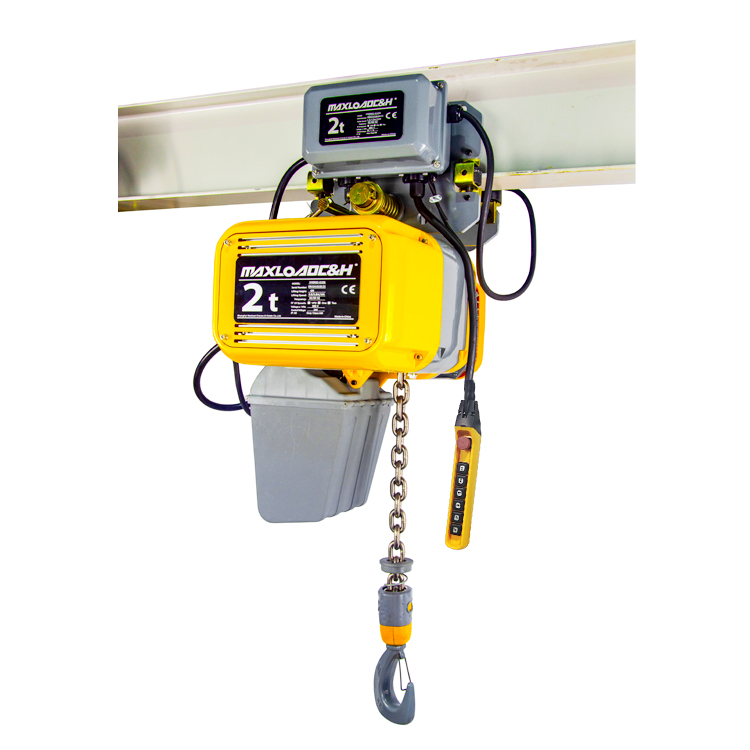
An electric hoist typically consists of a lifting motor, gearbox, drum or sprocket, wire rope or lifting chain, and a hook. Based on the type of lifting medium, it is primarily divided into wire rope electric hoists and chain electric hoists.
Wire rope electric hoist: Offers high lifting heights and high duty ratings, suitable for heavy industrial applications and frequent operation.
Chain electric hoist: Features a compact structure, small size, light weight, and easy installation. The chain is more wear-resistant and easier to maintain compared to wire rope, making it widely used in light-duty lifting equipment and KBK systems.
II. KBK Crane: The "Precise Manipulator" for Flexible Manufacturing
If overhead cranes address "large-scale, heavy-load"搬运 (handling), then KBK cranes focus more on "ergonomic, high-frequency, precise positioning" for workstation-level handling.
1. Structural Analysis
Originating from European standards, KBK utilizes standardized, modular track components installed and suspended from the factory ceiling or support structures.
Flexible Design: The cross-section of the KBK rail is specially designed, allowing the traveling trolley to move within the track with low noise and low resistance, providing excellent "handling feel." The operator only needs to apply minimal force to move the load, achieving semi-assisted handling through "manual pushing, mechanical lifting."
Flexible Layout: KBK systems can form simple monorails or be configured into single-girder, double-girder, or even cantilever structures. They can easily navigate around factory columns and equipment, covering irregular work areas.
2. Typical Application Scenarios
KBK cranes excel in environments with workstations (dense workstations) and high assembly precision. Examples include automotive parts assembly lines, machine tool loading/unloading areas, mold maintenance workshops, and packaging/shipping zones where operators frequently need to move workpieces accurately from point A to point B.
Due to their light self-weight, their requirements for building load-bearing capacity are significantly lower than those of traditional overhead cranes. Even in light industrial buildings or upper floors without corbels, KBK systems can be easily installed, which is why they are also known as "floor cranes."
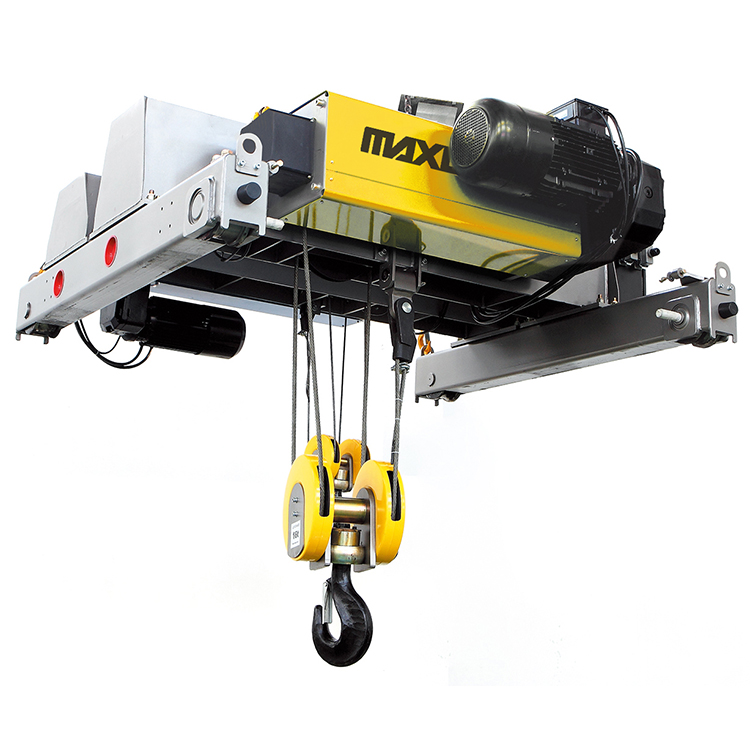
III. Overhead Crane: The "Steel Backbone" of Heavy-Duty Workshops
Overhead cranes, or bridge cranes, are the most traditional and highest-capacity handling equipment in industrial buildings. They primarily handle the transfer of bulk materials and heavy equipment across workshops.
1. Classification and Characteristics
Overhead cranes typically consist of a bridge, long-travel mechanism, trolley, and electrical control system.
General-purpose overhead crane: Suitable for various indoor loading and unloading tasks, with rated capacities ranging from a few tons to several hundred tons.
Metallurgical / Explosion-proof specialized cranes: Structurally reinforced for specific environments.
2. Application Positioning
The core value of overhead cranes lies in their "large span" and "heavy load capacity." In steel structure fabrication, heavy machinery processing, port terminals, and large-scale storage centers, overhead cranes cover the entire longitudinal and transverse space of the workshop. They can lift raw materials weighing dozens of tons from the storage yard to the cutting machine, and then transfer finished products to the shipping area.
However, due to their high inertia and complex operation, traditional overhead cranes are often less efficient than KBK systems for tasks requiring fine assembly. Therefore, modern factories typically adopt a combined approach where "overhead cranes handle macro-level transfer, and KBK systems handle micro-level assembly."
IV. Synergistic Application: Building a Comprehensive Handling Matrix
In actual factory planning, integrating electric hoists, KBK systems, and overhead cranes into a rational system yields far greater overall efficiency than purchasing a single type of equipment.
1. Overhead Crane + Electric Hoist: Standard Configuration for Heavy Load Transfer
This is the most common combination. The bridge of the overhead crane provides movement in the X and Y axes, while the electric hoist handles the Z-axis (lifting). This combination is suitable for scenarios requiring large spans and high single-lift capacities.
Optimization Suggestion: When retrofitting older overhead cranes, consider upgrading the original wire rope hoist to a chain hoist with variable frequency drive (VFD) functionality. This reduces impact during start-up, enables precise micro-positioning, and minimizes load sway, reducing psychological stress on the operator.
2. KBK + Electric Hoist: The Ideal Partnership for Flexible Workstations
In a KBK system, the electric hoist is no longer just a "traveling component" but integrates with the KBK trolley.
Combined Advantages: The KBK rail minimizes resistance during horizontal load movement, allowing the operator to control direction with one hand, while the electric hoist manages vertical lifting.
Intelligent Extension: In high-end manufacturing, this combination can be further enhanced with pneumatic balancers or intelligent lift assist devices. Operators can achieve "floating" load handling, greatly improving the efficiency and safety of assembling precision components.
3. Functional Complementarity: Coverage from "Point" to "Area"
An efficient material handling system is typically structured across three levels:
Level 1 (Cross-Workshop Transport): Handled by heavy-duty overhead cranes, responsible for moving raw materials from the unloading area to storage or rough processing areas.
Level 2 (Inter-Workstation Transfer): Handled by KBK cranes, covering the transfer of semi-finished products between adjacent workstations. Their flexible layout allows them to bypass equipment for precise delivery.
Level 3 (Single-Point Assembly): Handled by jib cranes or wall-mounted KBK systems (in conjunction with) electric hoists, focusing on (fine operations) at individual workstations, such as changing fixtures or flipping workpieces.
This layered approach avoids the energy waste of "using a sledgehammer to crack a nut." Using a 50-ton overhead crane to move a few hundred kilograms of components is not only energy-intensive but also inefficient and resource-occupying for the large crane. By using KBK systems to handle light-duty tasks, heavy-duty cranes are freed up to focus on their core heavy-load responsibilities.
V. Selection and Safety Considerations
When planning the application of electric hoists, KBK systems, and overhead cranes, the following points are crucial:
Duty Rating Matching:
Don't(focus solely on) lifting capacity; consider the duty rating. For multi-shift, high-frequency production lines, even a 1-ton capacity system requires a high-duty-rated electric hoist and heavy-duty KBK track. For workshops where equipment is used only occasionally for maintenance, a more economical configuration may suffice.
Structural Safety Margins:
Both KBK tracks and crane girders are load-bearing steel structures. Dynamic and impact factors must be considered during the design phase. For suspended KBK systems, the load capacity of the factory ceiling must be verified. For overhead cranes, the stiffness of corbels and rail beams must comply with standards to prevent issues like rail gnawing.
Ergonomics:
The value of equipment lies in serving people, not constraining them. For workstation-level handling, priority should be given to user-friendly interfaces. Low-headroom designs can maximize lifting height. End bumpers prevent collisions. Smooth-rolling track trolleys reduce operator fatigue. A well-designed application方案 (solution) can increase production efficiency by over 30% while reducing safety risks associated with fatigue-induced errors.
VI. Conclusion
Electric hoists, KBK cranes, and overhead cranes together form a complete ecosystem for modern industrial material handling. Overhead cranes are the skeleton, providing the breadth for heavy logistics; KBK systems are the blood vessels, reaching into every corner between workstations; electric hoists are the heart, delivering reliable power for every lift.
In practical application, no single piece of equipment should be viewed in isolation. Instead, adopting a "system integration" perspective to organically combine these three technologies based on material weight, handling frequency, distance, and precision requirements is essential. Whether for the top-level design of a new factory or enhancing the efficiency of an existing workshop, choosing the right equipment combination is not only an investment in production efficiency but also a guarantee of safe operations and long-term operational profitability.
 0086 156 1824 5535
 0086 156 1824 5535