From Points, Lines, and Planes: The Synergy of Industrial Material Handling
In the fields of modern industrial manufacturing, logistics, warehousing, and heavy equipment assembly, the efficiency of material handling directly determines an enterprise's production capacity and safety levels. Within the complex system of handling equipment, electric hoists, KBK light cranes, and overhead traveling cranes constitute a complete solution spanning from "points" to "lines" and then to "planes." These three are not simply alternatives to one another; instead, based on different working conditions, loads, and spatial layouts, they form a complementary, synergistic hierarchical ecosystem.
This article delves into the core characteristics, applicable scenarios, and how rational combination configurations can create an efficient, safe, and economical workshop handling system.
I. Electric Hoist: The "Point" Power of Precise Lifting
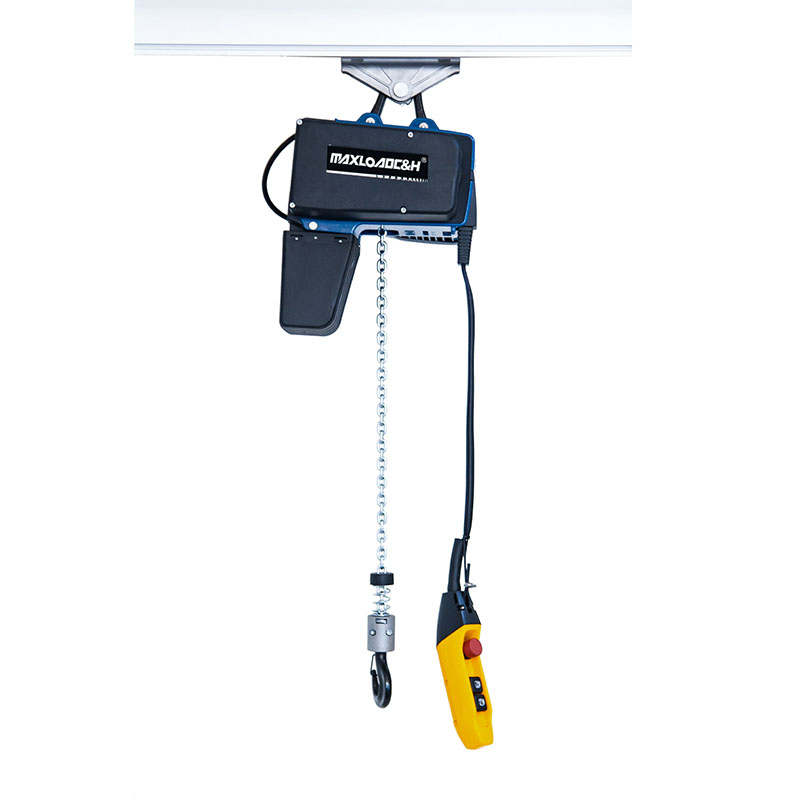
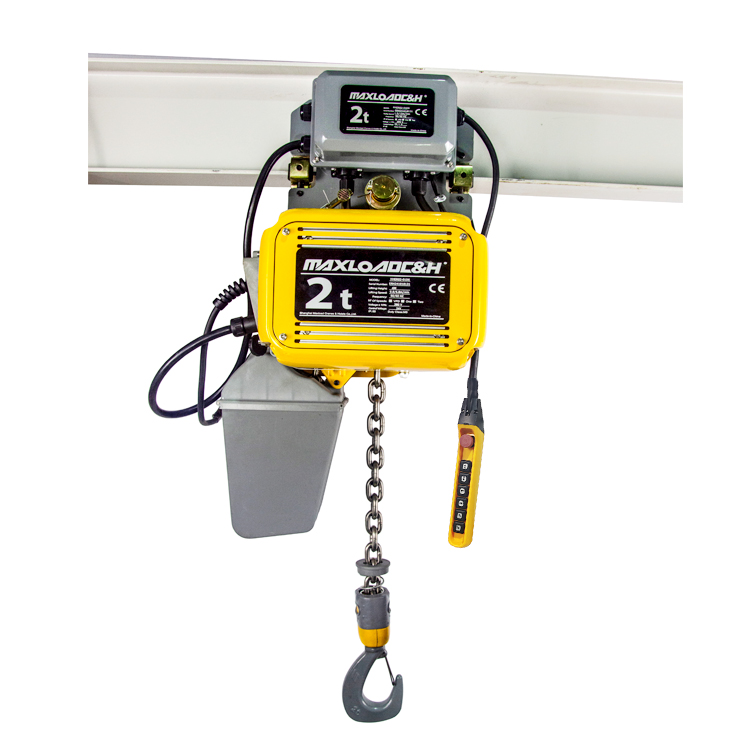
The electric hoist is the most fundamental and core execution unit in lifting machinery. Whether operating independently on an I-beam or serving as the hoisting mechanism of a crane, it undertakes the critical actions of "grabbing" and "lifting."
1. Structure and Characteristics
An electric hoist typically consists of a lifting motor, reducer, drum or sprocket, hook, and control device. Based on the type of load-handling attachment, it is mainly divided into wire rope electric hoists and chain electric hoists.
Wire rope electric hoist: Suitable for applications requiring high lifting heights and high duty cycles. It features a compact structure, fast lifting speed, and can handle frequent industrial-grade operations.
Chain electric hoist: Due to the flexibility of its chain, it performs excellently in confined spaces. It is lightweight, imposes less impact on the track, and is relatively easy to maintain, making it very suitable for precision assembly lines with small to medium tonnage.
2. Application Scenarios
As a "point" device, the core value of the electric hoist lies in the precise lifting and placement of materials at specific locations. In machining workshops, it is often used for machine tool loading and unloading; in maintenance bays, it is used for disassembling and assembling engines or large components. Due to its flexible operation, operators can achieve millimeter-level micro-movements using a pendant control or wireless remote, meeting the demands of high-precision alignment.
3. Selection Considerations
When selecting an electric hoist, it is insufficient to only look at the rated load capacity. The key is the duty classification (M3 to M6). If the equipment requires 24-hour continuous operation, a heavy-duty hoist with a high duty classification must be chosen; otherwise, issues like motor overheating and accelerated brake wear can occur, significantly shortening the equipment's lifespan.
II. KBK Crane: The "Line" and "Plane" of Flexible Coverage
The KBK crane, fully known as the "modular combination crane," is a lightweight lifting system based on a standardized modular design. If the electric hoist addresses the "vertical" movement, the KBK system addresses the "horizontal movement" across a plane.
1. Structural Advantages
The core of the KBK system lies in its modularity and flexibility. It consists of suspension devices, rails, traveling trolleys, electric hoists, and various connecting components. The rail profile is typically a closed steel section with high bending strength and torsional rigidity.
Flexible Combination: Compared to traditional I-beams, KBK rails can extend in any direction. Using components like curved rails, turntables, and switches, they can easily bypass columns, equipment, or production lines within a workshop, forming complex loop or grid-style material flow paths.
Lightweight, Low Building Requirements: KBK systems are typically top-hung, relying on the workshop roof's steel structure or concrete beams for support. Due to their extremely low self-weight, they often do not require additional reinforcement of the roof structure in older factories, significantly lowering installation barriers and civil construction costs.
2. Application Scenarios
KBK cranes are ideal for workstation-level material handling.
Assembly Lines: In automotive parts, electronic device, or home appliance production lines, KBK systems commonly exist as "monorails" or "double-girder underhung cranes." Workers can easily guide heavy objects using a handle, moving them freely within the workstation area, enabling "move and lift as you go."
Intensive Warehousing: At the inbound end of立体 warehouses, KBK systems can cover the entire area from the truck unloading zone to the storage rack area, compensating for the inconvenience of forklifts operating in narrow aisles.
3. Ergonomic Value
The greatest hidden value of the KBK system lies in ergonomics. Through low-friction wheel designs, operators require minimal pushing force to move loads weighing hundreds of kilograms. This not only reduces labor intensity but, more importantly, decreases the risk of back injuries associated with manual handling. It is an indispensable component in modern lean production management.
III. Overhead Crane: The "Spatial" Coverage of the Entire Domain
The overhead crane, or bridge crane, is the most extensive and highest-capacity lifting equipment within a workshop. Acting like an "aerial bridge" spanning the workshop, it enables the transportation of heavy materials across the entire facility's span.
1. Structural Classification
An overhead crane mainly consists of the bridge girder, bridge traveling mechanism, trolley traveling mechanism, and hoisting mechanism.
Single-Girder Crane: Simple structure, economical cost, suitable for applications with capacities up to around 1 to 20 tons. Its main girder is a single box girder or structural steel section, with the electric hoist suspended and operating beneath it.
Double-Girder Crane: Suitable for applications with high capacities or large spans. The double-girder structure offers better stability and higher lifting height. The trolley operates on rails atop the two main girders, enabling a wider range of material coverage.
2. Application Scenarios
Overhead cranes address workshop-level overall logistics.
Raw Material Inbound/Outbound: In steel stockyards or equipment assembly workshops, overhead cranes are responsible for unloading raw materials weighing several tons or even hundreds of tons from transport vehicles, transferring them to storage areas or directly to processing stations.
Process Connection: In heavy industries, large structural components undergo multiple processes like welding, machining, and painting. Only high-capacity overhead cranes enable the seamless transfer of these workpieces between different workstations.
3. Safety and Compliance
Overhead cranes are classified as special equipment. Their design, manufacturing, installation, and use are subject to strict supervision by market regulatory authorities. Compared to KBK systems, the safety devices on overhead cranes are more complex, including overload limiters, travel limit switches, and end truck bumpers, ensuring absolute safety under heavy-load, high-speed operation.
IV. Synergistic Application: Building an Efficient Workshop Handling Ecosystem
In practical industrial scenarios, electric hoists, KBK cranes, and overhead cranes do not operate in isolation but rather exhibit a pyramid-like synergistic structure.
1. Layered Operation
In large mechanical assembly workshops, a common sight is:
Top Level: Large double-girder overhead cranes are responsible for lifting heavy bases or housings weighing tens of tons to the final assembly station.
Middle Level: Once the base is fixed, workers use jib cranes mounted on columns or KBK flexible beams to precisely lift and position small to medium-sized components into designated spots inside the base.
Bottom Level: For precision tasks like bolt tightening or wiring connections, lightweight chain electric hoists combined with KBK monorails help balance tools or provide auxiliary support, avoiding collision risks associated with the inertia of large cranes during delicate operations.
This division of labor—"heavy cranes for heavy work, light cranes for fine work"—ensures the efficiency of heavy-load logistics while avoiding the waste of resources and safety hazards of using an overly large tool for a small task.
2. Solving the "Last Meter" Challenge
Although large overhead cranes have extensive coverage, their operational precision and flexibility are often insufficient at the final workstation. Here, the KBK system acts as the "capillary" network of the overhead crane, extending to each specific workstation. Through flexible KBK tracks, electric hoists can precisely position workpieces inside machining centers or onto complex fixtures, solving the "last meter" handling problem that large cranes cannot reach.
3. Optimizing Space Utilization
Given the increasing scarcity and cost of land, workshop height and floor space have become invaluable. Overhead cranes utilize aerial space without occupying floor space for aisles, while KBK systems are suspended below the cranes or at the truss level, creating a two-tiered, three-dimensional workspace. With precise interference calculations, both systems can operate concurrently within the same bay, significantly increasing logistics throughput per unit area.
V. Selection Recommendations
When planning a lifting and handling solution, enterprises are advised to follow this logic:
Look at the Load: For loads >5 tons requiring long-distance movement, a bridge crane is the preferred choice; for loads 1-5 tons at fixed workstations, a KBK + electric hoist combination offers greater cost-effectiveness; for loads <1 ton requiring extremely high flexibility, pneumatic balancers or intelligent lifting devices are a growing trend.
Look at the Frequency: For high-frequency, heavy-duty applications, a high-duty-cycle overhead crane and wire rope hoist are necessary; for low-frequency, light-load applications, a chain hoist with a lightweight KBK system can be considered to reduce initial investment.
Look at the Site: For older buildings with insufficient load-bearing capacity, prioritize KBK systems; for new constructions with ample ceiling height, embedding crane runway beams is a farsighted approach.
Conclusion
Electric hoists, KBK cranes, and overhead cranes form the solid backbone of modern industrial material handling. From the precise lifting of electric hoists to the flexible coverage of KBK systems and the comprehensive coordination of overhead cranes, together they define the operational standards of "efficiency, safety, and labor-saving."
For business managers, understanding the synergistic relationship between these three is not only an essential lesson in equipment procurement but also a key factor in optimizing production processes and reducing operating costs. When making choices, one should move beyond comparing parameters of individual devices and focus on the overall workshop's material flow path, spatial layout, and long-term development strategy to build the most suitable three-dimensional handling system.
 0086 156 1824 5535
 0086 156 1824 5535