Industrial Lifting Solutions: Electric Hoists and Overhead Cranes
In modern industrial production and material handling, electric hoists and overhead cranes are the most common and efficient lifting systems. Proper selection and coordinated operation of the two directly impact production line efficiency, operational safety, and the total lifecycle cost of equipment. This article systematically discusses the engineering applications of electric hoists and overhead cranes from the perspectives of technical principles, application scenarios, key selection points, and safety operation and maintenance.
I. Technical Positioning and Core Characteristics of Electric Hoists
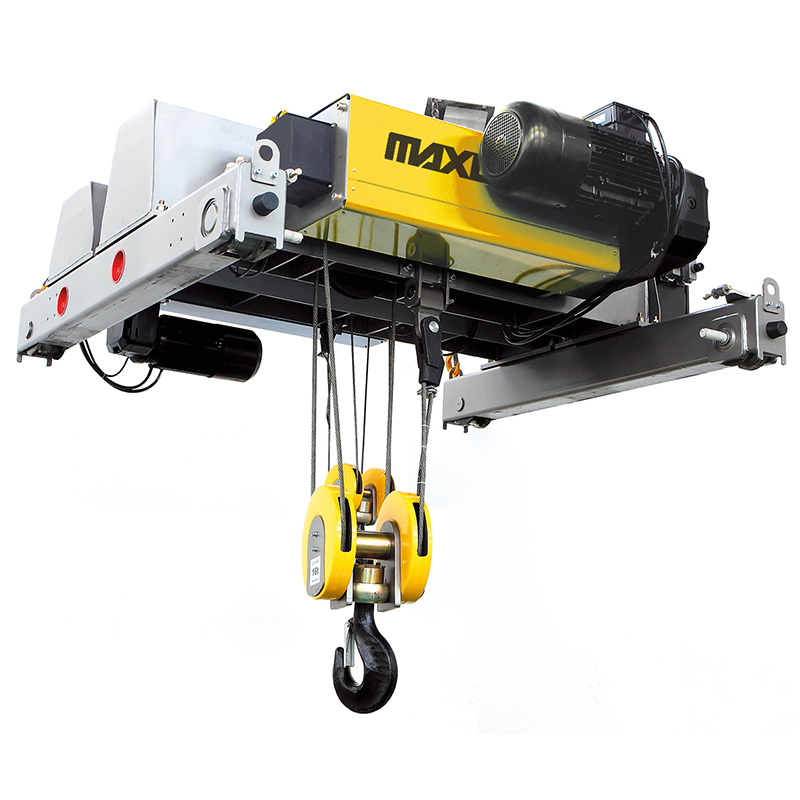
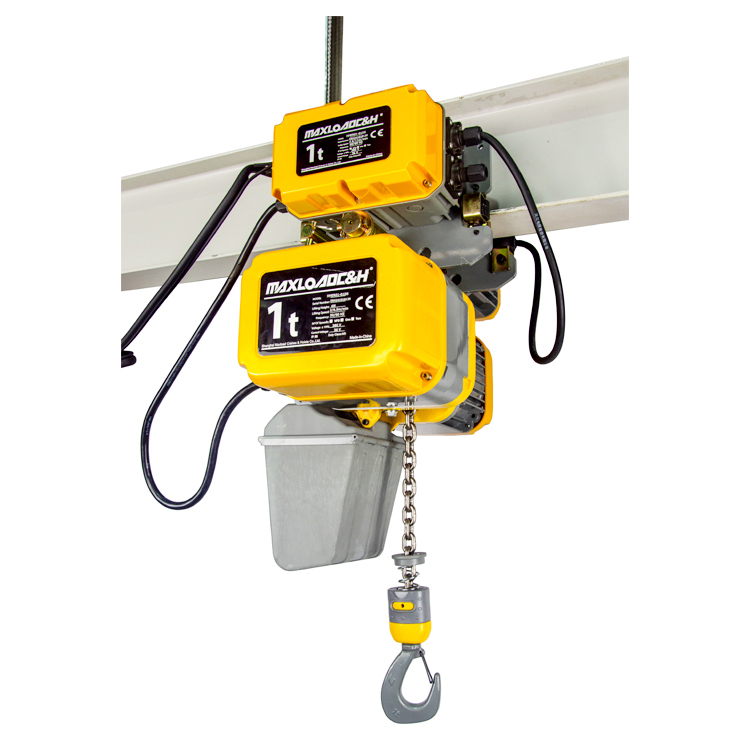
An electric hoist is a light-duty lifting device, typically installed on a monorail, jib crane, or crane bridge girder, to achieve vertical lifting and horizontal movement of heavy loads. Its core structure includes a hoist motor, reduction mechanism, drum or chain wheel, hook assembly, and electrical control system.
From a technical classification perspective, electric hoists are mainly divided into wire rope electric hoists and chain electric hoists. Wire rope electric hoists offer large lifting heights and high duty ratings, making them suitable for frequent heavy‑load operations. Chain electric hoists are compact and relatively economical, often used where lifting heights are low or installation space is severely restricted. The duty rating is a key parameter for evaluating the overall performance of an electric hoist; it takes into account the load spectrum, frequency of use, and environmental conditions, directly determining the equipment’s applicability and expected service life under specific operating conditions.
II. Structural Composition and Functional Layers of Overhead Cranes
An overhead crane, also known as a bridge crane, consists fundamentally of a bridge (main girder(s) and end trucks), a long‑travel mechanism, a cross‑travel mechanism (for the trolley), a hoisting mechanism, and an electrical control system. According to the bridge structure, it can be further subdivided into single-girder and double‑girder overhead cranes.
A single girder crane uses a single main girder, with the electric hoist suspended underneath and moving transversely along the girder. It features a simple structure and low self‑weight, suitable for relatively small spans and moderate lifting capacities. A double‑girder crane is equipped with two parallel main girders; the hoisting trolley straddles and runs on rails on top of the two girders. This allows the lifting capacity to be greatly increased to several hundred tons, while offering higher running stability and positioning accuracy, making it suitable for heavy‑duty environments such as heavy machinery manufacturing, metallurgy, and shipbuilding.
It should be emphasized that in practical engineering applications, the electric hoist often serves as the lifting and cross‑travel actuating unit of the overhead crane. The two are functionally coupled through rails and traveling mechanisms. The crane provides large‑scale spatial movement capability, while the electric hoist is responsible for precise vertical lifting and load gripping, forming a complete material handling chain.
III. Typical Application Scenarios
Manufacturing production lines: In a machining workshop, the overhead crane covers the entire length and width of the shop floor, and the electric hoist, together with special lifting accessories, transfers workpieces between processes. For example, during the loading of a large machine tool, the operator uses precise inching control of the electric hoist to place a multi‑ton blank smoothly onto the designated position of the worktable, achieving positioning accuracy at the millimeter level.
Warehousing and logistics centers: In a high‑bay warehouse or heavy‑material yard, the combined system of overhead crane and electric hoist handles the inbound and outbound operations of large, heavy goods. Seamlessly connecting with ground transport vehicles, it enables rapid flow from the storage area to the shipping area. In some intelligent systems, the electric hoist is also integrated with a load cell and a wireless data transmission module, allowing simultaneous weighing and data recording during lifting.
Maintenance and overhaul operations: In facilities such as power plants, hydropower stations, and large pumping stations, the overhead crane and electric hoist are the core equipment for major unit overhauls. Take the overhaul of a hydraulic turbine runner as an example: the overhead crane lifts the tens‑of‑tons runner out of the pit as a whole, while the electric hoist, working with a special spreader beam, performs in‑air turning and attitude adjustment, providing working space for subsequent maintenance.
IV. Key Technical Parameters for Selection and Design
Rational selection requires comprehensive consideration of the following core parameters:
Lifting capacity: In addition to the weight of the heaviest single piece, the self‑weight of the lifting attachment and the dynamic load factor must be included. According to national standards, the dynamic load factor for general‑purpose bridge cranes is generally taken as 1.1 to 1.25, meaning the rated lifting capacity should be at least the maximum load multiplied by this factor.
Lifting height and span: Lifting height depends on the clear height of the workshop and the lowest required position of the lifting attachment; the span is determined by the column spacing of the workshop and the required coverage area. Particular attention should be paid to the fact that an excessively large span will aggravate the deflection of the main girder, affecting the smoothness of trolley travel.
Duty rating: Determined comprehensively based on the load spectrum and frequency of use.
Lifting speed and travel speed: Speed parameters directly affect the operational cycle time. Variable frequency drive systems allow a wide range of stepless speed adjustment, accommodating both rapid no‑load movement and slow, precise positioning under heavy load.
Control mode: From traditional cab operation and floor‑level pendant control, to radio remote control and even fully automatic unmanned operation. Radio remote control greatly improves the operator’s visibility and safety, especially in environments where multiple cranes are operating in overlapping areas or where line of sight is restricted.
V. Installation, Commissioning, and Key Points of Safe Operation and Maintenance
The core tasks during installation include rail alignment accuracy control, main girder horizontal level and diagonal tolerance control, and functional verification of the upper limit switch and overload limiter. According to national standards, the mid‑span camber of the main girder of a bridge crane should be controlled between 1/1000 and 1.4/1000 of the span to compensate for elastic deflection under load.
In daily operation and maintenance, special attention should be paid to the following: inspection of wire rope breakage and wear, periodic testing of brake gap and braking force, reliability verification of limit switches on all mechanisms, and monitoring of the oil level and quality in the gearbox. The motor of the electric hoist is designed for intermittent duty; frequent continuous operation may cause thermal protection to activate, so operators should reasonably control the working rhythm.
Regarding safety devices, in addition to the legally mandatory overload limiter, travel limit switches, bumpers, and hook latches, it is recommended to install audible/visual alarms and anti‑sway control systems in areas where overhead work is performed or where personnel are concentrated. For special environments such as explosion‑proof, high‑temperature, or corrosive conditions, equipment with appropriate protection ratings and certifications must be selected.
VI. Technical Development Trends
Currently, electric hoist and overhead crane technology is evolving towards intelligence, energy saving, and modularization. Intelligent operation and maintenance systems, by adding vibration sensors, temperature sensors, and current monitoring modules, can perform condition monitoring and fault prediction for key components such as gearboxes, motors, and brakes. Energy feedback technology returns the regenerative electric energy generated by the motor during load lowering back to the power grid, reducing overall energy consumption by approximately 20% to 30% in frequent lifting/lowering operations. Furthermore, the popularization of radio remote control and video‑assisted systems allows operators to stay away from hazardous areas, significantly improving operational safety.
Conclusion
As fundamental equipment in the industrial handling field, the technical level and application depth of electric hoists and overhead cranes directly affect the overall efficiency of a production system. From proper selection and standardized installation to scientific maintenance and technological upgrades, every step requires engineering professionals to make sound judgments based on actual operating conditions. Understanding and mastering the technical characteristics and synergistic logic of these two types of equipment is a prerequisite for building a safe, efficient, and economical material handling system and serves as the technical foundation for advancing industrial production to a higher level.
 0086 156 1824 5535
 0086 156 1824 5535