Collaborative Applications in Modern Industrial Material Handling
In modern industrial production and logistics operations, the proper selection and efficient application of material handling equipment directly affect production efficiency, operational safety, and cost control. As two core types of lifting and transport machinery, electric hoists and overhead cranes each have distinct functional roles while forming an inseparable collaborative relationship in practical applications. This article systematically discusses the application of electric hoists and overhead cranes from the perspectives of technical characteristics, selection principles, typical application scenarios, and safety maintenance.
I. Electric Hoist: The Core Execution Unit for Lightweight Lifting
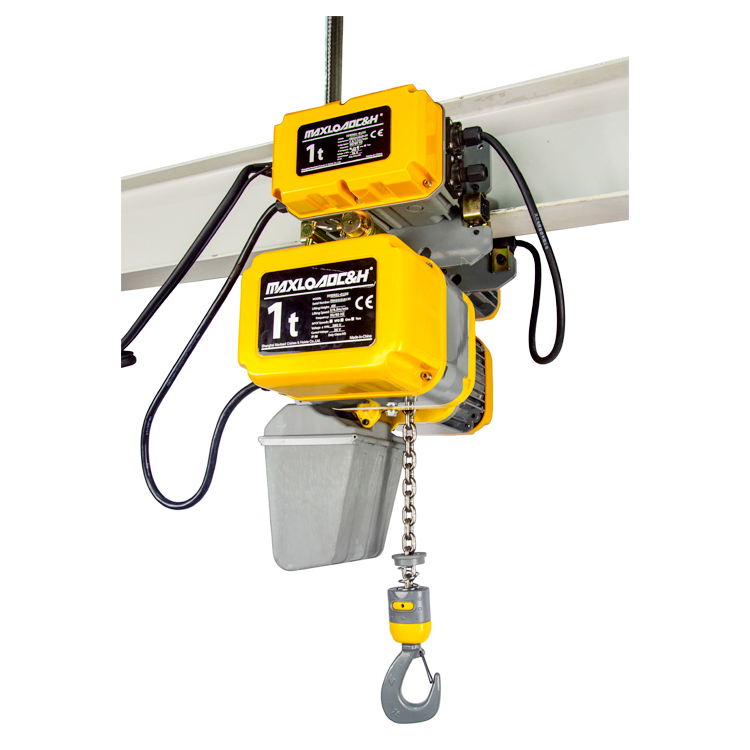
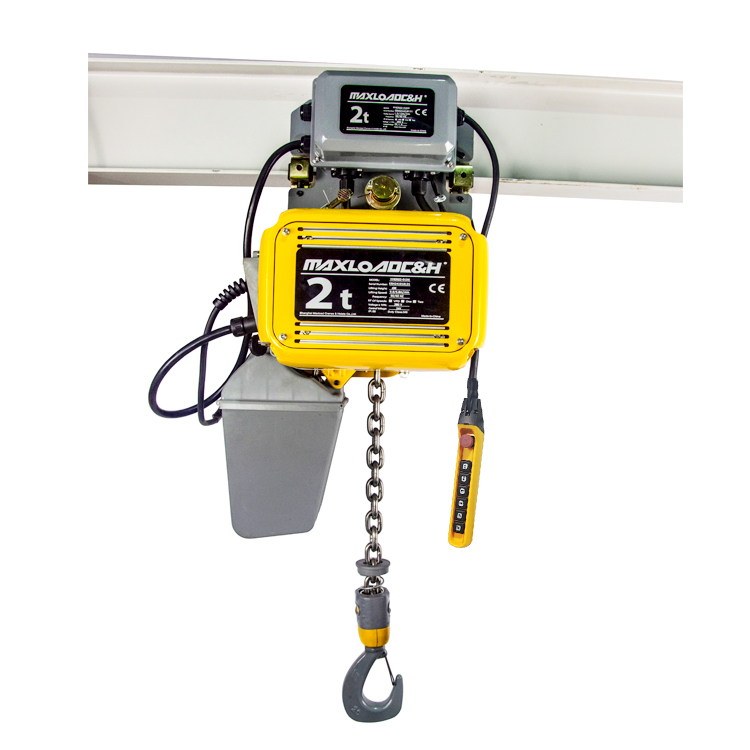
An electric hoist is a light and small lifting device installed on a track or fixed support. It mainly consists of a lifting motor, a reduction mechanism, a drum or a chain wheel, a hook, and a control system. Its core function is vertical lifting and lowering of heavy loads, with some models also capable of horizontal movement along a track.
Technical Characteristics Analysis
Electric hoists can be divided into wire rope electric hoists and chain electric hoists based on their structural form. Wire rope hoists offer large lifting heights and high operating speeds, making them suitable for heavier capacities or high-frequency operations. Chain hoists are compact and lightweight, offering advantages in low-headroom, small-capacity, and frequent-movement applications.
Key technical parameters include rated lifting capacity, lifting height, duty classification, and control mode. The duty classification is determined by the mechanism's utilization class and load spectrum, directly reflecting the hoist's suitability and expected service life. Common control modes include pendant control (floor-mounted), remote control, and cab control. Wireless remote control technology is increasingly used in large-area movement or obstructed-view scenarios.
Independent Application Scenarios
When not mounted on a crane bridge, electric hoists are typically used independently in fixed or underhung monorail configurations. Typical applications include workpiece transfer between workstations, component lifting for equipment maintenance, and goods lifting at loading docks. Their low investment cost, flexible installation, and easy maintenance make them the preferred choice for small and medium-sized enterprises and specific workstation material handling.
II. Overhead Crane: A System Platform for Large-Span Material Handling
An overhead crane, also known as a bridge crane or traveling crane, is a heavy lifting device consisting of a bridge that travels longitudinally along tracks fixed on elevated runways on both sides, while the hoisting mechanism and trolley move transversely along the bridge. The crane forms a complete material handling platform covering a rectangular working area.
Structural Composition and Types
The core components of an overhead crane include the bridge, long travel drive mechanism, trolley and hoisting mechanism, and electrical control system. The bridge structure determines the crane's load capacity and span adaptability; common types include box girder, truss girder, and single main girder.
Based on bridge support, overhead cranes are divided into single-girder and double-girder types. Singlegirder cranes have simple structures and low self-weight, suitable for smaller capacities and moderate spans. Double-girder cranes offer higher capacities and smoother operation, meeting the requirements for heavy equipment lifting and large-span workshops. Additionally, underhung cranes have the bridge suspended from the roof structure, suitable for spaces where floor space is limited but overhead area can be utilized.
System Integration Features of Overhead Cranes
The core value of an overhead crane lies in its system integration capability. It is not merely a carrier for the hoist but a platform capable of precise three-dimensional positioning within the working area. By combining with an electric hoist or other lifting devices, the crane can cover any point in the entire rectangular workspace, enabling full process material flow from raw material receiving, interprocess transfer, to finished product dispatch.
III. Collaborative Application of Electric Hoists and Overhead Cranes
In practical industrial settings, electric hoists and overhead cranes are often used together, forming complementary complete solutions. The electric hoist, as the lifting execution unit, is mounted on the crane's trolley. It performs vertical lifting and also moves transversely with the trolley along the bridge. The crane's long travel mechanism moves the entire bridge longitudinally along the workshop tracks. The superposition of these three motions enables precise three-dimensional positioning at any point within the working area.
Typical Collaborative Application Scenarios
Mechanical Manufacturing and Assembly Workshops: During machining of heavy components, the crane handles long-distance transfer of workpieces between machine tools, while the electric hoist performs precise positioning and unloading on the machine table. This division allows fast long-distance travel and precise short-distance positioning to work separately, significantly improving cycle efficiency.
Warehouse and Logistics Centers: In large highbay warehouses, the crane bridge covers the entire storage area, and the electric hoist with dedicated lifting attachments handles vertical storage and retrieval. With variable frequency drive and position control technology, automatic bin addressing and smooth lifting/lowering can be achieved.
Maintenance and Repair Operations: In power plants, metallurgical plants, and large equipment manufacturers, the crane provides a maintenance platform covering the equipment area, while the electric hoist handles disassembly lifting, component replacement, and other detailed tasks. In confined spaces, the hoist's flexibility and the crane's coverage complement each other effectively.
Die and Mold Change and Maintenance: In injection molding, die casting, and stamping industries, dies/molds are typically heavy and changed frequently. The crane moves the mold from storage to near the machine, and the electric hoist performs precise alignment and removal between the mold and the machine table.
Key Selection Points for Collaborative Configuration
When configuring a collaborative system with a crane and electric hoist, the following technical factors should be emphasized:
Capacity Matching: The rated lifting capacity of the electric hoist must match the load capacity of the crane trolley, with allowance for the weight of lifting attachments and rigging.
Duty Classification Coordination: The duty classifications of the crane and hoist should be determined separately based on actual operation frequency and load spectrum to avoid an unbalanced system life due to a weak link.
Speed Coordination: The speeds of the long travel, cross travel, and hoisting mechanisms should be coordinated to ensure both operational efficiency and requirements for precise positioning and smooth motion.
Control System Integration: Use an integrated electrical control system to achieve interlocking and coordinated operation of the three motions, and equip it with safety limit switches, overload protection, and anticollision devices.
IV. Safe Operation and Maintenance Management
As special equipment, electric hoists and overhead cranes must be managed under standardized safety regulations. According to national regulations, equipment with a rated capacity above certain thresholds is subject to special equipment supervision, including periodic inspection and usage registration.
In daily operation, the following safety items should be emphasized: perform noload testing before each shift to verify normal operation of all mechanisms and effectiveness of limit switches; regularly inspect wire ropes or chains for wear and broken wires, replacing them immediately when discard criteria are met; periodically verify brake torque to ensure reliable holding under rated load; and check track and bolt tightness, as well as bumper condition, during routine inspections.
Electrical system maintenance is equally important. Regularly check the contactor contacts, the conductive reliability of cable trolleys or cable chains, and clean dust inside electrical cabinets to prevent faults caused by poor contact or insulation aging.
Conclusion
Electric hoists and overhead cranes each have their own roles while complementing each other in modern material handling systems. The electric hoist, with its compact structure and precise control, serves as the lifting actuator, while the overhead crane, with its large span coverage, forms the complete handling platform. Their collaborative application embodies both the technical logic of specialization in lifting machinery and the engineering value of system integration.
For industrial users, proper selection and scientific configuration of electric hoist and overhead crane systems not only improve material handling efficiency and reduce manual labor intensity but also achieve a balance of safety and economy over long-term operation. With ongoing developments in variable frequency control, remote monitoring, and automation technology, the collaborative application of electric hoists and cranes will continue to evolve toward greater intelligence, precision, and safety.
 0086 156 1824 5535
 0086 156 1824 5535