From Basic Selection to Refined Application
On the material handling chain in industrial production, the electric hoist and overhead crane are a familiar combination. These two are not independent devices but rather a coordinated lifting system – the crane provides the framework for spatial positioning, while the electric hoist handles precise load gripping and lifting. Understanding the working logic of this pair has direct practical significance for equipment selection, routine maintenance, and even production line efficiency.
Working Principle and Classification
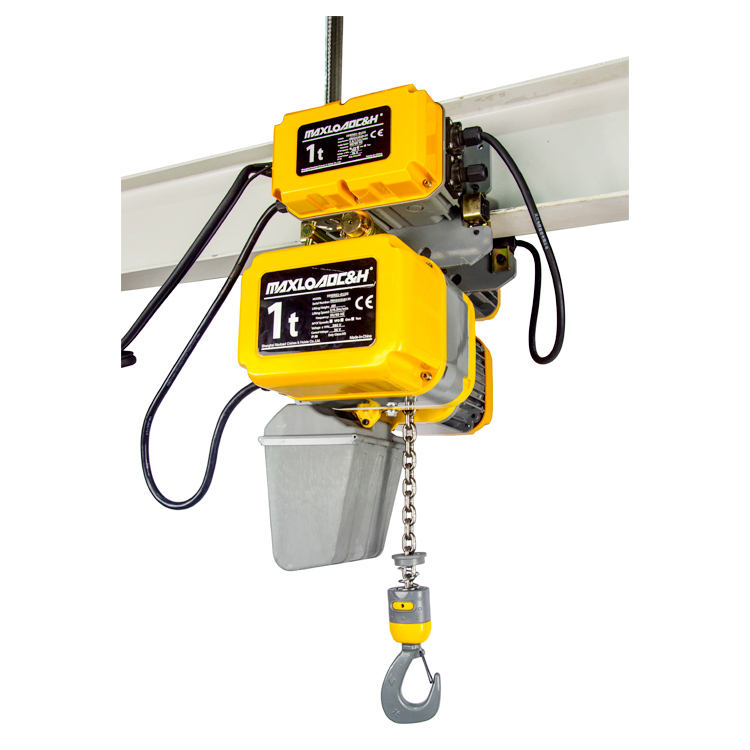
An electric hoist is essentially a compact lifting device integrating a motor, transmission mechanism, and drum (or sprocket). Based on the lifting element, electric hoists are primarily divided into two main categories: wire rope and chain hoists.
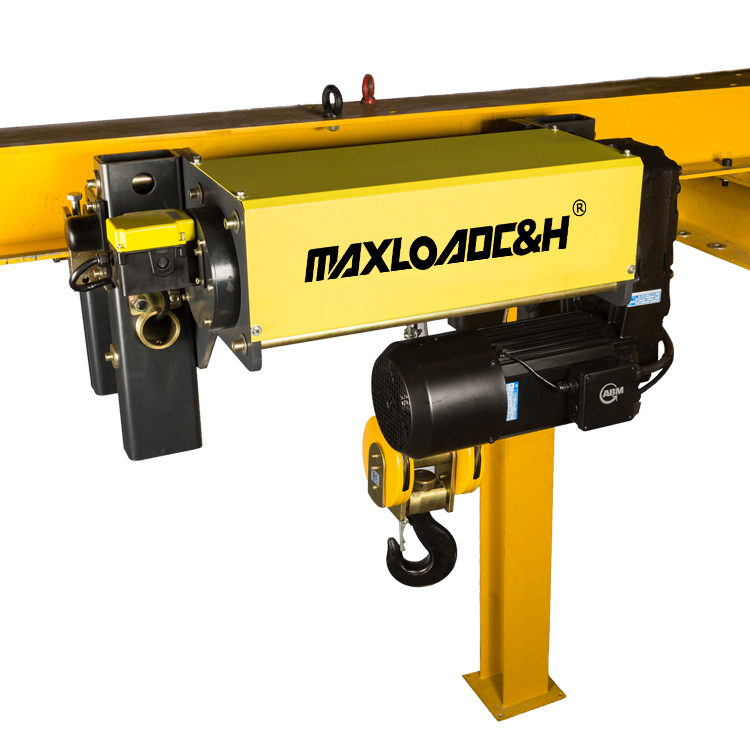
The wire rope electric hoist is the most common form. Its lifting mechanism adopts a classic series structure, with the motor and reducer arranged on opposite sides of the drum set, transmitting power through an internal drive shaft. This structure makes it particularly effective in medium-to-heavy load conditions of 5 tons and above, especially suitable for frequent heavy lifting operations. The chain electric hoist uses a high-strength alloy chain as the load-bearing component, offering a small bending radius and a more compact body, which provides clear advantages in space-constrained environments or where curved-track operation is needed.
The overhead crane serves as the travel carrier for the electric hoist, typically referring to a bridge crane. According to the number of main girders, it can be divided into two basic forms: single-girder and double-girder. The single-girder overhead crane has a simple structure and low headroom requirement; when paired with a traveling electric hoist, it can cover general lifting needs in most small and medium-sized workshops. The double-girder overhead crane uses a centralized drive double-rail trolley, used in conjunction with a fixed wire rope electric hoist. It is worth noting that in scenarios with limited factory headroom, low-headroom electric hoists, through compact structural design, can effectively increase the usable lifting height without altering building conditions.
Key Considerations in Selection
Matching an electric hoist with an overhead crane is far more complex than simply "matching the rated tonnage." In practical selection, the following parameters often determine whether the equipment can withstand the demands of the application.
Duty Classification. The duty class reflects the frequency of use and load intensity of the equipment and does not directly correspond to the rated lifting capacity. Taking a 1-ton electric hoist as an example: if used only for occasional equipment maintenance, class M3 is sufficient; if used for over 50 lifts per day on an assembly line, it needs to be upgraded to class M5 or higher, otherwise issues like frequent motor overheating and accelerated component wear are almost inevitable. It is important to note that the duty class of the compact lifting device should match that of the crane's main girder and trolley frame to avoid single-point excessive wear affecting the overall machine life.
Lifting Speed and Control Method. Lifting speed is not necessarily faster is better. Conventional single-speed configurations are suitable for rough handling; two-speed configurations balance lifting efficiency and positioning accuracy, suitable for machine tool loading or precision component assembly requiring inching operation; variable frequency stepless speed control allows millimeter-level positioning accuracy, suitable for scenarios demanding high precision, such as automotive parts assembly or wind power equipment maintenance. In terms of control methods, aside from conventional pendant controls, wireless remote control is increasingly used in large-span workshops and high-altitude operations, with operating distances reaching over 50 meters, keeping personnel away from hazardous lifting areas.
Differential Requirements of Application Scenarios
The combination of electric hoists and overhead cranes is found throughout the manufacturing industry, but requirements vary significantly across different sectors.
Machining and Assembly Workshops. This is the most common application scenario. Typically, two-speed or variable frequency controlled wire rope electric hoists are configured to meet lifting needs at various stages, such as loading parts onto machine tools, changing fixtures, and unloading finished products. The duty class generally chosen is M4 to M5, balancing moderate operating intensity with equipment lifespan.
Warehousing and Logistics. In warehouse environments, a traveling electric hoist combined with a single-girder crane enables material access and stacking across racks. These scenarios have clear requirements for lifting height, with common specifications including 6m, 9m, 12m, 18m, etc., chosen based on rack height and working level. Simultaneously, lightweight, high-frequency chain electric hoists are gradually replacing some traditional equipment in small and medium-sized warehouses due to their compact size and easy maintenance, particularly suitable for flexible operation in narrow aisles.
Metallurgy and Heavy Industry. In harsh environments like metallurgy and foundries characterized by high temperatures, heavy loads, and continuous operation, equipment needs higher protection ratings and special designs. Chain electric hoists, because the chain shows obvious wear before fracture (facilitating hazard detection) and some products can be adapted for intrinsically safe explosion-proof designs, offer high reliability in hot and dusty environments. Furthermore, metallurgy-specific electric hoists can have duty classes up to M6 or higher to accommodate 24/7 lifting rhythms.
Construction and Building. On construction sites, oil tank group lifting, etc., electric hoists are often installed in fixed or clustered configurations, used with climbing systems or jacking systems for vertical material transport or synchronized lifting. These scenarios demand high weather resistance and synchronous control capability from the equipment, typically requiring centralized control systems for multiple electric hoists.
Routine Safety and Maintenance Practices
The safe operation of lifting equipment depends on standardized daily inspections and regular maintenance. According to the requirements of standard GB/T 31052.10, inspections for compact lifting devices should cover three levels: daily inspection, periodic inspection, and special inspection.
Before daily use, operators should perform a no-load test run, jog test the sensitivity of the limit switches, and test lift approximately 10% of the rated load to confirm reliable braking. Hooks with openings exceeding 10% of the original size or wear on dangerous sections exceeding 5% of the nominal diameter should be immediately removed from service and replaced. Daily inspection of the wire rope is equally important – a single strand with more than 5% broken wires or total broken wires exceeding 10% reaches the standard (should be scrapped).
For monthly in-depth maintenance, the reducer needs cleaning and gear oil replacement, and the wear of the coupling's elastic ring should be checked. Insulation resistance measurement of the electrical system, limit switch operation verification, and brake gap adjustment should all be incorporated into the periodic maintenance plan. Brake slip distance is a key indicator of braking performance and should be controlled within 100 mm under rated load.
Electrical faults are the most common type of fault for electric hoists, including motor overheating, controller malfunction, and cable damage. Operators should regularly check the cable outer sheath for damage, and terminals for looseness or arcing marks, and measure motor insulation resistance with a megohmmeter. Mechanical system faults often manifest as hook jamming, wire rope breakage, or bearing wear. If abnormal noise or vibration is detected, the equipment should be stopped immediately for inspection; never operate a faulty machine.
Conclusion: Synergy is Efficiency
The relationship between the electric hoist and the overhead crane is essentially a complementary, synergistic one. The crane defines the spatial scope of operation, while the electric hoist defines the precision of lifting. If, during selection, attention is paid only to the parameters of one party while neglecting their match, it can, at best, impair operational efficiency, and at worst, create safety hazards.
In practical engineering, the focus should not be solely on the lifting capacity figure, but also on whether the duty class matches the current operating conditions, whether the lifting speed aligns with the production cycle time, whether the protection rating suits the working environment, and whether daily maintenance follows a standardized process. Once these issues are clarified, the equipment can truly withstand the test of time and stably serve every working day on the production front line.
 0086 156 1824 5535
 0086 156 1824 5535