Application of Industrial Lifting Equipment in Production Lines
In the field of industrial manufacturing and warehousing logistics, material handling efficiency directly impacts production line cycle times and operating costs. Electric hoists and jib cranes, as two widely used types of small and medium-sized lifting equipment, undertake critical tasks such as workpiece transfer, equipment maintenance, and assembly positioning in various workshops. However, in practical engineering, many purchasers and users lack sufficient understanding of the technical parameters of these two equipment types, leading to mismatches between selection and actual operating conditions. This article systematically reviews the engineering practice of electric hoists and jib cranes from three dimensions: technical characteristics, parameter matching, and typical applications.
Ⅰ. Electric Hoists: Core Parameters Are Often More Important Than Rated Capacity
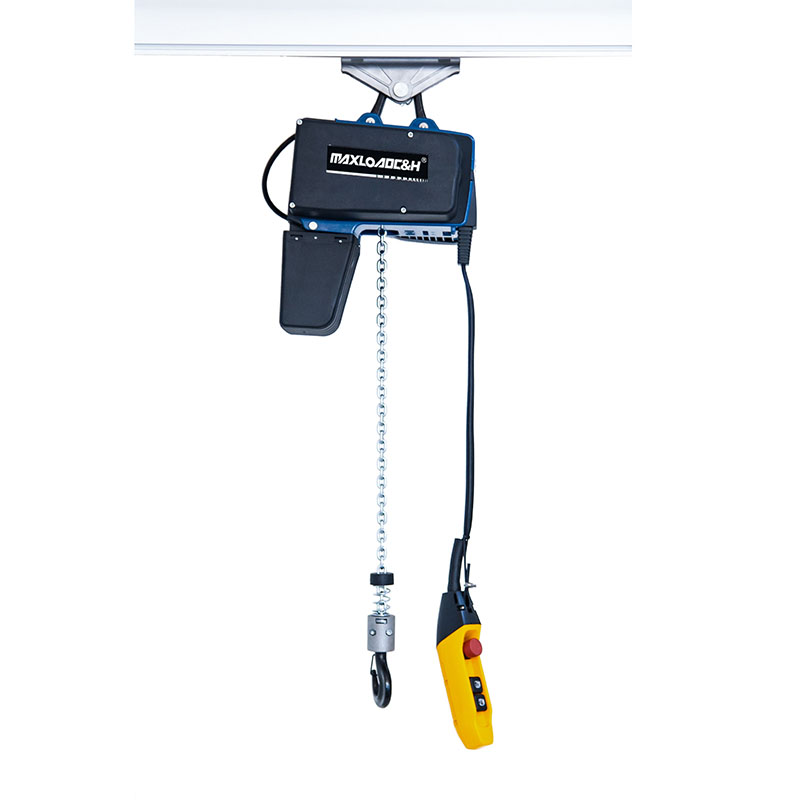
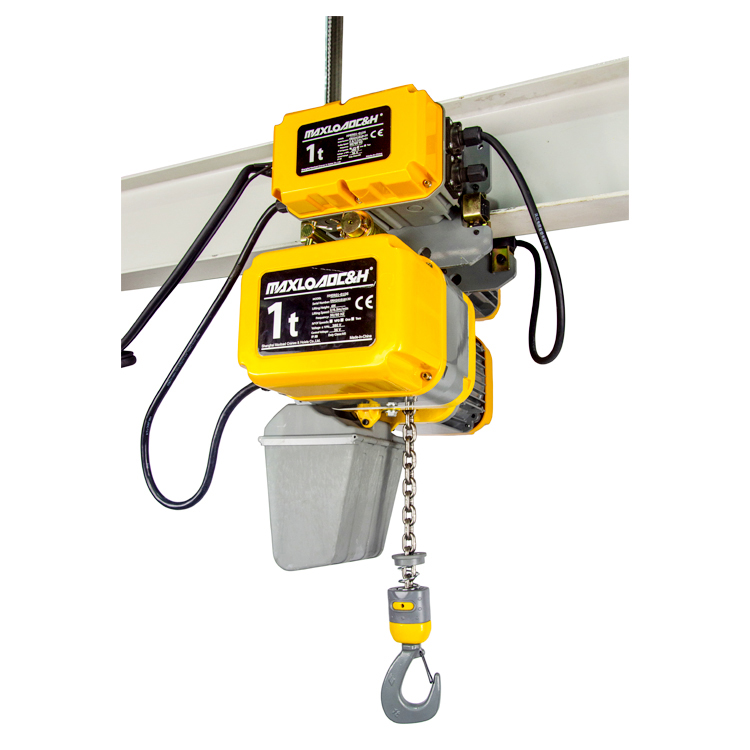
An electric hoist is a light-duty lifting device driven by an electric motor, consisting of a transmission mechanism, drum or sprocket, hook, and other core components. Based on the lifting medium, it is mainly divided into wire rope electric hoists and chain electric hoists. The former is suitable for heavy loads and long travel distances, while the latter has a more compact structure, making it ideal for confined spaces.
In engineering selection, the rated lifting capacity is the most intuitive parameter, but relying solely on this is far from sufficient. The following parameters have a decisive impact on equipment lifespan and operational safety:
Duty classification is a core indicator that integrates load spectrum coefficients and the number of working cycles, and is not directly related to rated capacity. According to the national standard GB/T 3811, duty classes range from M3 to M8: M3 is suitable for occasional use such as equipment maintenance or light-duty warehouse handling, with no more than 10 operations per day; M4 is suitable for general factory workshops, with 10 to 30 operations per day; M5–M6 are suitable for frequent lifting operations such as assembly lines and port loading/unloading, with 30 to 80 operations per day; M7–M8 are for heavy-duty applications such as metallurgy and foundries with 24/7 continuous operation. Using an M3-class device in high-frequency conditions will significantly accelerate motor overheating and component wear, potentially shortening equipment life from five years to one or two years.
Lifting speed and control method. The lifting speed range of electric hoists is typically between 0.8 and 20 m/min. Single-speed models are suitable for rough handling; two-speed models balance efficiency and positioning accuracy, making them suitable for precision parts assembly, flask closing, and similar tasks; variable-frequency stepless speed control models offer the highest positioning accuracy and are ideal for applications requiring fine inching control, such as automotive parts assembly. Additionally, the working environment determines the choice of control method: standard workshops can use pendant controls; overhead or hazardous areas should use wireless remote control; explosive atmospheres require explosion-proof electrical configurations.
Actual lifting height calculation. The effective lifting height equals the rail elevation minus the sum of the hoist’s headroom, workpiece height, and safety lower clearance. In applications with limited ceiling clearance, low-headroom hoists can be selected to maximize effective lifting height through structural optimization.
Ⅱ. Jib Cranes: Flexible Coverage of Complex Workstations
A jib crane consists of a column, a slewing boom, and an electric hoist. The column is fixed to a concrete foundation, the boom rotates around the column, and the electric hoist moves transversely along the boom track, enabling material handling in three-dimensional space. Based on structural forms, jib cranes can be divided into freestanding (pillar), portable, wall-mounted, wall-traveling, and knuckle-boom types.
A freestanding jib crane has a column diameter of only 200–500 mm but can achieve a 360-degree circular working area, making it especially suitable for workshops with dense equipment and confined spaces. Wall-mounted jib cranes are installed directly on factory columns or walls, occupying no floor space and can be arranged along assembly line directions. Knuckle-boom jib cranes can navigate around obstacles such as pipes and equipment through their multi-joint structure, enabling precise positioning in complex environments. Portable jib cranes are equipped with traveling devices, allowing flexible deployment between multiple workstations, suitable for flexible production scenarios with frequently changing stations.
Ⅲ. Collaborative Applications: Condition-Based Configuration Solutions
The combined use of electric hoists and jib cranes is essentially a systematic configuration based on specific operating conditions. Different types of working environments correspond to different selection logics.
Machining workshops. Next to CNC machines, lathes, and milling machines, freestanding jib cranes combined with chain electric hoists are the most widely used configuration. In workpiece loading and unloading operations, workers use chain hoists to transfer workpieces weighing from tens to hundreds of kilograms from logistics carts or the floor to machine tables. A case study from an automotive parts company shows that dozens of such configurations deployed on an engine cylinder block machining line, each covering 2–3 machine tools, increased production efficiency by more than 30% compared to manual handling and significantly reduced worker physical strain. During mold changeover operations, heavy-duty freestanding jib cranes combined with wire rope electric hoists enable rapid changeovers, reducing downtime.
Automotive and parts assembly lines. Assembly processes demand high positioning accuracy. Lifting of engines, transmissions, chassis frames, and other components can be achieved with wall-traveling jib cranes combined with two-speed or variable-frequency electric hoists for precise positioning, replacing traditional manual handling. In welding workshops, jib cranes can memorize lifting paths for different vehicle models, automatically adjusting boom angle and hoist position to reduce manual intervention. Knuckle-boom jib cranes are suitable for bypassing workstation obstacles to deliver components precisely to assembly positions, improving assembly accuracy and reducing part damage.
Warehousing and logistics scenarios. In sorting and packaging areas, wall-mounted jib cranes can be arranged along shelves and conveyors, occupying no floor space; freestanding jib cranes are used for medium-sized goods loading and unloading in shelf areas. An actual case shows that a logistics company covered 80% of its warehouse area with jib cranes, increasing stacking height to 5 meters and improving space utilization by about 30%.
Special condition adaptations. Food processing workshops require stainless steel jib cranes to meet cleanroom requirements for corrosion and rust resistance; chemical workshops involving flammable or explosive materials should use explosion-proof jib cranes; high-temperature conditions, such as foundries and metallurgy, require specialized models designed for high-temperature environments.
Ⅳ. Selection Recommendations
In summary, the configuration decision for electric hoists and jib cranes should follow this logic: first, determine the rated lifting capacity based on the maximum workpiece weight, reserving a 10–20% safety margin, and include the weight of auxiliary components such as slings and spreader bars; second, determine the duty class based on daily operation frequency to avoid premature equipment failure due to insufficient duty class selection; third, determine speed configuration and speed control method based on positioning accuracy requirements; finally, select the jib crane structural type and electric hoist protection grade based on workshop space conditions, assembly line layout, and environmental characteristics.
The combination of electric hoists and jib cranes has accumulated rich engineering practice data in fields such as machinery manufacturing, automotive parts, warehousing logistics, and food processing. With the penetration of IoT and intelligent control technologies, smart lifting equipment featuring remote monitoring, fault warning, and path memory functions is gradually replacing traditional solutions. Proper equipment configuration not only ensures production line cycle times and operational safety but also serves as a foundational engineering measure for optimizing material handling costs and improving overall workshop operational efficiency.
 0086 156 1824 5535
 0086 156 1824 5535