Application and Adaptation of Cranes
In modern industrial material handling systems, the selection of lifting equipment directly impacts workshop production efficiency, space utilization, and long-term operating costs. Electric hoists, overhead cranes, and KBK light suspension cranes are three common types of lifting equipment. They differ significantly in structural form, load capacity, and applicable scenarios. Understanding the respective positioning and adaptation scenarios of these three is the foundation for rational planning of workshop logistics.
Electric Hoist: The Core Actuator of Lifting Operations
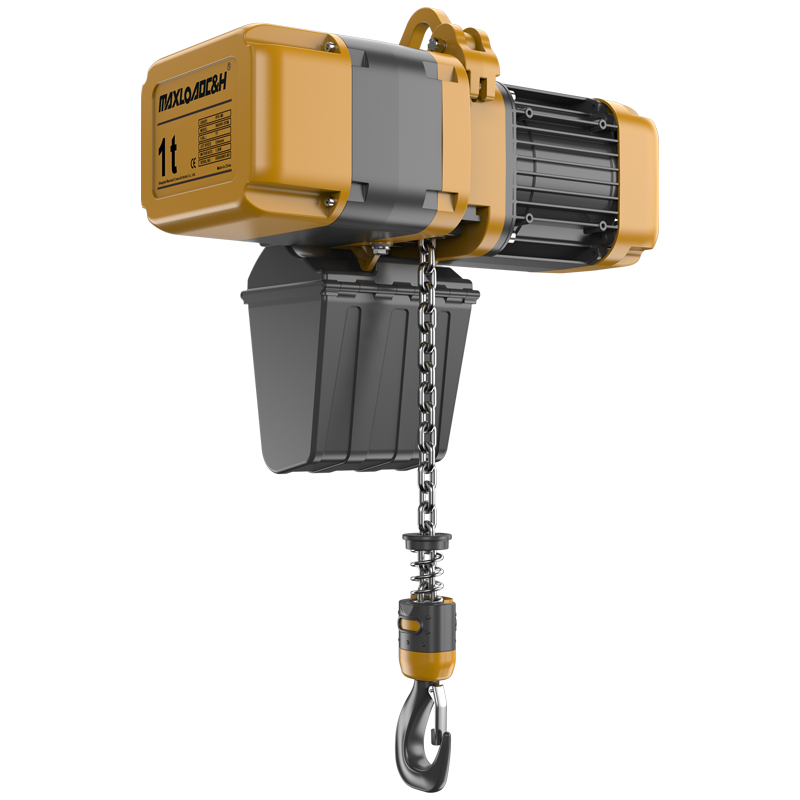
Strictly speaking, an electric hoist is not a complete crane but an independent lifting mechanism. It consists of an electric motor, reducer, braking device, and drum (or sprocket), acting as a vertical lifting." Its load capacity covers an extremely wide range. Based on the transmission medium, electric hoists are divided into wire rope electric hoists and chain electric hoists: wire rope hoists are suitable for high-tonnage, high-frequency operations with faster lifting speeds; chain hoists feature compact structure and low dead weight, making them particularly suitable for confined spaces or low-ceiling workshops.
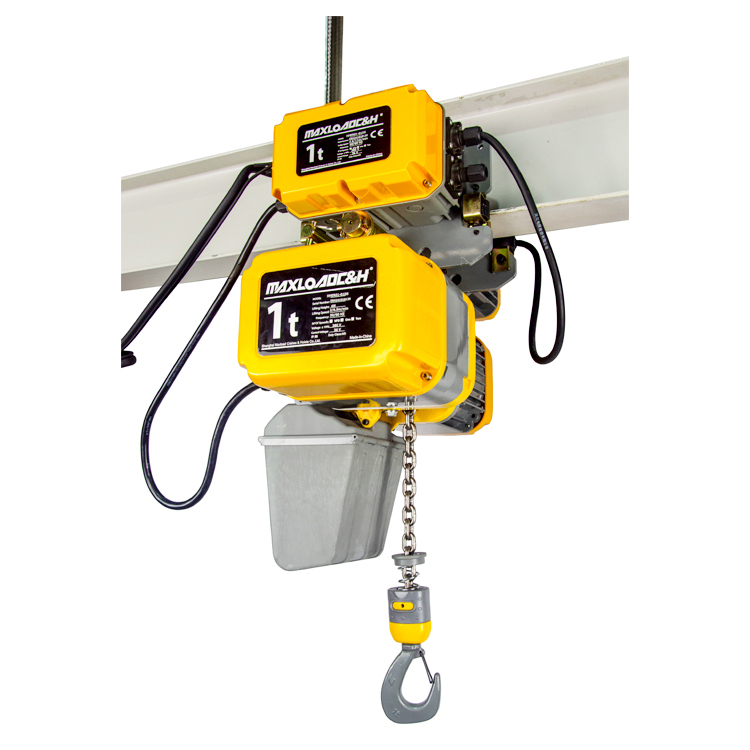
In practical applications, electric hoists are rarely used alone but rather serve as the "core actuator" mounted on various lifting equipment—installed under a single-girder crane to form a single-girder overhead crane, or suspended from a KBK track system to become a light-duty workstation handling device. In other words, the electric hoist defines "how heavy and how high it can lift," while the carrier system it attaches to determines "the range of movement." Therefore, when planning a workshop lifting solution, the electric hoist model should first be selected based on material weight and operation frequency, and then matched with a suitable load-bearing platform.
Overhead Crane: Workshop-Wide Coverage for Heavy Materials
An overhead crane consists of bridge girders, end carriages, traveling mechanisms, and a hoist (or lifting trolley). It moves longitudinally along tracks on both sides of the workshop, enabling material handling across the entire workshop area. Based on the number of girders, overhead cranes are divided into single-girder and double-girder types.
The single-girder crane has only one main girder, with the electric hoist suspended from the lower flange of the girder. It is suitable for light to medium loads and intermittent operations. Due to its simple structure, low dead weight, and lower requirements for workshop load-bearing capacity, single-girder cranes are commonly found in small to medium-sized manufacturing workshops, warehouses, and maintenance stations, with relatively economical initial investment and installation costs.
The double-girder crane features two parallel box-section main girders, with a dedicated lifting trolley running on rails laid on top of the girders. It is suitable for continuous, heavy-duty operations. The double-girder structure offers higher bending rigidity, smoother operation, and better positioning accuracy. Therefore, it is widely used in heavy industries such as steel and metallurgy, shipbuilding, heavy machinery manufacturing, as well as large logistics centers requiring high-frequency, high-tonnage lifting.
The choice between single-girder and double-girder is essentially a trade-off between "cost" and "performance." For scenarios with limited budget, light loads, and low usage frequency, a single-girder crane is sufficient. However, when heavy loads, high frequency, or high-precision lifting is required, the advantages of a double-girder crane become fully evident.
KBK Crane: A Lightweight Solution for Flexible Production Lines
The KBK crane is a modular light suspension crane system, composed of standardized track modules, suspension devices, traveling trolleys, and lifting hoists. Its core concept is to "build a crane system like building blocks"—tracks can be spliced into straight, curved, or even circular paths, allowing flexible adaptation to existing workshop layouts without extensive building modifications. The tracks are suspended directly from the workshop steel structure, occupying no floor space, making them especially suitable for workshops with dense equipment or narrow aisles.
The KBK system also offers significant advantages—according to industry data, its average annual maintenance cost is 25% to 40% lower than that of traditional overhead cranes.
Typical applications of KBK cranes are concentrated in flexible production lines in modern manufacturing: automotive parts line transfers, precision assembly of electronic components, cleanroom material handling in food and pharmaceutical industries, and goods sorting in warehousing and logistics centers. In these scenarios, material weights are low, but flow paths are complex and operation frequencies high. The lightweight, modular, and flexible layout capabilities of the KBK system match perfectly. In contrast, while traditional overhead cranes have stronger load capacities, they are cumbersome and energy-inefficient for light-load, high-frequency production line logistics.
Selection Approach: Combinational Adaptation Based on Operating Conditions
The application boundaries of the three equipment types are not completely separate; more often, they work together in a "combination" approach. A reasonable selection path typically follows these steps: First, determine the weight range and lifting frequency of the materials, then select the appropriate electric hoist model and specification. Next, determine whether the material movement range is a fixed single point or a cross-station transfer. For a fixed single point, a stationary electric hoist is sufficient. For cross-station movement, further evaluate the travel distance and load magnitude. When the load is under 3 tons, and the movement path is flexible and variable, the KBK crane is an efficient and economical solution. When the load is heavy, the span is large, and full workshop coverage is needed, the overhead crane is an irreplaceable choice.
Ultimately, the selection of lifting equipment has no absolute right or wrong—only whether it fits the specific operating conditions. The electric hoist addresses "whether it can lift," the overhead crane addresses "coverage area," and the KBK addresses "flexibility of movement." Each performs its role in different dimensions, forming the technical backbone of modern industrial material handling systems.
 0086 156 1824 5535
 0086 156 1824 5535