Analysis of the Collaborative Application in Industrial Handling
In industrial production and material handling, the selection of lifting equipment directly impacts operational efficiency, space utilization, and operational safety. As the core execution unit of light and small lifting equipment, the electric hoist, combined with the supporting structure of the jib crane, forms a classic configuration for workstation-level material handling. This combination, characterized by its flexibility, high efficiency, and cost-effectiveness, has been widely adopted in manufacturing workshops, assembly lines, warehousing, and logistics. This article analyzes this combined application from the perspectives of equipment principles, structural forms, application scenarios, selection, and maintenance.
I. Equipment Overview and Working Principles
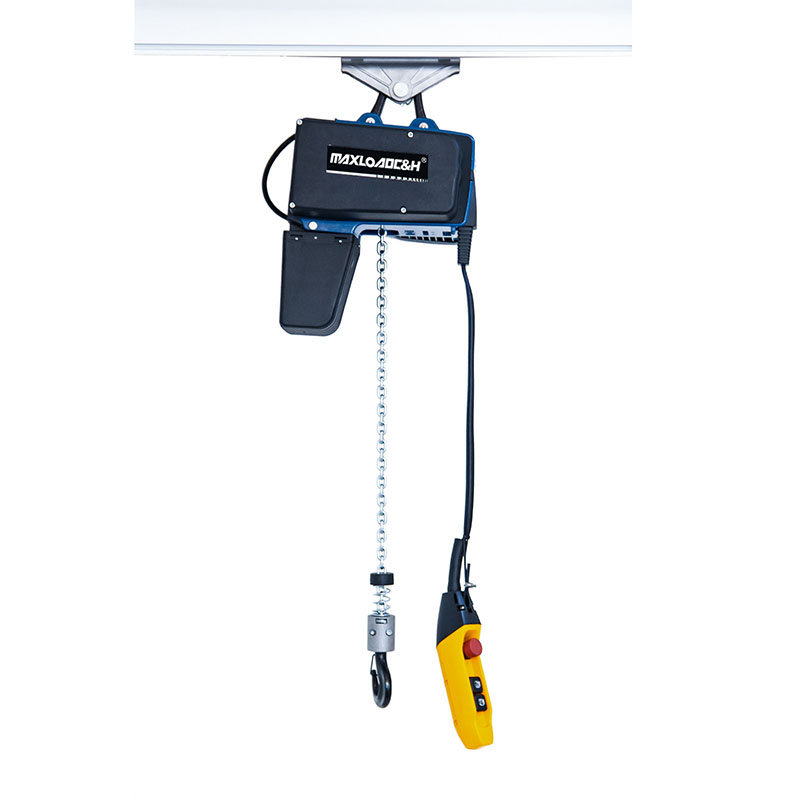
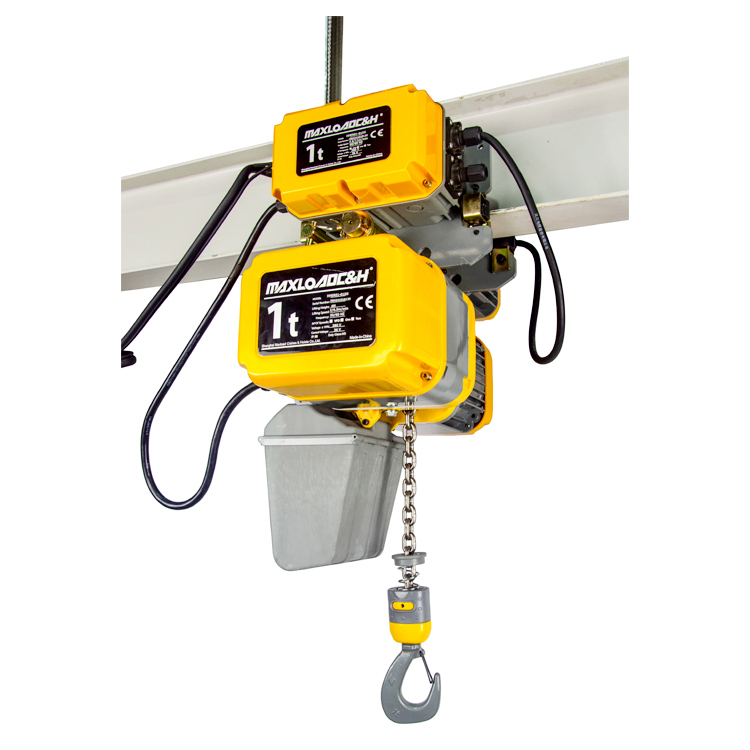
An electric hoist is a light and small lifting device powered by an electric motor, which drives a drum or sprocket through a reduction gear to lift and lower loads. Based on the load-bearing medium, it is primarily divided into wire rope electric hoists and chain electric hoists. Wire rope hoists offer a large lifting height and relatively low cost, making them common in workshops. Chain hoists have a compact structure, low self-weight, and higher precision, making them especially suitable for space-constrained or frequently moved applications. Their duty class ranges from M3 to M8, corresponding to various operating conditions from light use to continuous heavy-duty operation.
A jib crane is a type of boom crane with the jib as its main load-bearing component. It consists of a column, a rotating jib arm, a slewing drive, and an electric hoist. The lower end of the column is fixed to a concrete foundation via anchor bolts. The jib arm rotates via a cycloidal pinwheel reducer, while the electric hoist travels linearly along the jib rail to lift and move loads horizontally. When working together, they achieve flexible three-dimensional handling within the coverage radius.
II. Main Forms and Applicable Scenarios of Jib Cranes
Jib cranes come in various structural forms, with common types including column-mounted, wall-mounted, articulated jib, and mobile. Each form has different installation requirements, coverage areas, and operational flexibility.
The column-mounted jib crane has its column independently installed on a foundation, with the jib arm able to rotate around the column over a wide range (some models up to 360 degrees). The electric hoist moves along the jib rail, together covering a circular working area centered on the column. It has a strong load capacity and a large working radius, suitable for frequent lifting at independent workstations, such as in machining and automotive parts manufacturing. A disadvantage is the need for embedded anchor bolts and a solid foundation, which imposes requirements on the installation site.
The wall-mounted jib crane fixes the jib arm to a wall or load-bearing column, requiring no dedicated floor space. It is particularly suitable for arrangement along production lines for material transfer between adjacent stations. It occupies little space and has lower installation costs, but its working range is limited to the line area, making it less flexible than the column-mounted type.
The articulated jib crane adds a joint structure to the traditional jib arm, allowing multi-directional telescoping and obstacle avoidance. It can perform lifting operations in environments with dense equipment or many obstacles. It is widely used in complex conditions such as electronics assembly and precision manufacturing. However, its complex structure results in higher manufacturing costs and maintenance requirements.
The mobile jib crane achieves overall movement via a base or rails, combining the flexibility of a jib crane with the ability to quickly transfer between workstations. It is suitable for multi-station shared use or temporary lifting needs, but its load capacity and stability are relatively lower.
III. Selection Considerations for Electric Hoists and Jib Cranes
In practical applications, the selection of this combination should focus on the following key parameters:
Lifting capacity and duty class are the primary considerations. It is recommended to reserve a safety margin of 1.25 times the actual lifting weight to ensure long-term reliability.
Matching the hoist type to specific working conditions is essential. Chain hoists perform excellently for small-tonnage applications below 5 tons, offering compact structure and easy operation. For heavy loads exceeding 5 tons, wire rope hoists are preferable, as they can reach lifting capacities of several tens of tons and offer a more significant cost advantage. For duty class: light-use scenarios, such as maintenance workshops and warehouses, can choose M3–M4; medium-intensity operations like production lines and assembly workshops recommend M5; heavy-duty conditions, such as ports and metallurgy, require M6 or higher.
Environmental adaptability must not be overlooked. In humid, dusty, or explosive atmospheres, specialized models with appropriate protection ratings (IP55 or higher) or explosion-proof certification should be selected. For cold storage or low-temperature environments, the low-temperature adaptability of materials and lubricants must also be considered.
IV. Installation, Commissioning, and Daily Maintenance Points
Proper installation and maintenance are fundamental to ensuring the safe operation of the equipment. For a newly installed or overhauled electric hoist, first conduct a no-load trial run, followed by a static load test at 125% of the rated capacity (lift the load about 100 mm off the ground and hold for 10 minutes) to check all components. Subsequently, a dynamic load test should be performed, repeatedly lifting and lowering, and moving left and right with the rated load, to verify the reliability of the mechanical drive, electrical, and connecting parts.
The following points must be observed in daily use: Overloading is strictly prohibited; do not press operation buttons in opposite directions simultaneously. The flexibility and reliability of limit switches should be checked regularly. Wire rope wear and broken wires must be documented, ensuring at least two safety wraps remain on the drum. Operators should be certified, familiar with safe operating procedures, and must avoid improper practices such as pulling loads at an angle.
V. Conclusion
The combined configuration of an electric hoist and a jib crane represents a typical solution for workstation-level applications of light and small lifting equipment. It differs from the high investment and large-span coverage of large overhead cranes, as well as the inefficiency and hazards of purely manual handling. Instead, it achieves a good balance between flexibility, economy, and operational efficiency. As manufacturing evolves toward greater refinement and flexibility, this combination will continue to iterate in areas such as intelligent control and modular adaptation, providing even more efficient solutions for industrial handling.
 0086 156 1824 5535
 0086 156 1824 5535