Collaborative Application of Electric Hoists and Jib Cranes at Workstations
In the material handling system of workshops, the combination of electric hoists and jib cranes is one of the most common pairings. The former handles vertical lifting, while the latter provides horizontal slewing coverage. Together, they form a complete workstation-level lifting solution. Understanding the technical characteristics and matching logic of these two devices is of practical significance for manufacturing enterprises to rationally allocate workstation lifting resources.
I. Positioning and division of labor of the two devices
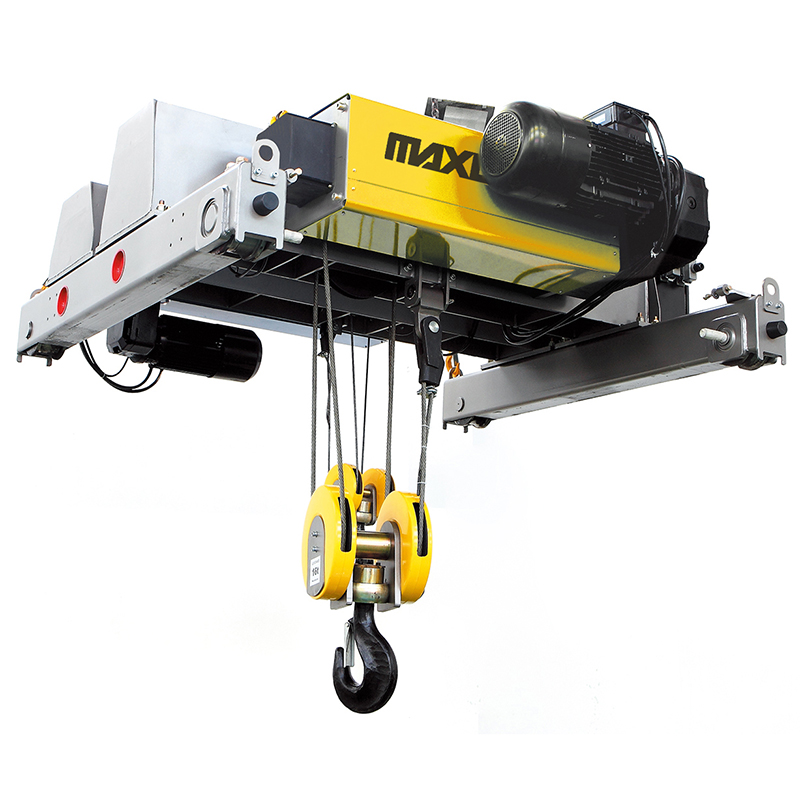
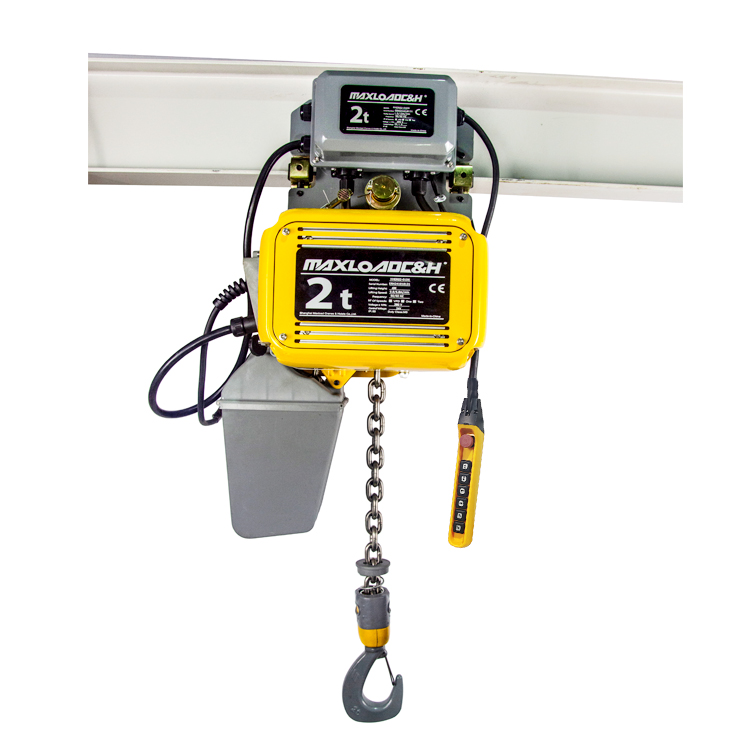
An electric hoist is a light-duty lifting device powered by an electric motor, consisting of the motor, transmission mechanism, and drum (or sprocket). According to the load-bearing medium, it is mainly divided into wire rope electric hoists and chain electric hoists. The former uses a wire rope as the transmission medium, and its drum structure offers greater extensibility in lifting height; the latter uses a chain as the medium, is more compact, and is suitable for frequent start-stop and short-stroke operations.
The duty class of electric hoists is typically M3 to M4, belonging to intermittent operation, with a rated load factor of about 25%. This means that electric hoists are not designed for long-term continuous operation. When selecting a hoist, the appropriate duty class must be matched to the actual operating frequency to avoid reduced equipment lifespan due to overuse.
A jib crane is a type of boom crane. Its structural feature is that it uses a column or wall as a support point, and the slewing motion of the jib enables horizontal movement of goods within a circular range. According to installation methods, it can be divided into column-mounted, wall-mounted, and mobile types, with slewing angles generally ranging from 180° to 360°. The lifting capacity generally covers 0.125 tons to 5 tons, making it suitable for workshop environments with high workstation density and limited operating space.
The design of jib cranes follows the industry standard JB/T 8906-2014 Jib Cranes, which specifies detailed structural forms, technical requirements, and test methods for various types of jib cranes. In selection, besides lifting capacity, the slewing radius, lifting height, and slewing angle are three key parameters that directly determine the crane’s coverage capability for workstations.
II. Typical application scenarios
Loading and unloading in machining processes
A typical condition in machining workshops is the repeated loading and unloading of workpieces between CNC machine tools, lathes, or milling machines. Workpiece weights range from tens to hundreds of kilograms. If handled entirely by manual labor, efficiency is low and there is a significant risk of injury.
In this scenario, a column-mounted jib crane combined with a chain electric hoist is a common configuration. The jib crane is usually installed next to the machine tool, covering a radius of 2 to 4 meters, and can serve 2 to 3 pieces of equipment simultaneously. The chain electric hoist, with its fast start-stop response and a chain bag that does not occupy vertical space, is particularly suitable for high-frequency loading operations. According to industry feedback, after adopting this configuration, single-workstation production efficiency can increase by more than 30%, while worker labor intensity is significantly reduced.
Precise positioning on assembly lines
In the assembly processes of core components such as engines, transmissions, and machine tool spindles, the parts are often small in size but heavy, and require high assembly precision. In this case, an articulating jib crane, with its multi-joint structure, can bypass equipment and obstacles around the workstation and smoothly deliver the component to the designated position.
The unique value of the articulating jib crane in this scenario lies in its flexible joint design, which enables effective coverage of blind spots in the work area. When paired with a two-speed electric hoist, it can switch to slow speed mode when approaching the assembly position, achieving smooth alignment and reducing the risk of part collision.
Die change and heavy part handling
Die changing is a routine operation in stamping and injection molding workshops. Dies often weigh several tons and require extremely high lifting stability and alignment accuracy. In this scenario, a heavy-duty column-mounted jib crane combined with a wire rope electric hoist is the mainstream solution. Wire rope electric hoists have advantages in matching lifting capacity with lifting height, making them suitable for heavy-load, high-stroke lifting requirements.
In the automotive manufacturing industry, die change operations in stamping workshops are particularly typical. A properly configured lifting system can reduce a single die change time from hours to less than half an hour, significantly reducing production line downtime losses.
Sorting and transfer in warehousing and logistics
In warehousing and logistics, the combination of electric hoists and jib cranes is mainly used for sorting, stacking, and loading/unloading goods. Wall-mounted jib cranes are suitable for arrangement along sorting lines without occupying floor space; column-mounted jib cranes are often used for loading/unloading medium-sized goods in shelf areas. Chain electric hoists, due to their small size and smooth operation, perform well in the precise handling of small goods.
III. Technical considerations for selection and configuration
The selection of jib cranes and electric hoists requires comprehensive consideration of three dimensions: load, workstation layout, and operating environment.
Load matching is fundamental. The rated lifting capacity of the electric hoist must be greater than the maximum weight of the materials to be lifted, while also considering safety factors. For each increase in duty class, the rated lifting capacity is reduced by 20%. Therefore, the duty class must be reasonably selected based on actual usage frequency.
Workstation suitability determines the structural form. For single-point fixed operations, a column-mounted jib crane is preferred; for assembly line operations, a wall-mounted type is preferred, as it does not occupy floor space; for workstations with many obstacles, an articulating type is preferred, using its joints to avoid equipment.
Environmental factors cannot be ignored. In clean workshops such as food and pharmaceutical industries, stainless steel jib cranes must be used to meet anti-corrosion and hygiene requirements; in chemical, painting, and other environments, the electrical parts of the electric hoist must have explosion-proof ratings.
Regarding the choice of lifting mechanism, chain electric hoists are suitable for high-frequency, short-stroke operations and have the best adaptability on jib cranes; wire rope electric hoists are suitable for heavy lifting capacity and high stroke requirements; for precision assembly scenarios, two-speed or variable-frequency electric hoists provide variable speed control that can greatly improve operational accuracy.
IV. Safety regulations and usage management
As special equipment, the use and management of electric hoists and jib cranes are strictly regulated by laws and regulations. According to the Special Equipment Safety Law of the People's Republic of China and the Safety Technical Code for Lifting Appliances (TSG 51-2023), effective from January 2024, lifting equipment must undergo regular annual inspections, and operators must hold a certificate and participate in safety training on time.
In daily use, the following points are particularly critical: before installation, a professional institution must assess the bearing capacity of the foundation to ensure that the column or wall support structure meets safety factor requirements; overloading is strictly prohibited; regularly inspect wear on key safety components such as wire ropes (or chains), hooks, and limit switches; before operation, check the brakes and limit devices; during operation, avoid oblique pulling and lifting, and never allow personnel to ride on the load.
The installation process for jib cranes also requires standardized operation: first fix the column and calibrate verticality, then install the jib and electric hoist, ensuring that the rollers fit the track without sticking, and finally assemble the slewing mechanism and check the gear meshing clearance.
V. Conclusion
The combination of electric hoists and jib cranes is essentially a workstation-based, lightweight lifting solution. With low equipment investment and flexible space adaptability, it plays an irreplaceable role in many scenarios in manufacturing workshops. From machine tool loading/unloading to assembly positioning, from die change to logistics sorting, the value of this configuration is not to replace large lifting equipment, but to fill the workstation-level lifting gap that large equipment cannot cover.
As manufacturing continues to deepen its pursuit of flexible production and lean management, workstation lifting equipment is evolving from a pure "handling tool" to a "workstation assistant". Higher positioning accuracy, more intelligent control methods, and more user-friendly operating experiences will become the main directions of technological iteration in this field. For manufacturing enterprises, scientific selection, standardized use, and regular maintenance are the long-term paths to making equipment truly serve production.
 0086 156 1824 5535
 0086 156 1824 5535