Collaborative Application Analysis in Industrial Scenarios
In the field of small to medium-sized industrial material handling, the combination of electric hoists and jib cranes is a long-proven solution. Although this combination is often regarded as "transitional" or "auxiliary" equipment in highly automated scenarios, it still undertakes a significant number of irreplaceable tasks in actual production due to its flexible spatial adaptability and stable operational performance. This article systematically reviews the application practice of this equipment combination from the perspectives of technical characteristics, typical scenarios, selection logic, and maintenance points.
I. Technical Characteristics of the Equipment Combination
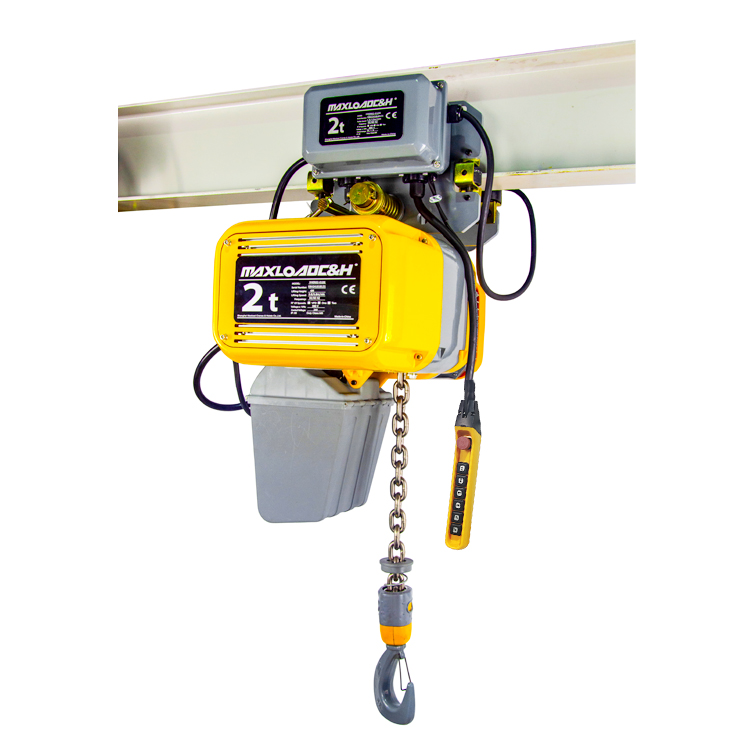
Understanding this equipment combination starts with the core functions of each component. The electric hoist handles vertical lifting tasks, while the jib crane provides horizontal coverage. Their coordination creates a two-dimensional working area pivoted on a column or wall.
The core technical parameters of the electric hoist include rated lifting capacity, lifting height, duty class, and travel speed. Duty class is a critical but often overlooked parameter – it comprehensively reflects the frequency of use and load intensity. According to the national standard GB/T 3811, duty classes range from M1 to M8. For example, M5 is suitable for processing and assembly workshops with moderate usage frequency, while M6 and above correspond to more frequent usage scenarios such as warehouses and conveyor lines. In practice, considering only tonnage without accounting for duty class can easily lead to premature failure of motors and transmission components due to overheating.
The structural classification of the jib crane determines how the equipment integrates into the workshop layout. The column-mounted (fixed post) type is the most common; it is secured to a concrete foundation via anchor bolts, with a jib that can rotate from 180 to 360 degrees, and a lifting capacity ranging from 125 kg to 5000 kg. The wall-mounted jib crane is fixed to load-bearing walls or factory columns via brackets, saving floor space, with a lifting capacity typically between 125 kg and 3000 kg. The wall-traveling type goes a step further, moving longitudinally along factory concrete columns, suitable for continuous operations across multiple workstations. Different types of jib cranes have different installation foundation requirements: the column-mounted type requires a concrete foundation of grade C25 or above with a minimum thickness of 200 mm, while the wall-mounted type requires a prior assessment of the wall's structural load-bearing capacity.
The collaborative logic of the two devices is straightforward: the jib provides coverage within its slewing radius, while the electric hoist moves linearly along the jib's track and performs lifting and lowering actions, thereby achieving material handling in three-dimensional space. This combination of "rotation + linear motion + lifting" allows the equipment to cover a considerable working area without occupying much floor space.
II. Typical Application Scenarios and Effectiveness Analysis
In actual production environments, the combination of an electric hoist and a jib crane is mainly concentrated in the following areas.
Workstation assistance in machining workshops is one of the most common applications. A column-mounted jib crane combined with a chain electric hoist installed next to CNC machine tools enables a single worker to complete workpiece loading and unloading. For example, in a small machining plant, manually handling parts weighing about 200 kg with a manual hoist required two workers and took about 15 minutes per operation; after switching to an electric jib crane, one worker could complete the same operation in 5 minutes. This efficiency improvement is not only reflected in reduced time but also in fewer part damages caused by improper handling during clamping.
Automotive manufacturing and parts assembly are other typical application areas. On automotive assembly lines, a jib crane can lift an engine from the ground to the underside of a vehicle body and rotate it to the next station for fastening, without needing to reposition the vehicle body. An automotive parts manufacturer deployed multiple column-mounted jib cranes on an engine block machining line, with each crane covering 2 to 3 machine tools, resulting in an overall production efficiency increase of over 30%. Such scenarios demand high lifting speed and positioning accuracy, often requiring variable frequency drives for micro-speed adjustment to achieve precise alignment of high-value components.
Special applications in clean environments have also increased in recent years. In cleanroom environments of pharmaceutical workshops, jib crane systems must be made of stainless steel and fully sealed to prevent particle shedding that could contaminate the environment. The transmission components of the electric hoist are enclosed to minimize lubricant volatilization, and surfaces are treated with electrolytic polishing to reduce dust accumulation. Similar designs are used in semiconductor manufacturing for handling delicate materials such as silicon wafers and lithography machine components. The common requirement in these scenarios is that the lifting equipment must not only "lift" but also "lift cleanly."
The layout advantages for small to medium-sized workshops are also noteworthy. Unlike overhead cranes that require runway beams and occupy significant overhead space, a column-mounted jib crane only needs the mounting surface of a single column, occupying less than one square meter of floor space, yet can cover a working area several meters in diameter. For workshops with limited ceiling height or existing dense equipment layouts, this "point-based arrangement" is clearly more feasible.
III. Core Considerations for Selection and Integration
When considering the two devices together, the selection decision should follow a logic from operating conditions to equipment, rather than selecting equipment first and then adapting to conditions.
First, the actual load and operation frequency of the handling task must be determined. The rated lifting capacity should have a safety margin above the maximum workpiece weight – this is a basic safety boundary. The choice of duty class should be based on the frequency of use: even if the load is small, high-frequency use must be matched with equipment of a higher duty class.
The type of jib crane should be selected according to the workshop's spatial conditions. When the floor is flat and has good load-bearing capacity, the column-mounted type is the safest choice. When the wall structure is reliable, and floor space needs to be freed up, the wall-mounted type is more suitable. For continuous operations across multiple workstations, the wall-traveling type is worth considering. The jib length and slewing angle should be determined based on the workstation layout; typical coverage radii range from 3 to 15 meters, and common slewing angles are 180 and 360 degrees.
Factors such as power supply conditions and environmental adaptability should not be overlooked. Standard models suffice for normal indoor environments, but special conditions, such as explosion-proof, corrosion-resistant, high-temperature, or low-temperature environments, require correspondingly configured specialized models. For precision assembly scenarios, variable frequency speed control provides millimeter-level positioning capability and is an important value-added selection feature.
IV. Maintenance Specifications and Safety Points
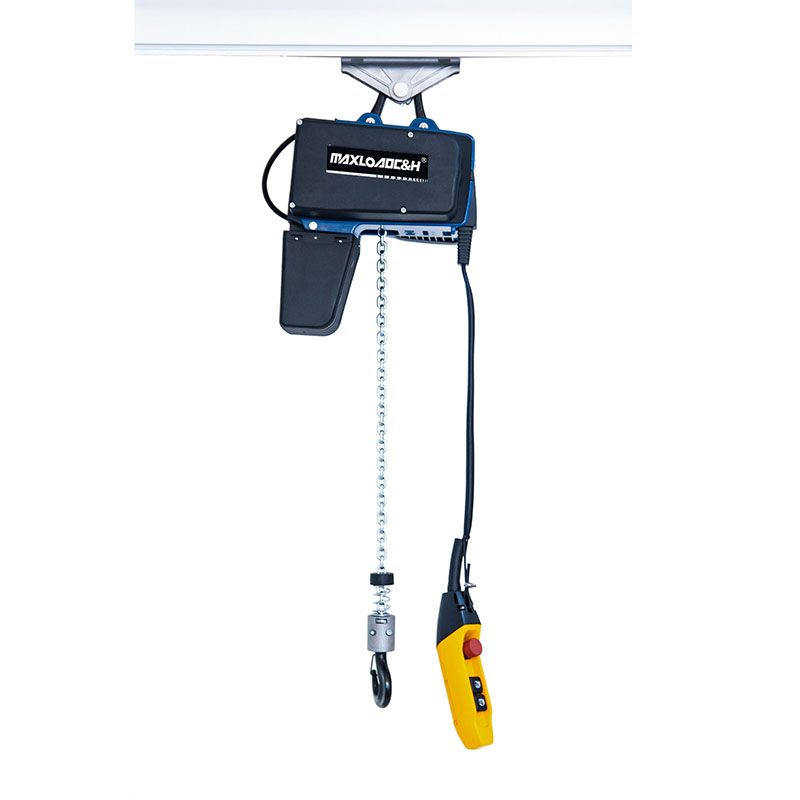
Both electric hoists and jib cranes fall under the scope of special equipment management, and their use, maintenance, and inspection are subject to clear regulations and standards. Operators should obtain appropriate qualification certificates. Equipment must undergo regular annual inspections. Wire rope wear, the lubrication status of transmission components, and the sensitivity of the braking system should be included in daily inspection routines. If overload protection or limit switch anomalies occur, the equipment should be shut down immediately for troubleshooting; operation with faults is not advisable.
In terms of safety protection, overload protection, limit switches, and emergency braking devices are the basic configuration baseline. In multi-worker collaboration areas, clear operating signals and area isolation protocols should be established to avoid safety incidents caused by communication errors.
From an industry trend perspective, light and small lifting equipment is evolving towards intelligence and green technology. Real-time condition monitoring, fault prediction, load display, and other features are already available on some high-end models. The adoption of variable frequency drives, permanent magnet synchronous motors, and other technologies is improving operational smoothness and energy efficiency. These changes mean that even traditionally "auxiliary" equipment is continuously increasing in technological content and system integration requirements.
Overall, the combination of electric hoists and jib cranes maintains sustained application vitality in various industrial scenarios due to its simple structure, flexible deployment, and controllable cost. Proper selection, standardized installation, and regular maintenance are the three fundamental pillars for ensuring long-term stable operation of the equipment, and they are also core topics worthy of continuous attention in practical applications.
 0086 156 1824 5535
 0086 156 1824 5535