From Workstation Handling to Efficient Logistics
In factory workshops and warehousing logistics sites, the efficiency and safety of material handling often determine the operational rhythm of the entire production line. The combination of an electric hoist and a jib crane—the former responsible for vertical lifting, the latter providing horizontal coverage within a slewing radius—achieves workstation-level material transfer with a compact structure. This setup has accumulated considerable practical experience in scenarios such as machine tool loading/unloading, assembly positioning, and warehouse sorting. From an engineering application perspective, this article outlines the system composition, typical application methods, selection and configuration key points, as well as installation and safety regulations for this combination.
I. System Composition and Complementary Logic
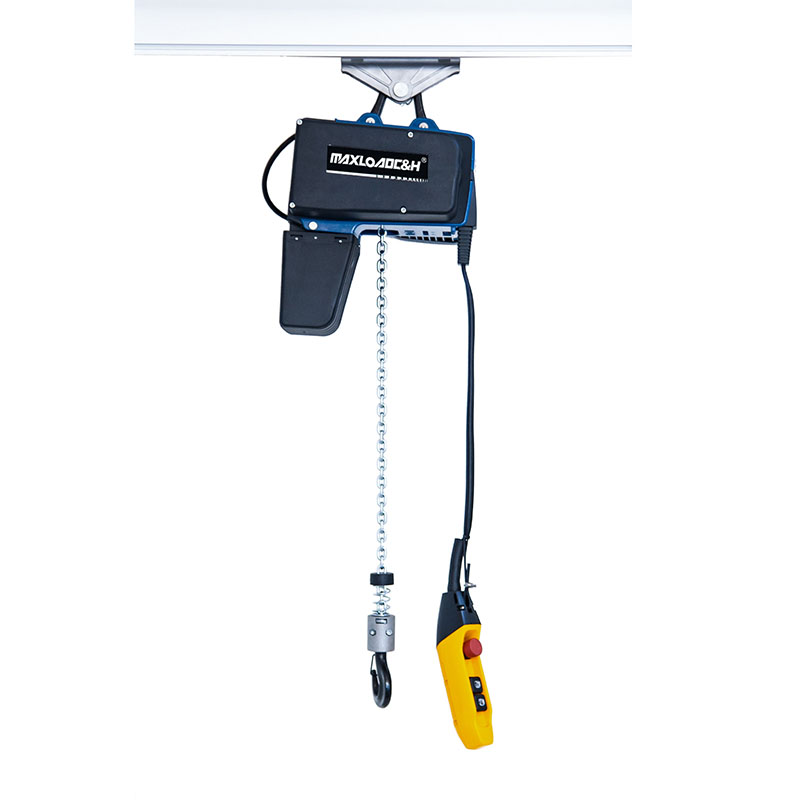
An electric hoist is a light-duty lifting device whose core function is to raise and lower loads vertically. When used alone, an electric hoist is typically fixed to a certain beam and can only cover the vertical space directly beneath it, with extremely limited horizontal movement capability. The jib crane precisely addresses this shortcoming.
A jib crane consists of four parts: a column, a jib arm, a slewing drive, and a hoisting mechanism. The jib arm can rotate within a certain angular range, typically from 270° to 360°. By mounting the electric hoist on a traveling trolley along the jib rail, a lifting system capable of three-dimensional movement within a cylindrical space is formed. The operator can control load lifting/lowering, traversing, and slewing positioning via a remote control, allowing a single person to complete the entire handling process.
From an engineering logic perspective, the electric hoist solves the problem of "vertical lifting," while the jib crane solves "horizontal coverage." Together, they fill the gap between large, cumbersome bridge cranes and inefficient manual handling.
II. Typical Application Scenarios
Workstation-level handling in manufacturing production lines
In machining workshops, jib cranes are often placed next to CNC machine tools, lathes, or milling machines, covering a radius of 2 to 4 meters, and paired with chain electric hoists for workpiece loading and unloading. For example, an automotive parts manufacturer installed dozens of column-mounted jib cranes next to its engine cylinder block machining line. Each crane covers 2 to 3 machine tools, and workers use the electric hoist for workpiece clamping, improving efficiency by about 30% compared to manual handling and significantly reducing labor intensity.
In assembly processes, articulating jib cranes can bypass obstacles at the workstation via their multi-joint structure, precisely delivering components such as engines and transmissions to the assembly position, ensuring positioning accuracy and reducing part damage.
Flexible deployment in warehousing and logistics
In warehousing scenarios, the advantage of jib cranes is that they do not rely on overhead crane rails and can be flexibly placed between racks or in sorting areas. Wall-mounted jib cranes are arranged along sorting lines without occupying floor space; column-mounted jib cranes are used for medium-sized goods shelving and retrieval. The equipment itself has a small footprint, requires no major modifications to existing workshop structures, and has a much lower investment cost than overhead bridge cranes.
Customized applications under special conditions
Food processing workshops and cleanrooms have high requirements for hygiene and corrosion resistance. Stainless steel column-mounted or wall-mounted jib cranes can be used, paired with vacuum suction tools for non-contact material handling. In chemical, pharmaceutical, and other explosive-risk areas, explosion-proof jib cranes are required, with all electrical components designed to be explosion-proof. Electronic assembly workshops, due to precision components and compact spaces, often use light-duty articulating jib cranes, and in some cases, anti-static measures are also necessary.
III. Key Points for Selection and Configuration
The core of selection is answering four questions: how heavy, how far, how frequent, and what environment.
Hoist selection
Jib cranes are mostly equipped with chain electric hoists as the lifting mechanism. Chain hoists are compact, provide smooth lifting, and are suitable for frequent operation and high-duty cycles. Wire rope electric hoists are used when the lifting capacity is larger, or the lifting height requirement is higher; they use electromagnetic braking devices for reliable braking. Slewing and horizontal movement are often manual, with electric drive only used for larger lifting capacities.
Jib type and mounting method
A single-point workstation is suitable for a column-mounted type; an assembly line suits a wall-mounted type; complex workstations with many obstacles are suitable for an articulating type. Column-mounted types have requirements for foundation bearing capacity, while wall-mounted types require evaluation of the wall structure's load-bearing capacity. Portable jib cranes are equipped with a base and casters, allowing sharing among multiple workstations, suitable for maintenance workshops or laboratories.
Coverage range and load matching
The effective jib length is typically 3 to 8 meters. Longer jib lengths impose higher requirements on structural rigidity and column foundation. Lifting capacity generally ranges from 250 kg to 5 tons. During selection, the self-weight of the electric hoist must be included in the total load.
Environmental adaptability
In humid and dusty environments, equipment with an IP55 or higher protection rating should be selected. In high-temperature or corrosive environments, an appropriate coating or material must be chosen based on the medium characteristics.
IV. Key Installation and Commissioning Steps
The installation quality of a jib crane directly affects operational stability and service life. The core process includes five stages: foundation construction, column installation, jib assembly, electric hoist mounting, and electrical commissioning.
Foundation construction is the first step and the most easily overlooked. A column-mounted jib crane requires a concrete foundation with adequate strength, generally cured for at least 28 days. Foundation dimensions and anchor bolt hole positions must match the equipment. After the column is hoisted into place, verticality must be checked with a level; deviation is generally controlled within 1‰, after which anchor bolts are tightened to the specified torque.
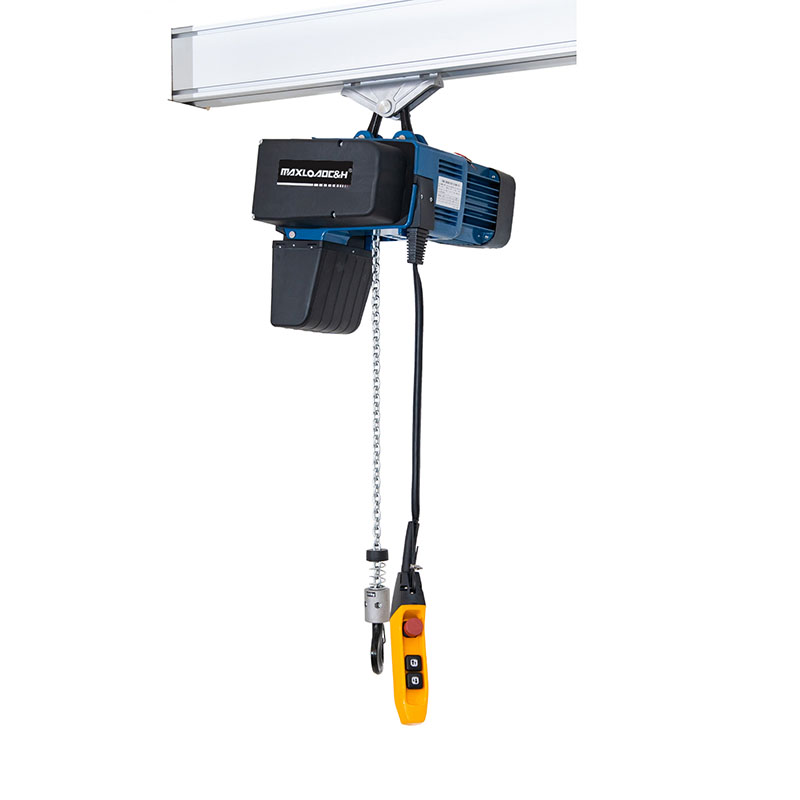
The connection between the jib and column typically uses high-strength bolts with flange connections, and anti-loosening washers should be added. After the electric hoist and traveling trolley are mounted on the lower flange of the I-beam along the jib rail, smooth travel without sticking should be checked. After electrical wiring is completed, no-load debugging and load test runs are performed to test the sensitivity of safety devices such as lifting limit switches and slewing limit switches. Only after all acceptance steps are completed can the equipment be formally put into operation.
V. Safety Regulations and Compliance Requirements
The combination of an electric hoist and a jib crane falls under the category of lifting machinery, and its design, installation, and use must comply with relevant standards and regulations.
Standards system
The technical conditions, test methods, and safety regulations for electric hoists correspond to three national standards: GB/T 10054, GB/T 10055, and GB/T 10056, respectively. The installation and acceptance of lifting equipment follow GB 50278, which explicitly covers electric hoists and jib cranes. Effective January 1, 2024, the *Safety Technical Regulations for Lifting Machinery* (TSG 51-2023) came into force, updating technical requirements for in-service lifting machinery.
Compliance points
A standalone electric hoist product is not subject to special equipment supervision, but once configured as a hoisting mechanism on a crane, the entire machine is included under special equipment management. The equipment user must conduct periodic inspections as required, and operators must receive professional training and hold certification.
Daily safety operations
Before each shift, inspect the hook, wire rope, and brake; prohibit overload lifting and skewed or diagonal pulling; when moving loads, keep them no higher than 1.5 meters off the ground; do not leave loads suspended in the air for long periods during work breaks. Regularly lubricate the slewing bearing and traveling wheels, and maintain operational logs—these are daily practices to extend equipment life.
The combination of an electric hoist and a jib crane is essentially a "workstation-level lifting solution"—not pursuing large-span coverage, but precisely addressing the handling needs of a specific workstation or production line. From machine-side loading/unloading to rack stacking in warehouses, from precision component assembly to rapid die changing, this system provides a cost-effective and flexibly deployable handling support for workshops and warehouses. Prudence in selection, standardization in installation, and compliance in use—these three are indispensable and together form the foundation for safe and efficient equipment operation.
 0086 156 1824 5535
 0086 156 1824 5535