From Hoist to Travel Platform: An Engineering Analysis
In industrial lifting systems, an often overlooked fact is that true handling efficiency depends more on the synergy between the hoist and the travel platform than on the specifications of a single device. The electric hoist serves as the lifting core, while the overhead crane and KBK act as travel carriers. These three elements form different dimensional combinations in engineering practice. Understanding the underlying logic of these combinations is a prerequisite for making sound selections.
Electric Hoist: The Lifting Core of the Lifting System
The electric hoist, composed of an electric motor, transmission mechanism, drum or chain wheel, is the most basic lifting unit in various cranes. Based on the transmission medium, it is mainly divided into wire rope electric hoists and chain electric hoists. Wire rope electric hoists, due to their compact structure and economical cost, are widely used in small and medium-sized cranes. Chain electric hoists, with their modular design and smaller footprint, offer greater advantages in KBK light rail systems and precision assembly scenarios.
The selection of an electric hoist should not focus solely on the rated lifting capacity. The duty class is a hidden parameter that directly determines the equipment's lifespan. For the same 1-ton capacity, an M3 class hoist intended for occasional maintenance and an M5 class hoist for high-frequency production line operations have completely different internal structural designs for load bearing. Using a light-duty hoist in heavy-duty conditions almost inevitably leads to motor overheating and accelerated wear of components. Additionally, the choice of lifting speed type is crucial: coarse handling suits single-speed configurations, while scenarios requiring precise positioning favor two-speed or variable frequency drive (VFD) solutions.
Overhead Crane: A Travel Platform for Large Span and Heavy Loads
The overhead crane, often referred to in engineering practice as a bridge crane, achieves large-area coverage through a bridge that runs on rails mounted on both sides of a workshop. The electric hoist is mounted on the crab (trolley) of the crane, moving transversely along the direction of the main girder, while the bridge itself moves longitudinally along the workshop. The superposition of these two movements enables lifting coverage of any position within the workshop.
This combination is characterized by a large coverage area and high load capacity, making it especially suitable for handling large workpieces, installing heavy equipment, and loading/unloading in container yards. Taking the example of a wire rope electric hoist paired with an overhead crane, the hoist provides precise lifting control, while the crane's rail system ensures large-area horizontal movement. Together, they efficiently complete the entire process of "lifting – traversing – positioning".
However, overhead cranes also have limitations. The equipment itself is heavy, imposing specific load-bearing requirements on the factory building. Installation typically involves complex civil works and rail laying, resulting in a long construction period, and once the production line layout is finalized, adjustments are difficult.
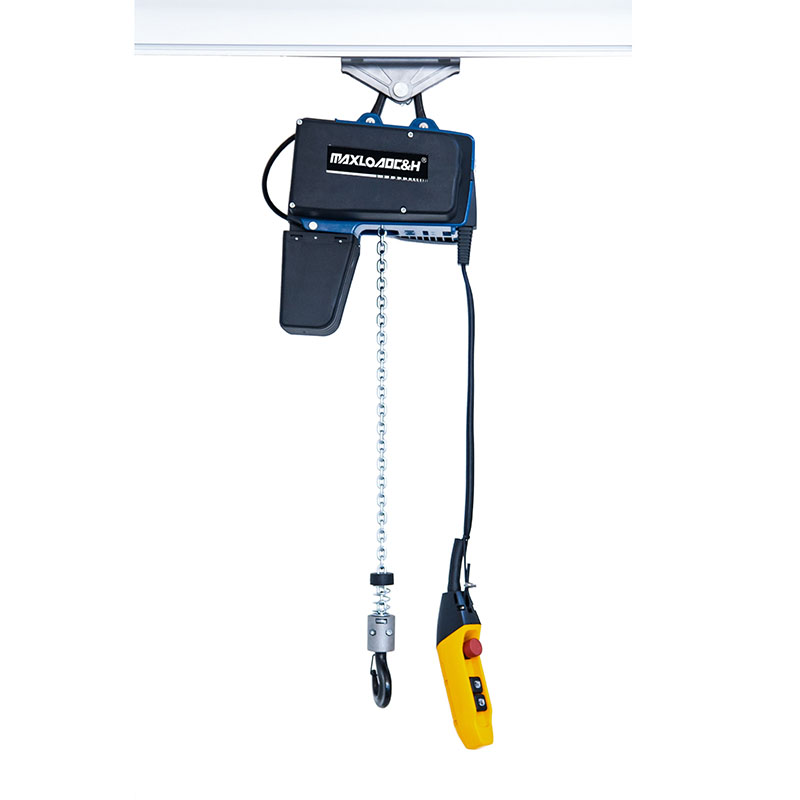
KBK Crane: A Typical Representative of Modular Lightweight Travel Platforms
The KBK crane is fundamentally different from the overhead crane in design philosophy. Its core lies in the modular architecture – rails, suspension units, traveling trolleys, electric hoists, etc., are all standardized components that can be freely assembled according to actual needs, like industrial building blocks, to quickly construct lifting systems adapted to different scenarios.
Based on rail type, KBK systems can be divided into flexible rail and rigid rail types. Flexible KBK uses Ω-shaped cold-rolled steel rails, offering low self-weight, high flexibility, and expandability. It can be installed independently or combined with the factory's steel structure, making it very suitable for multi-station material handling in small to medium load environments. Rigid KBK uses C-shaped steel rails, providing higher load capacity and positioning accuracy, suitable for precision operations with strict requirements for smooth travel.
The core advantage of KBK lies in its "flexible adaptability". The rails can be joined into straight lines, curves, branch tracks, or even circular systems, bypassing obstacles in the workshop to achieve material flow in complex spaces. In workshops with limited ceiling height, a low-headroom solution can be adopted, combined with a flat-profile electric hoist, saving 200 to 350 millimeters of vertical space compared to conventional configurations. When production needs change, the KBK system can be supplemented with modules or reconfigured, eliminating the need to replace the entire equipment like a traditional overhead crane. After introducing an electric KBK system, a certain auto parts manufacturer reduced single-station lifting time from 11 seconds to 7.5 seconds, achieving a production cycle stability rate of over 98%.
Three Matching Modes: Rational Selection Based on Operating Conditions
In practical engineering applications, the matching of electric hoists with overhead cranes and KBK can be roughly divided into the following three modes, each with its applicable scenarios.
Mode 1: Electric Hoist + Overhead Crane
Suitable for heavy-duty lifting scenarios with large spans and heavy loads, such as steel warehousing, container yards, and heavy machinery assembly. The crane's long-travel mechanism covers the longitudinal movement of the workshop, while the electric hoist moves transversely along the main girder, achieving full-coverage operation. The drawback of this combination is its lack of flexibility; production line adjustments incur high modification costs.
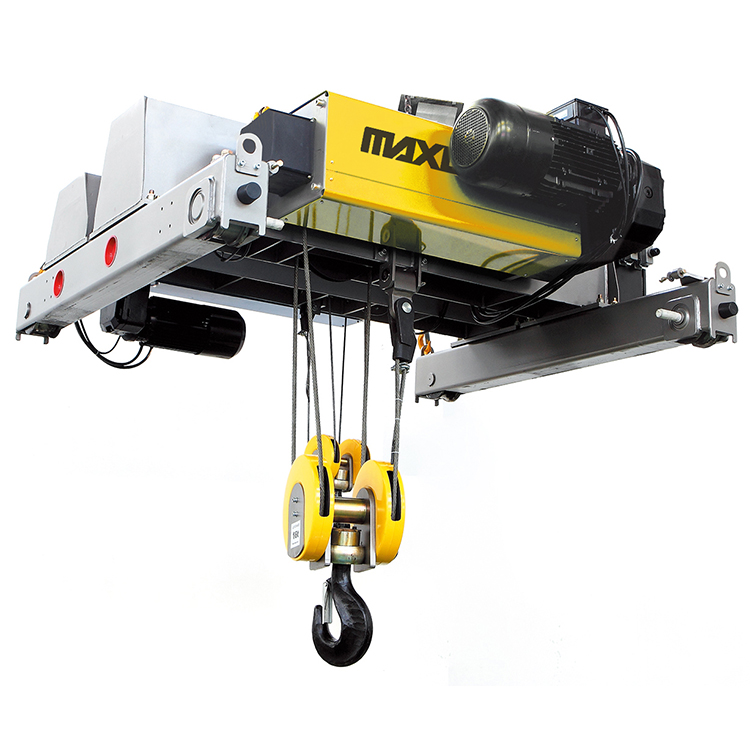
Mode 2: Electric Hoist + KBK Rail System
Suitable for multi-station material handling in small to medium load environments, such as electronic assembly lines, auto parts workshops, and material transfer in food processing lines. KBK rails are directly suspended from the roof steel beams, occupying no floor space, and the modular design allows a quick response to production line layout changes. In practice, chain electric hoists are more common due to their compact structure and ease of integration with KBK trolleys.
Mode 3: Customized Combinations for Special Operating Conditions
For specific industry requirements, the system configuration needs further customization. For example, in explosion-proof environments, electric hoists and rail components with ExdⅡBT4 (or higher) certification are required. Clean rooms may use aluminum alloy rails with stainless steel hoists to meet hygiene standards. High-precision assembly scenarios favor VFD-controlled electric hoists paired with rigid KBK rails to ensure positioning accuracy.
Conclusion
The electric hoist determines "how to lift", while the overhead crane and KBK determine "within what range to move". The degree of matching between them directly affects the operating efficiency, safety, and long-term operating costs of the entire lifting system. In practical selection, rather than focusing solely on the specifications of individual equipment, it is better to comprehensively evaluate dimensions such as workshop conditions, operation frequency, material characteristics, and production line flexibility. There is no absolute superiority or inferiority of equipment – only the degree of fit with the operating conditions.
 0086 156 1824 5535
 0086 156 1824 5535