Synergistic Advantages and Implementation Details of a Unified Solution
In manufacturing workshops and warehousing logistics, material-handling efficiency is often the invisible bottleneck that dictates the production line's rhythm. An electric hoist itself is merely a lifting mechanism; it requires a runway system to complete the combined action of "lifting plus horizontal travel." The KBK modular suspension crane provides precisely this runway operating system—it is composed of suspension devices, standard straight track sections, switches, traveling trolleys, mobile power supply units, and control devices. Suspended directly from the factory ceiling or roof beams, it enables the aerial transport of materials. When an electric hoist is mounted on this modular runway, the two are no longer simply a "hoist plus a track" but a truly complete, lightweight material-handling solution. This article discusses the engineering logic of this combination in practice from four perspectives: solution value, typical scenarios, key selection points, and installation standards.
Ⅰ. Why This Combined Solution Deserves Attention
While traditional bridge cranes are irreplaceable in heavy industrial settings, they often prove excessive in lightweight, high-frequency, or space-constrained environments—bulky, difficult to modify, and costly to invest in. The fundamental advantage of the KBK system lies in "trading modularity for flexibility." The runway can be spliced, extended, or even reconfigured as needed, while the tonnage and speed of the electric hoist can be independently selected. The entire handling line can be customized to the workshop layout, almost like building blocks, rather than forcing the workshop to accommodate the equipment.
Market data shows that this flexibility is increasingly recognized by enterprises, reflecting that lightweight, customizable handling solutions are becoming the mainstream choice. The driving logic is simple: production line iteration cycles are getting shorter. A handling route laid out today may need adjustment two years from now. Modular equipment can be disassembled and reassembled without starting from scratch.
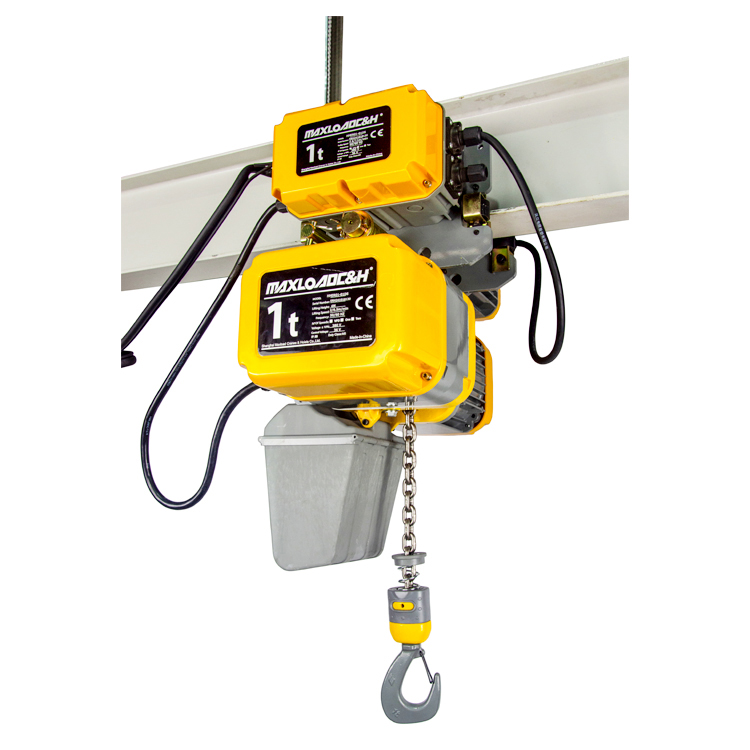
Ⅱ. Actual Performance in Typical Application Scenarios
The following excerpts from several industry cases illustrate the engineering value of this system in different types of workshops.
Printing and Coil Material Handling Scenario. A printing enterprise needed to handle coiled steel strips weighing between 300 and 800 kilograms daily, requiring stable lifting and precise positioning onto the feeding device. The project adopted a rigid track paired with an electric chain hoist. The track was suspended from the workshop’s steel structure, covering the entire storage and feeding area with a main track and auxiliary track arrangement, leaving the floor aisles completely unobstructed. After commissioning, a single operator could complete all lifting tasks, increasing efficiency by over 50% compared to the previous manual handling method.
Flexible Adaptation in the Automotive Manufacturing Sector. In new energy vehicle assembly, model update cycles have shortened from the traditional 5-7 years to 2-3 years, requiring production line layouts with rapid changeover capability. The modular track structure of the KBK system offers a significant advantage here: when workstation positions are adjusted, the track orientation can be reconfigured simply by unbolting and reassembling. A single system can adapt to multi-model mixed-line production, significantly reducing the downtime required for line modifications.
Low Headroom Renovation in Old Factory Buildings. This is a very common and challenging scenario in engineering practice. When the clear height of a workshop is less than 5 meters, the total occupied height of a standard suspension fitting, I-beam track, and ordinary electric hoist often reaches 600 to 800 millimeters. This results in severely insufficient hook lift height and even interference with overhead pipelines. Adopting a low-headroom solution—replacing standard I-beams with cold-formed steel tracks and standard chain hoists with flat, low-headroom electric hoists—can free up 200 to 350 millimeters of vertical space. This allows a hook lift height of over 2.2 meters in a building with a 4-meter floor height, increasing vertical space utilization by more than 30%.
Ⅲ. Key Parameters in Selection: Details That Are Easily Overlooked
In actual selection, after determining the lifting capacity, several parameters still require close attention, rather than simply placing an order based on tonnage.
Duty Classification. This is a frequently overlooked selection parameter. The duty classification reflects the equipment’s usage frequency and load spectrum duration and is not directly linked to the rated capacity. If a lower duty classification is selected for a high-frequency application, motor overheating and accelerated component wear are almost inevitable, potentially shortening the equipment's actual lifespan from an expected five years to just one or two.
Lifting Speed and Control Method. Single-speed hoists are simple in structure and low in cost, suitable for rough handling tasks without precise positioning requirements. However, for workstations demanding accurate positioning—such as sandbox mold closing or precision component assembly—dual-speed configurations or variable frequency drives are the rational choice. The slow-speed mode allows the operator to achieve micro-adjustment positioning as the load approaches the target. Regarding control methods, a pendant pushbutton station is the standard configuration, but in large-span workshops or areas with safety concerns, wireless remote control allows the operator to stay away from the lifting zone, significantly improving both safety and flexibility.
Low Headroom Requirements. If the workshop floor height itself is limited, it is necessary to clarify at the design stage whether a low-headroom configuration is required. Standard solutions and low-headroom solutions differ in the occupied height of suspension fittings, track type, and electric hoist selection. Once the track is already installed, changing the plan will incur significant rework costs.
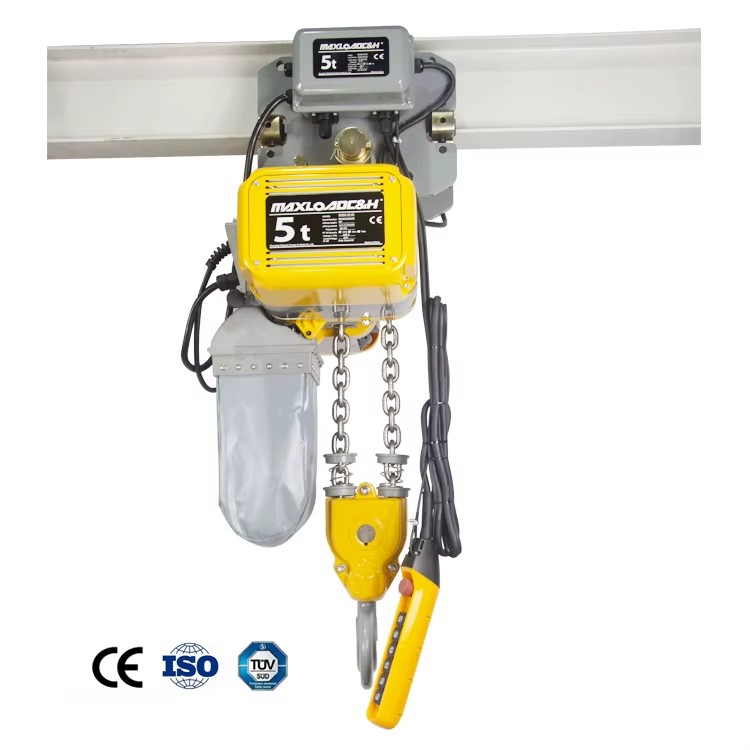
Ⅳ. Installation Process and Compliance Essentials
The combined installation of an electric hoist and KBK track must strictly follow relevant national standards and technical specifications, including the "Design Rules for Cranes" (GB/T 3811) and "Safety Rules for Lifting Appliances" (GB/T 6067.1). Installation quality directly impacts the long-term smoothness and safety of equipment operation.
A site survey must be conducted before installation: confirming clear dimensions, runway beam load-bearing capacity, power supply conditions, and whether the grounding resistance meets standards, while also verifying that track straightness and levelness deviations meet requirements. Track installation is the core link for accuracy control: levelness deviation must be controlled within 1/1000, and an expansion gap of 2 to 3 millimeters must be reserved at joints to accommodate thermal expansion and contraction. Critical connections must use high-strength bolts of grade 8.8 or higher and be tightened strictly according to the preload torque specifications.
After installation, no-load, rated load, and 1.1 times dynamic load test runs must be completed sequentially, and the lift height limiter, travel limit switches, and interlocking mechanisms must be verified one by one. If the trolley jams at track joints or the load swings noticeably during operation, this is usually related to an excessive height difference at the track joint or deviation in the verticality of the suspension point, requiring adjustment of the connection plate bolts and correction of the suspension rod.
Ⅴ. Several Noteworthy Trends
From an industry trends perspective, this combined solution is evolving in two directions. The first is the substitution of traditional steel rails with lightweight materials; high-strength aluminum alloy tracks have a dead weight of only 30% to 50% of traditional steel rails, reducing requirements for the building's load-bearing structure and decreasing operational energy consumption. The second is the integration of intelligent functions, where the addition of sensors enables real-time monitoring of equipment operating status and load data, providing a data foundation for predictive maintenance.
Ultimately, the widespread use of the electric hoist and KBK track combination is not due to any single outstanding parameter, but because it offers a logical engineering rationale—there is no need to over-engineer the handling process, nor to incur high modification costs when adjusting production lines. A properly designed KBK and electric hoist system can achieve reliable material handling coverage in workshops of various sizes with minimal space investment and cost. For enterprises concerned with workshop handling efficiency, understanding the selection logic, installation standards, and applicable scenarios of this solution is more important than memorizing any product parameter.
 0086 156 1824 5535
 0086 156 1824 5535