Skill Above the Rails: Electric Hoists and KBK Cranes
In the field of material handling, the combination of an electric hoist and a KBK modular crane is almost the most common configuration. Yet, precisely because it is so common, the technical details tend to be overlooked. During selection, many users place all their attention on two obvious parameters—lifting capacity and span. Only after the equipment is put into operation do they notice jerky movement, inaccurate positioning, and accelerated track wear. When they trace the problem back, they discover that the issue lies in the parameter coupling between the hoist and the track system—these two cannot simply be assembled and expected to work in harmony.
Ⅰ. The Hoist Is Not a Supporting Role: From "How Big" to "How It Runs"
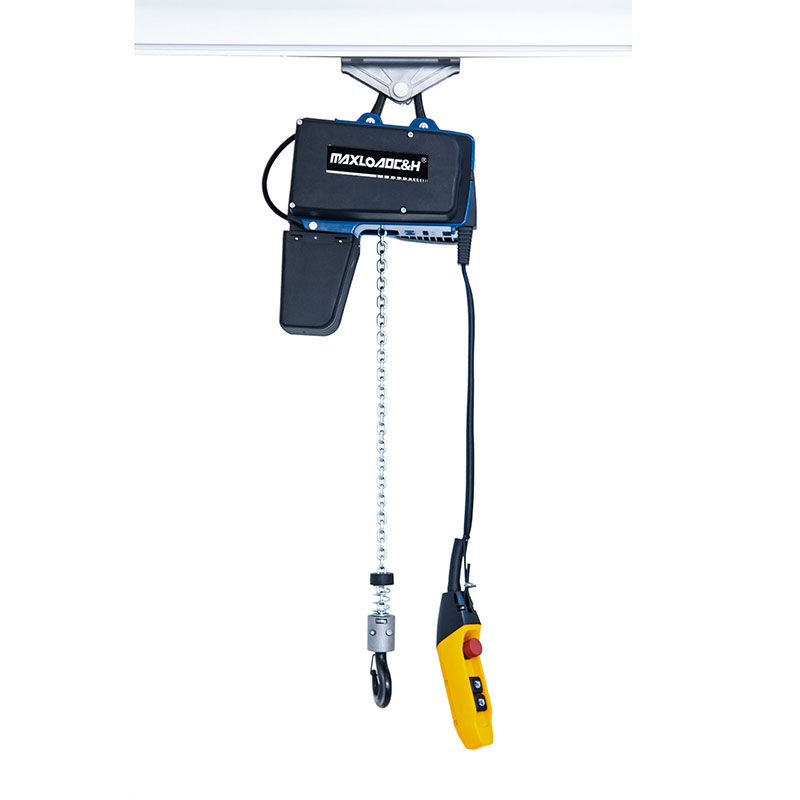
In the design logic of a KBK system, the electric hoist handles vertical lifting, while the travel trolley is responsible for horizontal movement. The motions of the two are not entirely decoupled. The hoist's lifting speed, starting and braking characteristics, and even its own physical height all map onto the operating quality of the entire system.
The True Meaning of the Work Duty Rating. Most conventional electric hoists on the domestic market fall within the M3 to M4 work duty range, with some reinforced designs capable of covering M5 or even M6. The work duty rating is not equivalent to a "quality grade"; rather, it reflects the combined utilization of the mechanism and the load condition. M3 is suitable for infrequent, light-duty operations. If the production line has a tight cycle time and the average daily lifting frequency exceeds a hundred times, choosing an M3 hoist—even if the nominal capacity complies—will result in noticeably accelerated brake wear and motor temperature rise. Therefore, when configuring a KBK system, the hoist's work duty rating should be unified with that of the track system to avoid a mismatch where "the track can withstand it, but the hoist cannot cope."
Speed Matching Holds Greater Value Than Merely Pursuing High Speed. The hoist’s lifting speed directly affects the cycle time of individual operations, but faster is not always better. In scenarios involving precision assembly or tasks requiring high positional accuracy, an excessively fast single-speed lift actually increases the difficulty of maneuvering. The proven practice in the industry is to use a two-speed or variable frequency drive (VFD) solution; a VFD solution can achieve stepless speed regulation. In a KBK system, the hoist's capability for slow-speed positioning often determines the actual production efficiency more than its maximum lifting speed, because the bottleneck affecting the cycle time is usually not the lifting phase, but the precise positioning at the end of the lowering phase.
Headroom Occupancy Directly Affects System Applicability. The physical height of the hoist determines the vertical space occupied by the entire suspended system. This is not simply a matter of “choosing a smaller model”; the geometric dimensions of the hoist must be factored into the headroom calculation at the design stage.
Ⅱ. The Track Is Not a Runway: The Logical Chain of Deflection, Rigidity, and Running Quality
Many selection manuals depict the KBK track with great simplicity, but problems that arise during actual operation are frequently rooted in the matching of the track system’s stiffness with the dynamic behavior of the hoist.
The Engineering Constraint of Deflection Limits. Every track undergoes downward deflection when loaded; the key difference lies in whether the deformation is within a safe range. According to current standards, the deflection limit for flexible KBK track is typically 1/500 of the span, while for rigid track it can be controlled within 1/1000. This difference manifests very concretely in practice: when the hoist trolley runs on a track segment with significant deflection, it is effectively climbing a slightly sunken slope. This not only increases travel resistance but also creates a "coasting" effect—accelerating downhill into the sag and decelerating as it climbs uphill—which impairs the positioning accuracy of the lifting point. If the deflection exceeds the limit, the trolley will exhibit noticeable climbing and jamming, potentially even jeopardizing operational safety in severe cases.
The Selection Criteria Between Rigidity and Flexibility. Choosing between a rigid and a flexible KBK system is essentially a trade-off between “handling flexibility” and “running rigidity.” Flexible systems use universal swivel joints, allowing the track path to be flexibly arranged through curves, switches, and loop layouts, typically achieving positioning accuracy within ±5 mm. Rigid systems, on the other hand, employ rigid bolted connections to form a closed framework structure, achieving an accuracy level of within ±2 mm. For production lines requiring multi-station switching and meandering paths, the flexibility of a flexible system is a hard necessity. However, for large-span, heavy-duty applications—scenarios with spans over 6 meters and loads exceeding 2 tonnes—a rigid system is the more rational choice.
The Micro-Interference Between Track Joints and Electric Hoist Travel. This is a detail that is easily overlooked: KBK track is assembled from multiple standard sections using bolts, and the evenness of the joints directly affects the smoothness of the hoist trolley’s travel. The industry standard requires that the height difference at joints not exceed 0.5 mm and the vertical deviation of suspension points not exceed 3 mm/m. These seemingly stringent dimensional controls are exactly the basis for ensuring that the clearance between the hoist’s running wheels and the track remains uniform, thereby reducing noise and wear.
Ⅲ. Let the Parameters Talk:
Key Design Points That Cannot Be Ignored During Selection
If the electric hoist and the KBK track are not examined within the same framework of parameters, the selection process tends to fall into a situation where each component is considered in isolation. The following three points are critical areas worth investing extra time in at the planning stage.
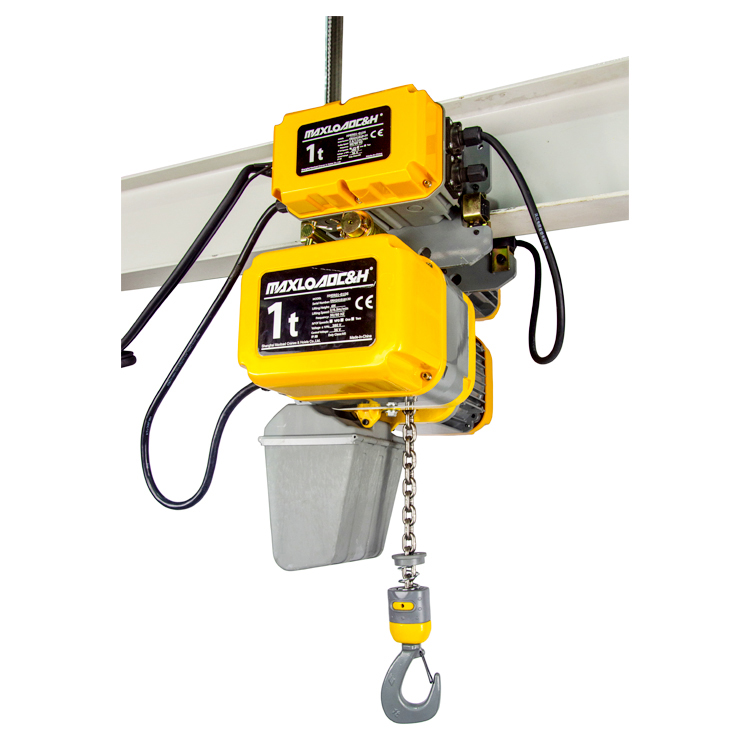
Integrated Consideration of Power Supply and Track Structure. The mobile power supply for an electric hoist usually relies on conductor bars or a festoon cable. The KBK track itself can integrate the conductor bar internally, simplifying wiring and aesthetics, but this needs to be determined at the track selection stage. If the hoist is selected first and the power supply solution is considered later, an externally mounted festoon cable is often the only option. This not only requires extra installation space but also allows the swinging motion of the cable to cause friction with the track system during operation. The decision to install the conductor bar inside the track profile is one that should be finalized at the very beginning of the project design.
The Requirements That Operating Modes Place on System Capability. An electric hoist and KBK system can be configured for manual, semi-automatic, or fully automatic operation. This is a significant differentiating factor on high-frequency handling lines. In automated scenarios, the host PLC needs to coordinate the hoist's lifting actions and the trolley's travel logic simultaneously, making variable frequency control a necessary condition for harmonizing the motions of both.
How Installation Conditions Define Solution Boundaries. The structural form of the plant building determines the suspension method for the KBK system. The load-bearing capacity of the roof steel beams, the layout flexibility of suspension points, and the distribution of overhead pipelines and cable trays along the ceiling—all these factors will, in turn, constrain the hoist selection. For instance, in an old plant with dense overhead obstacles, the suspension point spacing may need to be shortened to 1.2–1.5 meters, and the track must be spliced in segments. In such cases, the hoist's physical dimensions and dead weight must be strictly controlled, as it will further aggravate the load on the suspension system.
Conclusion
The pairing of an electric hoist and a KBK crane seems simple—one is responsible for lifting, the other for traveling, and they just need to be assembled to work. However, whether they truly run smoothly depends not on the independent qualification of each parameter, but on the deep coupling between the two. The hoist’s operating characteristics affect the stress state of the track, while the track’s rigidity and routing, in turn, constrain the movement quality of the hoist. When designing a production line and selecting equipment, considering both in the same drawing, from a holistic perspective, is the correct path from merely “functional” to genuinely “efficient.
 0086 156 1824 5535
 0086 156 1824 5535