How to Choose Lifting Equipment Based on Working Conditions
When you need to add a lifting device to a workshop or outdoor station, flipping through selection manuals often leaves you hesitating among three types: electric chain hoists, wire rope electric hoists, and intelligent lift assists. All can lift loads, but under different working environments, their pros and cons become dramatically amplified. You might end up with chain jamming, wire rope corrosion, or sensor false alarms within three months of use. The essence of equipment selection is to pick out the most demanding conditions of your application and see which option can still "hold up." Below, we break down five dimensions to help you make a professional judgment.
Ⅰ. Load Nature and Duty Cycle – How Long the Frame Can Last
Many selection errors stem from not understanding the huge difference between "occasional lifting" and "continuous handling." The design basis for lifting equipment is the work class, not just the lifting capacity. Electric chain hoists are typically used for light to medium duty cycles, with common loads ranging from 125 kg to 5 tons. If you only do tooling repair, workpiece changes, or occasional assembly – dozens of lifts per day – a chain hoist is compact, economical, and perfectly adequate. But if you need uninterrupted handling for eight hours a day – e.g., sand core lifting in a foundry or steel bar feeding in a warehouse – this medium‑heavy duty cycle will quickly cause chain elongation and sprocket wear.
Wire rope electric hoists are built for high duty cycles, typically covering class M4 to M7, with heavy‑duty models reaching over ten tons. In steel processing, heavy truck assembly, freight yards – anywhere you have shift work and frequent inching – the fatigue life of wire rope and the heat dissipation of the drum structure give a clear advantage. If you need several hundred lifts per day and the load is above 5 tons, you hardly need to hesitate – a wire rope hoist is the only choice.
Intelligent lift assists are a special category: they generally handle loads below 2 tons, but can withstand extremely high repetition rates. Because they use servo drives and control algorithms, they avoid the frequent contactor engagement concerns of traditional hoists, making them suitable for scenarios requiring multiple picks per minute and precise assembly. In other words, load weight is not the differentiator – work rhythm and precision requirements are.
Ⅱ. Environment, Climate, and Protection – Whether It Can Survive
Clean rooms, food workshops, seaside outdoor sites, foundry dust, acid fog corrosion – these environments will directly eliminate unsuitable equipment.
In clean rooms or pharmaceutical production lines, oil drips and particle emissions are the biggest concerns. Chain hoists require regular lubrication of the chain, and tiny oil spots inevitably fling off during operation. Wire rope hoists also need wire rope grease. Once you use these in a clean environment, the subsequent cleaning cost is high. Intelligent lift assists mostly use synthetic fiber slings or sealed‑lubrication wire ropes, combined with lubrication‑free guiding mechanisms, producing almost no contamination. Their smooth bodies also resist dust accumulation, so they are increasingly common in semiconductor and medical device assembly.
If the workshop has heavy dust – e.g., woodworking, foundries, cement plants – the situation reverses. Dust easily embeds itself into the chain link gaps of a chain hoist, forming an abrasive paste that accelerates wear on both chain and sprocket, and may cause link jamming. Fine dust can also penetrate between the strands of a wire rope hoist, but adding dust scrapers and regular high‑pressure blowing can slow the wear. However, once dust enters the electrical enclosure, the risk is significant. Intelligent lift assists, with many electronic components like control boards and force sensors, can be dust‑sealed mechanically, but the conflict between heat dissipation and sealing becomes evident. Poor heat dissipation easily triggers false alarms, so follow‑up maintenance must be very careful. A special note: in explosive dust atmospheres, all three types require certified explosion‑proof models – standard units cannot be used.
Wet and corrosive gases are another story. Ordinary chain hoist chains rust easily in water – zinc‑plated or Dacromet‑treated chains perform better, but internal sprocket corrosion remains an issue. For wire rope hoists, you can choose galvanized wire rope and stainless steel drums and hooks, but the cost rises significantly. In coastal salt fog or chemical acid fog, intelligent lift assists often use aluminum alloy or stainless steel construction, with corrosion‑resistant slings, but internal sensors and precision bearings are still vulnerable to moisture ingress. A protection rating of at least IP65 is needed for safety. For long‑term outdoor use, chain hoists are generally not recommended with only a simple rain cover. A wire rope hoist with an added rain cover handles sun and rain more comfortably than a chain hoist.
Ⅲ. Headroom and Installation Method – Space Constraints
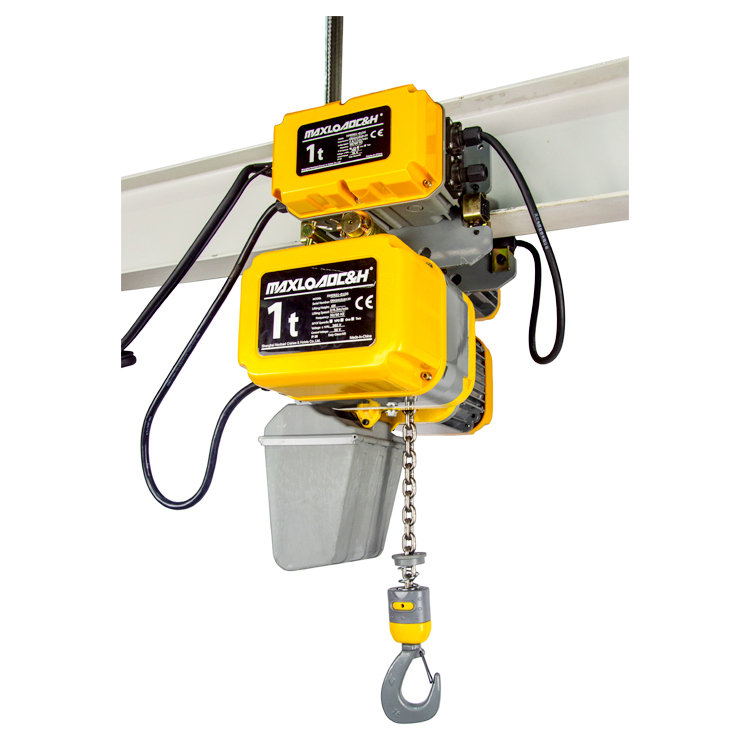
In old plants or low mezzanines, headroom is often just over two meters. Here, the hoist's "limit dimensions" become a hard indicator. Electric chain hoists have their chain stored in a chain bag; the lateral size is small, and the lowest hook point can be placed very close to the rail. With low‑headroom versions, they require far less headroom than wire rope hoists. Wire rope hoists need a drum for multi‑layer rope wrapping, making it difficult to reduce overall height – they suffer in low spaces. Intelligent lift assists are generally highly integrated, with a compact vertical dimension. Paired with an aluminum alloy rail system, they can achieve very good headroom, but you need to check whether the control handle and power cable routing interfere with the workstation.
Regarding installation methods, chain and wire rope hoists often work with monorail I‑beams or KBK rails, suitable for straight lines or small‑radius curves. Intelligent lift assists appear more on rigid rails or jib cranes, with very low manual movement force, making it easy for operators to position the load precisely above a mold. If your work environment involves many tasks requiring manual rail‑switching or floating alignment, the follow‑up effect of an intelligent lift assist with a rigid arm is hard to replace by the other two types.
Ⅳ. Operating Precision and Control Method – The Key to Human‑Robot Collaboration
For ordinary lift‑transport‑lower cycles, a pendant or remote control is sufficient. Two‑speed or VFD‑controlled chain and wire rope hoists can already achieve very slow, stable positioning. However, when millimeter‑level alignment or soft mating is required – e.g., engine block loading, precision mold handling – the low speed of conventional hoists still has a slight sliding feel and lag, placing high demands on operator experience.
Intelligent lift assists show a fundamental difference here: a force sensor continuously senses push/pull force on the handle. The operator pushes gently, and the load follows; stop pushing, and it stops. A floating mode is also available, making the workpiece feel weightless and allowing arbitrary positioning in space. This control method reduces workpiece impact and improves safety. If your environment requires fast yet gentle material handling – fragile items, high‑value parts – the benefits of an intelligent lift assist far outweigh its price difference.
Ⅴ. Maintenance and Real‑World Cost – The Total Lifecycle Account
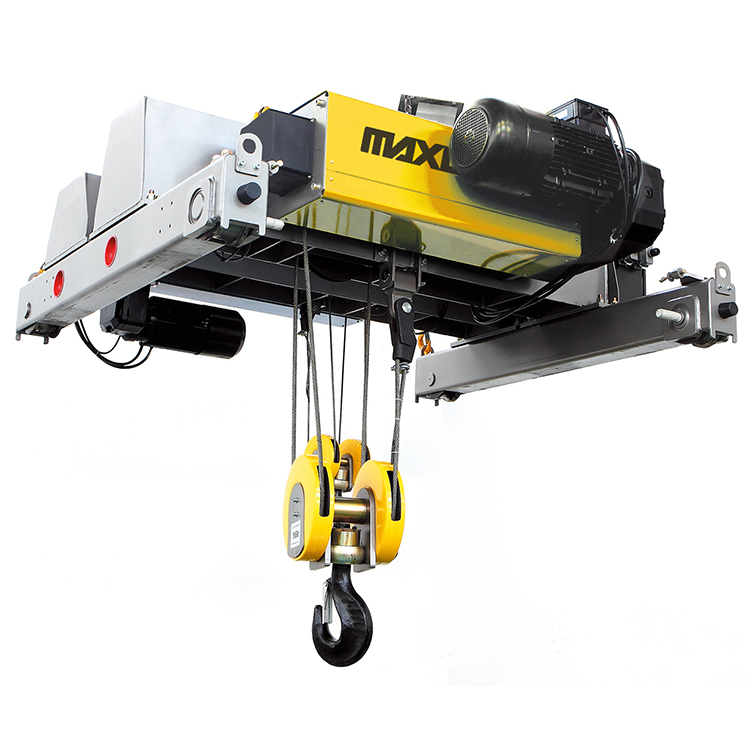
The harsher the environment, the thicker the maintenance ledger. In dusty, wet workplaces, chain hoists need weekly checks of chain lubrication and wear. Once link elongation reaches a certain limit, the entire chain must be replaced; there is a risk of breakage. Wire rope hoists require regular broken‑wire inspections, rope groove wear checks, and re‑lubrication. Replacing the wire rope also requires a specialist to thread it around the drum – time‑consuming and labor‑intensive. Although intelligent lift assists have a high proportion of maintenance‑free mechanical parts, once the servo drive or sensor fails, factory specialists must intervene – ordinary electricians cannot handle it. If your location is a remote mine or dock, the service response time must be considered in advance. In urban factories, maintenance service for intelligent lift assists is often better covered.
Straightforward recommendations based on working conditions:
General machine shop, 1–5 tons, moderate use, indoor clean → Electric chain hoist – most cost‑effective and user‑friendly.
Heavy assembly, steel mill yard, over 10 tons, frequent inching, high duty cycle → Wire rope electric hoist – an absolute necessity, no substitute.
Automotive or home appliance assembly line, loads of tens to hundreds of kilograms, picks every minute, requiring load floating and alignment → Intelligent lift assist – it is designed precisely for such scenarios.
Outdoor yard, occasional lifting of 2‑ton loads → Wire rope hoist with rain cover – avoid chain types.
Clean room or food workshop, no oil contamination allowed → Intelligent lift assist first, or a fully stainless steel special wire rope hoist (verify food‑grade lubrication).
Dust‑explosive area → Need dedicated explosion‑proof certified models. Chain and wire rope explosion‑proof solutions are relatively mature; explosion‑proof intelligent lift assists have narrow availability and very high cost – check the certification scope in advance.
Ultimately, the choice is not just a comparison of datasheets – it goes back to your own job site. Match the load spectrum, operation frequency, space dimensions, temperature/humidity/dust conditions, and positioning accuracy. Those five factors will filter out the model that truly holds up and works smoothly. If conditions allow, comparing demo units or past case studies of the three equipment types under the same application is more convincing than any manual.
 0086 156 1824 5535
 0086 156 1824 5535