How to Select the Most Suitable Combination Solution Based on Working Conditions
In actual material handling scenarios within workshops, electric hoists rarely work alone. They typically need to be mounted on a supporting structure to function, and the choice of this support structure—a freestanding jib crane, a wall-mounted jib crane, or a mobile jib crane—directly determines the practicality of the entire system in a specific environment.
Many factories fall into a trap when purchasing: focusing only on lifting capacity and price, while ignoring the match between equipment and the workshop layout or work processes. As a result, the equipment is installed but proves awkward in use—either the slewing range is insufficient, the column blocks forklift paths, or frequent movement causes excessive rail wear. Below, starting from actual working conditions, we analyze the applicable boundaries of the three combination solutions.
Column Mounted Jib Crane with Electric Hoist: Stable and Reliable, Ideal for Intensive Work at Fixed Stations
Freestanding jib cranes are the most common choice in workshops. Their structure is straightforward—a column fixed to the ground, with a boom rotating around the column, and an electric hoist hung on the I-beam rail of the boom for horizontal movement.
The greatest advantage of this combination is rigidity. The column is embedded in the ground or secured with anchor bolts on a base plate, leaving no room for wobble. For applications requiring precise positioning—such as placing workpieces onto machine tables or lifting precision parts onto assembly stations—the stability of a freestanding jib crane is unmatched by other types.
Additionally, the working range of a freestanding jib crane is relatively regular. The boom can rotate 360 degrees, and together with the hoist’s lateral travel, it covers a circular area. If workstations are arranged within this circle, operation becomes very convenient. A typical configuration is one freestanding jib crane serving a manufacturing cell, with lathes, milling machines, and drill presses arranged around the column, allowing the operator to turn and cover all equipment.
However, freestanding jib cranes have obvious drawbacks. The column itself occupies floor space, and although its footprint is small, in a space-constrained workshop, that column can end up blocking a logistics aisle. Moreover, once a freestanding jib crane is installed, its position is fixed; moving it is nearly impossible. Also, the slewing angle is limited by the boom length. If workstations are distributed along a long, narrow area, a freestanding jib crane will struggle—too short to reach the far ends, yet the near end is underutilized.
When to choose a freestanding jib crane? When workstations are relatively concentrated, operation frequency is high, positioning accuracy is required, and the floor can be bolted. Typical examples include small parts assembly lines, maintenance stations, and mold changing areas.
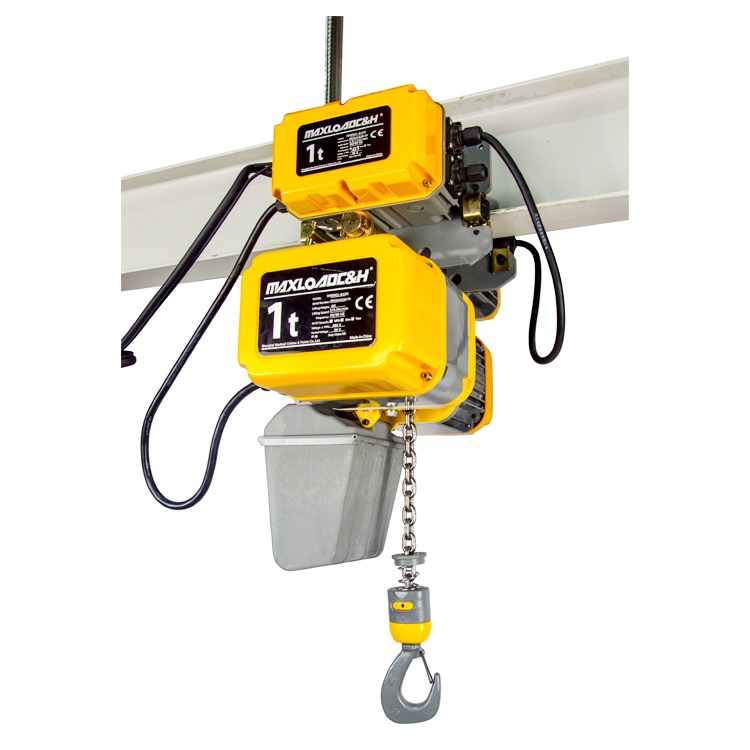
Wall-Mounted Jib Crane with Electric Hoist: Saves Floor Space, but Limited Load Capacity
Wall-mounted jib cranes are a variation of freestanding types. The difference is that they do not sit on the floor; instead, the slewing support is fixed to the building’s load‑bearing wall or structural column. The boom extends outward, and the electric hoist is suspended from it, activating otherwise unused space along the wall.
The biggest selling point of this combination is that it takes up no floor space. In a workshop, floor space is the most valuable resource—forklifts need to travel, racks need to be placed, and personnel need to walk. Removing one column makes a difference. A wall-mounted crane is placed along the wall, and the area under its boom can still hold racks and accommodate forklift traffic without interference. Also, wall‑mounted cranes are usually cheaper than freestanding ones because they lack the column and base assembly.
However, limitations are also clear. First, load capacity is constrained by the wall’s condition. Not all workshop walls can withstand the bending moment generated by lifting loads. Brick walls are certainly insufficient; concrete walls require calculation of the pull‑out force of embedded anchors. Many factories buy a wall‑mounted crane only to find that their wall cannot support it, forcing them to switch to a freestanding type, wasting time and shipping costs.
Second, the working range of a wall‑mounted jib crane is limited. The boom can only swing between 180 and 270 degrees—areas behind the wall are unreachable. Additionally, vibrations from the wall itself are transmitted to the boom, making the electric hoist feel slightly tremulous during operation. While this does not affect functionality, the handling feel is less solid than that of a freestanding crane.
When to choose a wall‑mounted jib crane? When there is a stable load-bearing structure along the wall, floor space is tight, the working area is directly adjacent to the wall, and full‑circle rotation is not required. Typical examples include spray lines along a wall, cleaning tanks, or loading/unloading stations next to heat treatment furnaces.
Mobile Jib Crane with Electric Hoist: Flexible, but Requires Rails and a Suitable Floor
Mobile jib cranes are completely different from the previous two types. They are not fixed at a single point; instead, they have a set of wheels at the bottom and can travel back and forth on floor rails. The electric hoist is hung from the boom, and the boom itself can still rotate. In essence, this is a jib crane that can move along a track.
This combination solves the core pain point of covering long, narrow areas. A production line may be dozens of meters long—a fixed jib crane cannot reach both ends, but a mobile one can travel along the rail from one end to the other, going wherever needed. Another typical scenario is multiple workstations sharing one crane: in a machine shop with dozens of machine tools, each only needs occasional lifting of workpieces. Installing a fixed crane for each would be wasteful; one mobile crane pushed around serves them all.
However, mobile jib cranes come with several issues. First, they demand a high-quality floor. Ordinary concrete floors will develop ruts after a few traverses; steel rails must be laid, and the installation accuracy of the rails directly affects travel smoothness. Many small factories try to cut corners by simply marking lines on the floor, resulting in rapid wheel wear, high rolling resistance, and difficulty pushing after six months.
Second, the overall rigidity of a mobile jib crane is lower than that of fixed cranes. The accumulation of clearances among so many moving parts—travel mechanism, slewing mechanism, boom, hoist—leads to noticeable sway when lifting. Positioning accuracy is significantly worse than with fixed cranes; fine operations like aligning bolt holes become quite laborious.
Additionally, the cost of a mobile jib crane is not low. The jib crane itself, plus the travel mechanism, rails, and power supply system, often results in a total price higher than that of a comparable freestanding crane. Moreover, the rails occupy floor space, and forklifts bump when crossing the rails, requiring special handling.
When to choose a mobile jib crane? When work points are scattered, but each point requires only occasional lifting, the layout is long and narrow, you are willing to install rails, and positioning accuracy is not critical. Examples include multi‑process transfer of large workpieces or loading/unloading operations in an open storage yard.
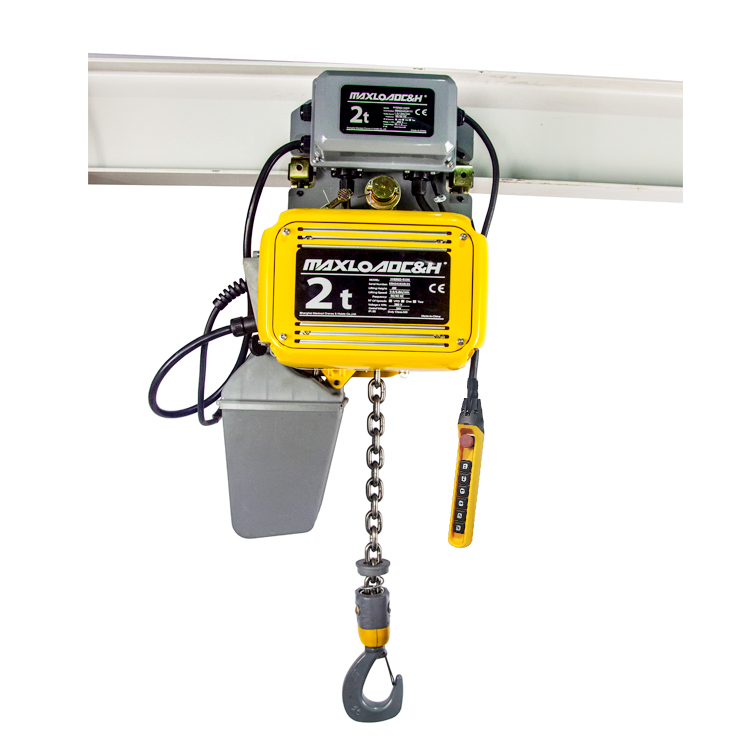
Practical Selection Logic for Combined Use
In many situations, a single solution cannot solve all problems, and multiple combinations need to be considered.
For a few high-frequency workstations, use a freestanding jib crane with a large-capacity chain hoist to ensure efficiency for hundreds of lifts per day. For intermittent workstations, a mobile jib crane is sufficient. For a spot along the wall where large equipment is occasionally repaired, install a wall-mounted crane with a manual chain hoist—the lowest cost.
When selecting, ask yourself a few questions. Are work points concentrated? If distributed within a diameter of six meters, a freestanding crane is suitable. If distributed linearly along a wall, a wall-mounted crane is suitable. If scattered across multiple areas, a mobile crane is suitable. Is floor space tight? If yes, prioritize a wall-mounted crane. Is the wall reliable? If not, forget about wall-mounting. Is positioning accuracy critical? If yes, choose a freestanding crane; if low precision is acceptable, a mobile crane can work. What are the budget and installation conditions? Mobile cranes have higher upfront costs but offer flexibility; fixed cranes have lower one-time costs but are difficult to modify later.
One often overlooked factor: will the production line change in the future? Machine shops and mold shops are relatively stable, so fixed cranes are fine. However, assembly shops, maintenance shops, and experimental workshops undergo frequent layout changes, making the adjustability of a mobile crane a huge advantage.
Returning to the original question: no single combination is absolutely the best; only the one that best fits the current working conditions. Spending a day or two thoroughly understanding the site conditions and walking through the work process is far more reliable than directly flipping through product catalogs and placing an order. Once installed, the equipment will be used for eight to ten years; correcting a wrong installation costs not only money but also disrupts production.
 0086 156 1824 5535
 0086 156 1824 5535