Collaborative Working Logic of Electric Hoist and KBK Crane
Walk into any moderately sized factory workshop, and you will likely see something like this: an overhead track system with a trolley moving loads back and forth. Many people's first reaction is, "Isn't that an overhead crane?" But in fact, this is a common misunderstanding.
Overhead cranes, electric hoists, and KBK cranes are different types of equipment with distinct operating principles. Confusing them will lead to problems during selection – either you spend a lot of money on capabilities you don't need, or the equipment fails to deliver the expected efficiency gains once installed.
First, Clarify the Relationship Between the Three
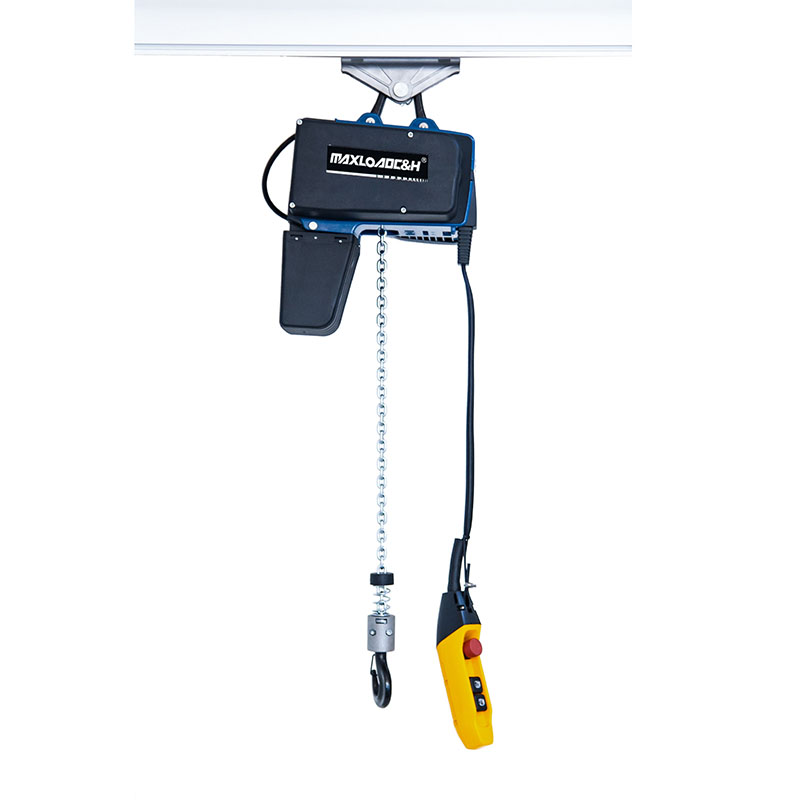
Simply put, an overhead crane is a building‑wide beam structure, typically designed to handle loads from a few tons to several tens of tons, covering the entire span of the workshop. An electric hoist is a lifting mechanism – it raises and lowers loads, but cannot move horizontally on its own; it must be suspended from a moving track. A KBK crane is essentially a modular track system, designed specifically to allow an electric hoist to cover a defined work area flexibly.
Thus, the "electric hoist + KBK" combination is a solution: the hoist handles vertical lifting, and the KBK handles horizontal movement. How well they work together depends heavily on the actual needs of your working environment.
What Kind of Environment Needs This Combination?
Case 1: Dense workstations and high cycle times
In assembly workshops, sorting lines, or packing stations, workers frequently transfer materials between adjacent workstations. For example, on an auto parts assembly line, a worker might need to pick a part from a tray every two minutes, move it two meters to an assembly station, and then transfer the finished product to the next station.
Using an overhead crane for this is overkill – the operator cannot keep up with the line rhythm. A forklift may not fit in narrow aisles and has a large turning radius. In this situation, a KBK track combined with a light‑duty electric hoist is the most sensible solution. The worker can easily move the load by hand and stop precisely at any position.
Case 2: Well‑defined area coverage, not plant‑wide
Some processes only need coverage over a single production line, an assembly island, or a loading/unloading area. For instance, between a raw material storage area and machine tools in a machining workshop – often a distance of less than ten meters – or at a warehouse incoming inspection area, covering just the dock to the inspection table.
Installing an overhead crane for the whole plant involves high civil construction costs, long approval times, and the crane beams themselves consume headroom, affecting ventilation and lighting layouts. A KBK system, by contrast, is suspended from the existing roof structure, can be installed exactly where needed, and wastes no track length.
Case 3: Low loads but very high frequency
A common misconception must be corrected: equipment selection should not be based solely on maximum load capacity; duty cycle is equally important. A 2‑ton overhead crane used to lift 0.5‑ton loads 30 times per hour will experience accelerated wear on its braking system, gearbox, and wheels, because it was not designed for such high‑frequency, light‑duty operation.
In contrast, a KBK combined with a low‑headroom electric hoist is lightweight, can achieve faster lifting speeds, offers low rolling resistance, reduces operator fatigue, and results in lower failure rates over time. High‑frequency, low‑load scenarios include moving raw material bins in food processing workshops, handling moulds in injection moulding shops, and transporting totes in 3C electronics factories.
Key Technical Parameters for Selection
Since we are discussing selection advice, general scenarios are not enough – the parameters must be concrete. The following questions should be answered before finalising a solution:
The length and width of the work area determine the span of the KBK main beam. Larger spans make deflection control more important. Generally, the economical span for a single KBK main beam is within 6 m; beyond that, a twin‑beam configuration or additional suspension points should be considered.
Lifting height and headroom limits are often overlooked. The electric hoist itself has a certain height dimension; when the hook is at its highest position, there is still a distance from the hook to the bottom of the track. The effective lifting height is the building's clear height minus that distance. If the clear height is only 4 m and you need to lift a 2.5‑m‑tall device, a low‑headroom hoist must be considered.
Load weight and centre of gravity need no explanation, but an additional point: it is advisable to add a 20% margin above the maximum load. This is not just for durability – it accounts for the weight of the lifting attachment and possible shock loads during lifting.
Duty cycle can be referenced against ISO or FEM classifications. A rough guide: fewer than 5 lifts per hour is light duty; 5 to 15 lifts is medium duty; more than 15 lifts is heavy duty, requiring a hoist with a more robust motor duty rating and longer brake life.
Common Issues During Collaborative Operation
In practice, this combination can present problems that are not obvious when each component is used alone.
One is rolling resistance. Although KBK tracks have running wheels, the force required to push the hoist manually is affected by uneven track joints, track inclination, and the friction coefficient between wheels and track. Standards recommend that the manual push force should not exceed 15 kgf. However, if the track is not levelled properly during installation, even a slight slope can double the required force. If a worker makes hundreds of pushes per day, accumulated fatigue increases the risk of operating errors.
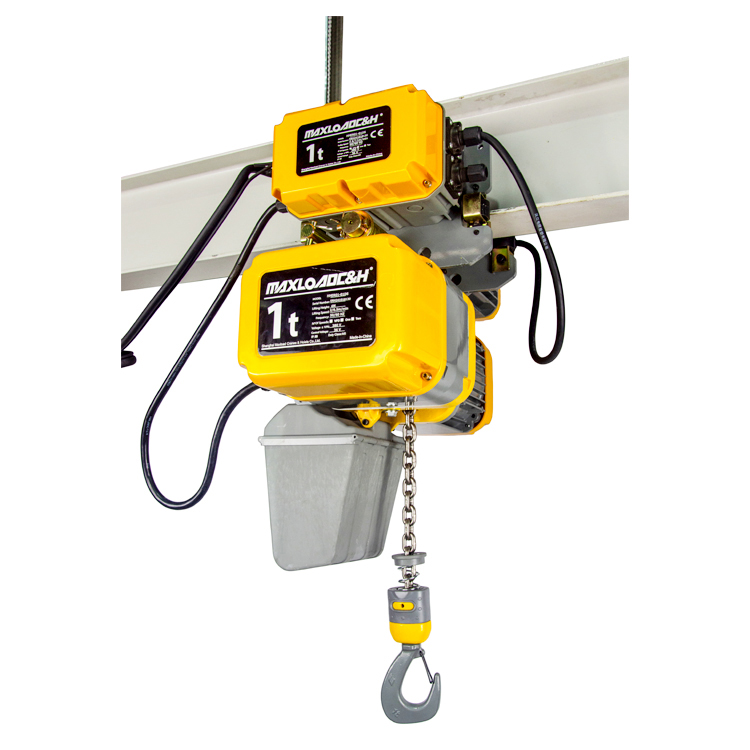
Another is matching the hoist to the track. An electric hoist travels on the KBK track via its own running trolley. Although many hoist manufacturers claim "KBK compatibility," differences in wheel material, wheel flange clearance, and track cleanliness requirements exist. Poor matching leads to rail gnawing over time – the wheels rub against the side of the track, generating metal debris. As the track wears, the clearance increases and running stability degrades.
A third, often ignored issue: end stops and buffers. Both ends of a KBK track must be fitted with buffers to prevent over‑travel. However, the stiffness of the buffers is critical. Too hard, and the impact force can knock the trolley wheels out of alignment; too soft, and the compression stroke reduces the effective travel length. Though a small detail, production stoppages caused by broken limit switches due to improper buffering are not uncommon in maintenance records.
Maintenance Access and Service Space Must Be Planned in Advance
Once the equipment is installed, maintenance follows. Many people fail to consider this during selection and only realise the difficulty after installation.
Both the KBK track and the electric hoist are located overhead. Can maintenance personnel reach the motor, gearbox, limit switch, wire rope, and other components that require periodic inspection and replacement? Is there a service platform, or must a lift be used from below?
If the workshop is densely packed with equipment and a lift cannot enter, then service points for each hoist must be considered during installation. Otherwise, when it comes time to replace the wire rope, you may find that the maintenance hours are twice the normal amount.
Electric hoist maintenance is relatively straightforward, but the wire rope, rope guide, and limit rod are consumables that need periodic replacement. KBK system maintenance mainly involves checking track joints, wheel wear, and the tightness of suspension bolts. When multiple hoists operate on the same track, collision prevention must also be considered – how to prevent two hoists from reaching the same position. Should proximity switches be added or mechanical stops installed? These decisions must be made at the design stage.
Manual, Semi‑Automatic, or Fully Automatic?
Finally, it is important to clarify that the combination of an electric hoist and a KBK can be operated in different ways.
The most common is manual operation, where the worker pulls the pendant or a rope attached to the hook to directly control lifting and horizontal movement. This is the most flexible and suitable for workstations with frequent changes and a variety of material types.
If more effort reduction is needed, the KBK trolley can be equipped with a travel motor, making it a powered travel – the worker simply pushes a button to move the load. This is suitable for heavier loads (e.g., over 200 kg) or longer horizontal travel distances.
For highly repetitive workflows, an automated solution can be considered. For example, multiple stations along the same track, each with a call button, and the system automatically dispatches the hoist to the calling station. However, this requires position sensing and a control system, significantly increasing cost – not always justifiable.
 0086 156 1824 5535
 0086 156 1824 5535