The Working Environment Decides Everything
Having been in equipment maintenance for over a decade, I've seen too many people buy electric hoists focusing only on lifting capacity and price. What happens? Within two months of installation, either the motor burns out, the brake fails, or the hoist gets corroded as if it were salvaged from the sea.
To be honest, electric hoists all look similar – motor, gearbox, drum, wire rope, hook. But the requirements for different environments vary enormously. Today, let's clarify this based on actual working conditions.
First, figure out what's really in your workshop
Many people don't seriously analyze their working environment before choosing a hoist. I suggest you take a piece of paper and clearly answer these questions:
What's in the air?
Is it as clean as an operating room, or is dust floating everywhere? Is the dust cement, wood chips, grain, or metal powder? What's the humidity level year-round? Are there corrosive gases, like acid mist in chemical plants or steam in electroplating shops?
What's the temperature range?
Normal room temperature, or the kind of radiant heat exceeding 100°C found in foundries or heat treatment shops?
How frequent is the usage? Twice a day or thirty times an hour? How long does it work continuously before getting a break?
Are there explosion-proof requirements?
Are there flammable or explosive gases, vapors, or dust in the workshop? This is no joke.
General workshops: the least demanding but also most prone to problems
In environments like ordinary machine shops, assembly workshops, and warehouses – where there's a bit of oil mist, some dust, normal temperature and humidity – most standard electric hoists on the market will work.
But pay attention to one thing: many people stumble in these seemingly simple environments because they think "it doesn't matter" and buy the cheapest option. The result? Cheap hoists use contactors with insufficient contact capacity – after frequent starts and stops, they burn out and weld shut in a few months. The limit switches are simple rope-weight types that trip falsely when the wire rope slightly sways. The motor is single-speed, and micro-positioning drives the operator crazy.
In such environments, choosing a two-speed motor, contactors with a larger contact capacity margin, and a hoist with a cut-off limit switch doesn't cost much more, but the user experience is completely different.
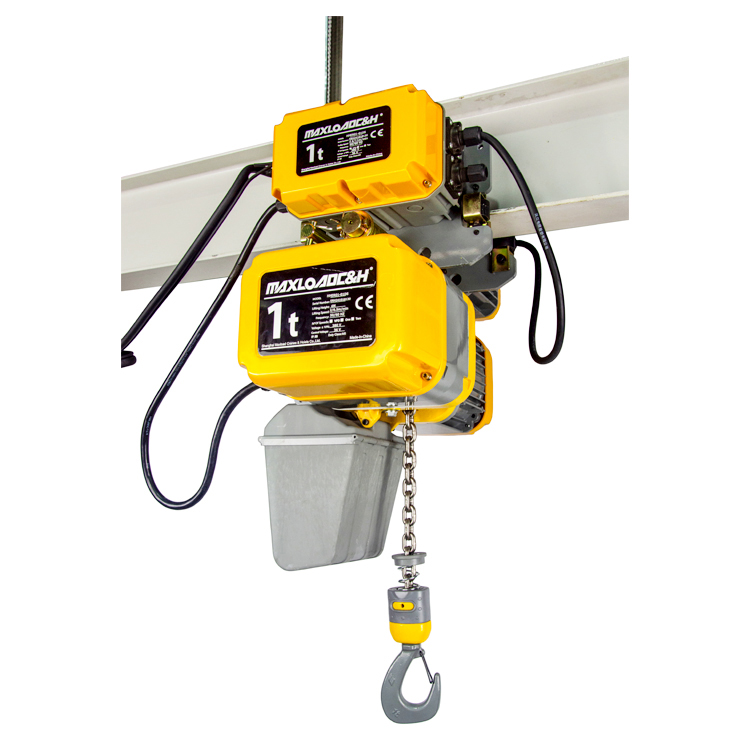
Corrosive environments: protection ratings are not just for show
Food processing plants, shipyards – these places share high humidity.
In such environments, the electrical parts fail first on standard hoists. Motor junction boxes get water ingress and short-circuit, relay contacts in control boxes corrode, and limit switches jam – these are common failures. Then the brake: the brake wheel and friction disc rust, the brake can't hold, and the load slips. Finally, the appearance: paint peels off, bolts rust solid – and when it's time for maintenance, you'll cry.
What's the right approach? First, the protection rating should be at least IP55, preferably IP56. IP55 protects against dust and water jets; IP56 protects against powerful water jets. Second, the motor and brake should have anti-corrosion coatings, and key fasteners should be stainless steel. The wire rope should be galvanized or stainless steel – ordinary wire rope will rust like iron wire in a month in such an environment.
One more point many overlook: the control cable. Ordinary PVC-sheathed cable absorbs moisture, ages, and leaks in humid environments – you need a rubber-sheathed, weather-resistant cable.
Dusty environments: don't turn your hoist into a vacuum cleaner
Let me give you a cold shower: standard electric hoists rely on a cooling fan that sucks in air. In dusty environments, they suck dust into themselves while working. Cement dust, carbon dust, grain dust, metal powder – these get into the motor, first coating the windings and impairing heat dissipation, then wearing out bearings. Conductive dust like graphite or aluminum powder, can cause direct short circuits.
The bigger problem is the brake. Dust entering the friction surfaces of an electromagnetic brake causes a sharp drop in braking torque. The brake may look fine, but you have no idea how much load it can actually hold.
Therefore, dusty environments require dust-proof hoists. How to identify them? Look at the motor – fully enclosed, no cooling fan, heat dissipation through the housing. The brake should also be sealed, or use a conical rotor motor with built-in braking – simple structure, less prone to dust ingress.
If the dust is conductive – e.g., graphite processing, aluminum-magnesium alloy grinding – sorry, standard industrial hoists won't do. You must follow dust explosion-proof standards, which will be covered separately below.
High-temperature environments: watch out for radiant heat cooking your hoist
Foundries moving molten iron ladles, heat treatment shops loading parts into salt bath furnaces, glassworks handling materials – the radiant heat in such places can melt the cable of a standard hoist, bake the lubricating oil dry, and destroy motor winding insulation.
Some say, "Our hoist is installed high up, far from the heat source." Have you measured it? Radiant heat intensity is inversely proportional to the square of the distance – one meter makes a huge difference. The right approach: measure the actual temperature at the hoist's working position – not the ground temperature, but the temperature at the hoist's height.
If the temperature is below 60°C, choose high-temperature cables and high-temperature grease, and a standard motor can basically handle it. Between 60°C and 100°C, the motor must have Class H insulation, the control box should be moved to a wall away from the heat source, and the hoist body should have heat shields. Above 100°C? Sorry, don't even think about it – use an overhead crane with a heat-insulated hook or a pneumatic hoist; electric hoists are not suitable.
Low-temperature environments also have their own requirements. In a freezer at -30°C, ordinary steel becomes brittle, lubricating oil solidifies like asphalt, and cable plastic sheaths crack at the slightest touch. Choose low-temperature-specific configurations: low-temperature cables, low-temperature grease, and low-temperature toughness steel.
Explosive environments: don't play with your life
This is the most serious – no compromises allowed.
Explosion-proof requirements fall into three categories: gas explosion-proof, dust explosion-proof, and coal mine methane explosion-proof. Gas explosion-proof is further divided into levels – IIA (e.g., propane), IIB (ethylene), IIC (hydrogen, acetylene). IIC is the strictest.
Standard electric hoists generate sparks during operation – motor commutator sparks, brake friction sparks, limit switch contact sparks, and static electricity from wire rope friction. In an explosive environment, these are ignition sources.
How do legitimate explosion-proof hoists solve this? Flameproof motor – if an internal explosion occurs, the housing withstands it without bursting, and the flame does not escape. The brake uses non-sparking materials. All electrical components are flameproof or intrinsically safe. The wire rope is stainless steel or plastic-coated to reduce static. The hook uses non-sparking materials like beryllium bronze.
Most importantly, an explosion-proof hoist must have a complete explosion-proof certificate and CCC certification. It's not explosion-proof just because it's painted yellow on the outside. I've seen "fake explosion-proof" hoists – they look like the real thing on the outside, but open them up and the motor is still standard. If an accident happens, no one can bear the responsibility.
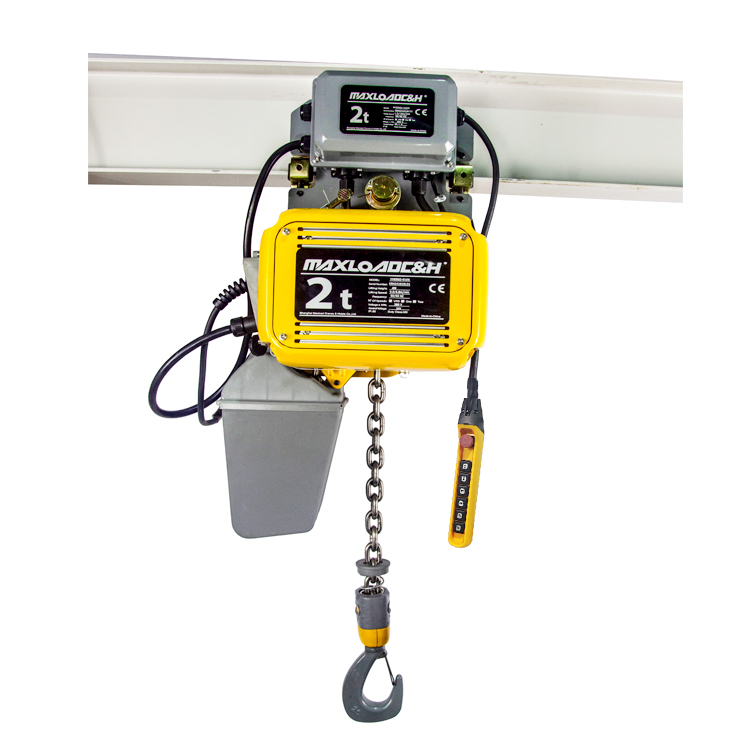
Frequency of use: determines how much you need to spend
Even with daily operation, one hoist may run a total of 10 minutes a day, another 4 hours non-stop. The difference is huge.
The duty rating of an electric hoist is not arbitrarily marked. According to FEM or ISO standards, from light-duty M3 to very-heavy-duty M8, each higher rating requires larger gear modules, larger bearings, higher actual motor power, and longer brake life.
A typical example: an M4 (light-duty) hoist is designed for about 60 starts per hour or less, with total running time below 15% of its life. If you use it for M6 work – 180 starts per hour – the motor and brake will fail quickly.
So before choosing a hoist, calculate your daily number of starts, running time, and average load factor. Then refer to the duty rating table to select. Don't listen to salespeople who say, "Our quality is so good that a light-duty hoist can be used as heavy-duty" – if you believe that, you'll cry over maintenance costs later.
Restricted installation space: not every place fits a standard hoist
Sometimes, there's no overhead space – for example, in a workshop with low ceiling height, a standard hoist with an electric trolley installed leaves the hook too high off the ground, reducing actual lifting height. In such cases, you need a low-headroom hoist, where the drum and motor are arranged side by side rather than stacked vertically.
Other times, there's no lateral space – for example, lifting in narrow aisles where a standard hoist's wheel spacing is too wide to turn corners. This requires a curved track or a trolley with a steering function.
Also, some irregularly shaped loads tilt and swing when lifted – a standard hook block won't work. You need a cross-beam spreader or a specialized lifting device. Think about this during selection; don't wait until the hoist is installed to realize it doesn't work well.
 0086 156 1824 5535
 0086 156 1824 5535