Jib Crane Selection: An Engineering Decision Guide
In workshop discussions about jib crane selection, a common phrase is: "I need a 2-ton crane." This statement alone reveals a problem—selection is never just about a load capacity number. A jib crane is not like a standard screw that you can buy off the shelf by specification; it is the result of the interplay between workstation environment and handling requirements. A crane that works well in Workshop A may not even be installable in Workshop B. Truly professional selection never starts with equipment parameters; it starts with the workstation environment.
Ⅰ. Spatial Form Determines Structural Type
The structural type of a jib crane is not a matter of preference; it is dictated by the spatial conditions of the workstation.
Floor-mounted jib cranes are the most common choice. They are suitable where there is no load-bearing wall or column adjacent to the workstation and where the floor has space for foundation work. Their advantage is independence, with a slewing range typically up to 360°. They have a high application rate in workstations such as machine tool loading/unloading and die handling, where circular area coverage is required. However, it must be emphasized that floor-mounted cranes have rigid foundation requirements. The concrete floor thickness should generally be no less than 150 mm, with a strength grade not lower than C25; otherwise, there is a risk of overturning under full-load slewing.
Wall-mounted jib cranes are suitable where the workstation is next to a factory column or load-bearing wall. They occupy no floor space, making them ideal for narrow aisles and areas with mixed equipment and personnel traffic. Slewing angle is typically within 180°. However, a frequently overlooked prerequisite is that the wall or column must have sufficient load-bearing capacity. Lightweight partitions or hollow brick walls cannot meet the requirements, and the positional accuracy of bolt fixing points is much higher than for floor foundations.
Mobile jib cranes are suitable when a single crane needs to cover multiple workstations, or when the workstation itself does not have fixed installation conditions for temporary tasks. They have swivel casters at the bottom and can be pushed wherever needed—flexible but with limited load capacity, typically not exceeding 1 ton.
Articulated jib cranes are a solution for special conditions. When there are pipes, air ducts, or equipment overhead that block the standard jib from reaching the lifting point, the multi-joint structure of an articulated crane can navigate around obstacles by folding, enabling material handling along complex paths.
The logic for determining structural type can be summarized as follows: Is there a load-bearing wall or column available near the workstation? If yes, prioritize evaluating the feasibility of a wall-mounted type. If not, assess whether the floor can accommodate a foundation, then decide between a floor-mounted or portable crane. If obstacles are present, consider an articulated crane.
Ⅱ. Load and Duty Intensity Determine Core Parameters
Once the structural type is determined, the next step is to determine the "capacity" of the equipment. Many people only ask about lifting capacity, ignoring another equally important parameter: the duty class.
For lifting capacity selection, a widely adopted engineering principle is that the rated lifting capacity should be at least 1.1 times the maximum load. This 1.1 factor is not arbitrary; it corresponds to the dynamic load coefficient specified in GB/T 3811-2008. If the workpiece is irregularly shaped and the center of gravity is offset, an additional eccentric moment is generated, requiring an eccentricity correction factor of 0.8 to 0.9.
But even more critical—and more easily overlooked—than load capacity is the duty class. Duty class is not simply about "how often it is used"; it comprehensively reflects the load spectrum and frequency of use. According to standard industry classifications:
A1 to A3: Suitable for light, intermittent use, e.g., occasional restocking in a warehouse.
A4 to A5: Suitable for continuous operation on a production line, e.g., lifting components on an assembly line.
A6 and above: Correspond to heavy industrial, 24/7 continuous operation scenarios.
A common misconception is that "higher lifting capacity equals greater durability." In reality, a 2-ton jib crane selected with an A3 duty class will experience structural fatigue within a few years when used on a high-frequency production line. In contrast, a 1-ton crane with an A5 duty class will last much longer in the same scenario. Selecting a duty class too low will lead to weld cracks, slewing mechanism wear, and other problems long before the design life is reached. Selecting a class too high means unnecessary cost.
Another "golden rule" that many overlook: the longer the jib, the lower the actual usable load. Assuming the column and slewing system strength remain unchanged, the farther the lifting point is from the column center, the greater the bending moment on the jib, and the lower the safe lifting capacity. For example, a crane that can lift 1 ton at a 3-meter jib length may only be able to lift 600 kg when the jib is extended to 5 meters. Professional selection should require the manufacturer to provide a jib length–load curve, rather than simply specifying a "maximum lifting capacity."
Ⅲ. Drive Type and Power Supply Conditions Determine Operational Efficiency
The choice of drive type is essentially a matching of operational intensity and power supply conditions at the workstation.
Manual drive has the advantages of low cost, no dependence on electricity, and simple maintenance. The disadvantages are equally clear: low operational efficiency, requiring manual pushing and pulling for slewing and lifting. When the number of daily lifts exceeds 50, operator fatigue increases sharply. Therefore, manual cranes are generally recommended for light-load, low-frequency scenarios with fewer than 50 lifts per day and loads under 1 ton.
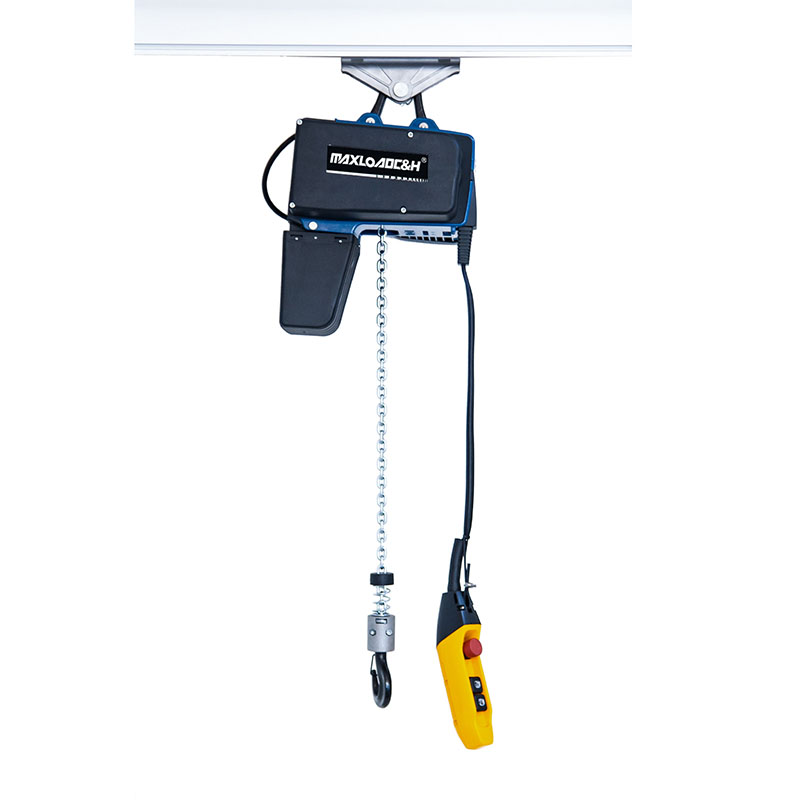
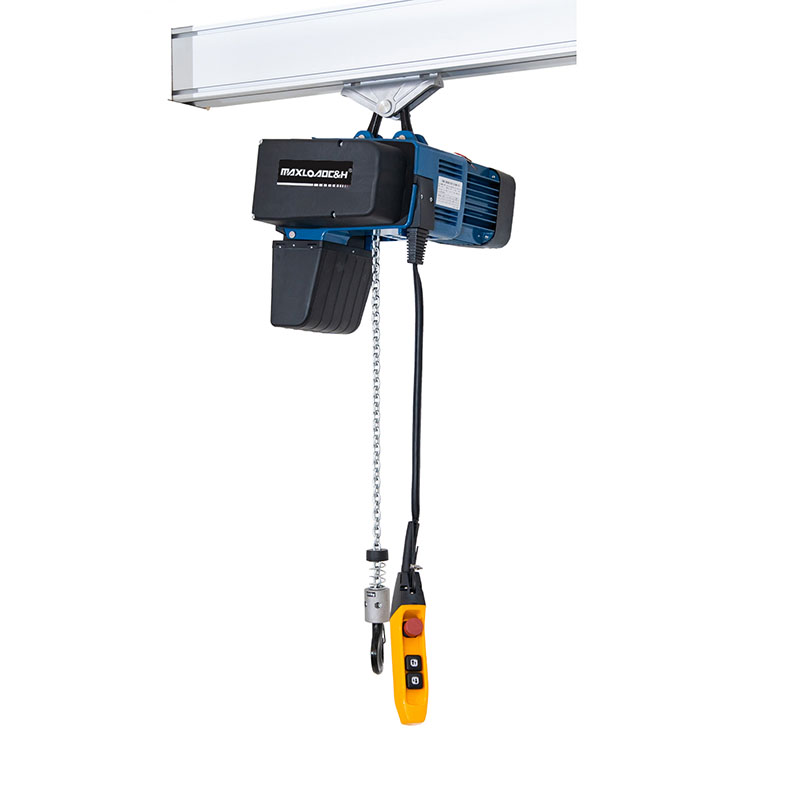
Electric drive is suitable for medium- to high-frequency tasks. An electric hoist combined with electric slewing and remote control enables precise load positioning, offering clear advantages in assembly line loading/unloading and high-frequency transfer. However, electric cranes rely on a stable power supply. In older factories, verifying that the power distribution capacity is sufficient is a necessary pre-selection condition. Additionally, if higher positioning accuracy is required, models with variable frequency drive (VFD) are preferable, as they provide smoother start and stop and reduce load swing.
Pneumatic drive is suitable for special environments. In explosion-proof workshops or clean rooms, the spark risk of electric equipment or the cost of stainless steel electrical components may be prohibitive. Pneumatic hoists, powered by compressed air, offer both safety and cleanliness, making them a worthwhile option to evaluate.
Ⅳ. Special Environmental Conditions Determine Selection Details
Three types of special workstation environments each have corresponding selection considerations.
Cleanroom environments (e.g., semiconductor fabs, pharmaceutical GMP workshops, food processing areas) have strict cleanliness controls. The primary consideration when selecting equipment is its "particle generation." The main structure should be made of 304 or 316L stainless steel, with a polished surface and anti-static coating to reduce particle adsorption and metal oxidation shedding. Fully enclosed electric hoists are superior to open structures, preventing lubricant volatilization or dripping that could cause contamination.
Explosion-proof environment (e.g., chemical workshops, painting areas with explosive gases or dust). The key to selection is to confirm the hazardous area classification of the workstation, require the supplier to provide a complete machine explosion-proof certificate, and ensure that the equipment's explosion-proof rating matches the work area. Note that explosion-proof considerations go beyond the motor; they also include spark protection of the hook material, the effect of operating speed on impact sparks, and other factors. In flammable and explosive environments, lifting speed should actually not be too fast—high-speed start/stop generates frictional heat and impact sparks that compromise explosion-proof safety.
Low headroom or old factory buildings. Workshops with limited ceiling height require low-headroom jib cranes. Through optimized structural design, these can save 200 to 350 mm of vertical space compared to conventional solutions. Additionally, the floor load capacity and column conditions in old factories vary widely. When necessary, a structural engineer should be engaged to conduct an on-site assessment to verify the actual load-bearing capacity of the foundation and mounting points.
Conclusion
Selecting a jib crane is, in the end, a "translation" exercise—translating the workstation's spatial conditions, load characteristics, operational frequency, and environmental requirements into corresponding equipment parameters and technical specifications. The earlier this is done, the more likely you are to avoid the embarrassment of "bought it but can't install it" or "broke down after six months."
 0086 156 1824 5535
 0086 156 1824 5535