No matter how high the crane's configuration, a mismatched workspace environment renders it useless.
You bought a set of KBK crane and electric hoist; the configuration sheet looked fine. But once installed in your own workspace, either something blocks the movement or the speed is too slow, and it ends up being a useless ornament. Ultimately, the problem lies in not thoroughly understanding the workspace environment. This article discusses how to proceed step by step, based on the actual workspace conditions, to match the KBK system and hoist for the smoothest operation — focusing on logic, not brands.
Ⅰ. Space: Wrong dimension calculations lead to endless problems
When you get the workshop drawings, the first thing to look at is often not the lifting capacity, but how high the overhead beam actually is. The KBK rail itself requires installation height, which includes the suspension fittings, rail profile thickness, hoist headroom, plus the spreader and workpiece height, before finally arriving at the usable lifting stroke. In simple terms: net ceiling height minus the rail system height, hoist headroom, spreader height, and at least another 150mm safety margin — that resulting number is the maximum usable lifting height.
I've seen many workshops with a five-meter under-beam clearance that seems spacious, but they chose a large-section KBK rail and a two-speed chain hoist. The rail and hoist alone consumed nearly 1.2 meters. Add a dedicated lifting beam, and they could only lift workpieces up to 1.6 meters high, while their mold itself was 1.5 meters — a tight squeeze. If there are columns, pipes, or fire sprinklers near the workstation, you must additionally account for sway space when the trolley and crane move. Manual push travel might barely cope, but once you use electric travel, speed increases, workpiece sway becomes larger, and you should leave at least 200mm lateral clearance to be safe. Also, if the joint underneath the rail connection is exactly above the workpiece lifting center, every time the trolley passes, there will be a slight step-like sensation. For precision assembly, this vibration is critical. Moving the joint away from directly above the workstation is a low-cost and practical solution.
Ⅱ. Load: Don't focus only on the maximum lifting capacity
Overlooking the duty cycle is the most common mistake. Lifting 500kg is the same on paper, but if a workstation only does three or four lifts per day with stable loads, an M3 class hoist is perfectly adequate. However, an assembly line workstation that lifts 30 times per hour with high load factors needs an M5 or even M6 class hoist and matching KBK rail; otherwise, the brake and motor won't last six months. KBK rails themselves also have fatigue strength concepts. Under high-frequency use, the rail's upper flange and connecting bolts accumulate fatigue, so you cannot rely solely on static strength.
Workpiece shape can also eat into your lifting capacity. Many castings or welded assemblies have severely offset centers of gravity. Lifting from a single point causes the wire rope to tilt, reducing effective height and imposing lateral forces on the KBK main beam. Over time, these lateral forces cause the trolley to run off-track and the rail to bend sideways. For such workstations, you must disclose the off-center load upfront and add anti-roll devices to the rail during the design phase. When necessary, choose a two-point lift hoist with a lifting beam to share the load across both main beams. An easily overlooked detail: spreaders, grippers, vacuum pads, and other attachments must be included in the total weight — otherwise, you'll find on site that the rated capacity on the hoist nameplate is already insufficient.
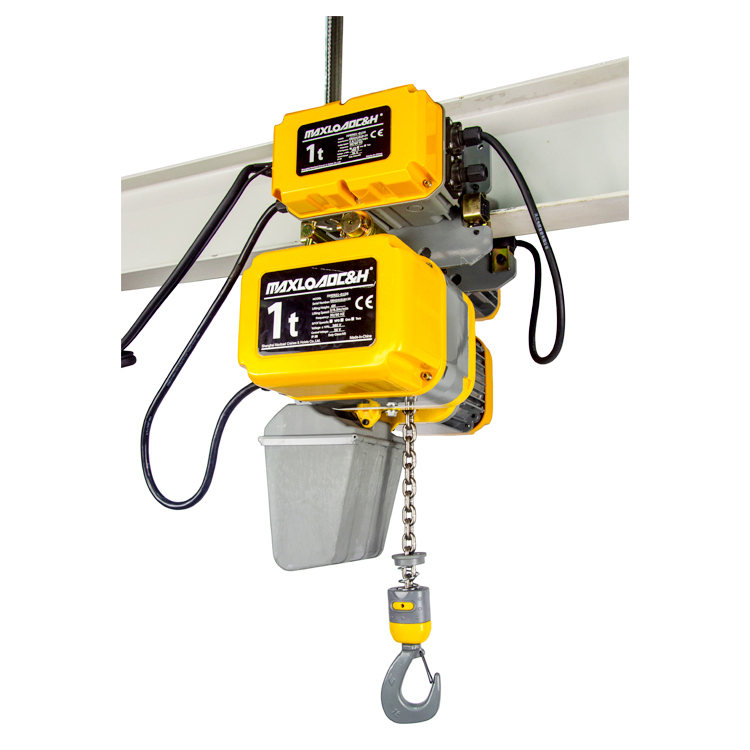
Ⅲ. Environment: The invisible processes are the toughest test
In an automotive parts plant's final assembly station, the KBK rail's paint layer blistered and peeled after just over two years, and the wheels wore abnormally fast. The cause was later found to be acidic fumes drifting from a nearby phosphating line — not high in concentration, but cumulative over time. For such conditions, if the standard carbon steel rail had been replaced with an epoxy-coated or hot-dip galvanized one, the hoist motor protection rating would have been raised to IP54 or higher, and the topcoat would have been inspected regularly; the situation would have been much better.
Workstations with heavy dust require extra caution. In foundries, grinding shops, and woodworking shops, fine particles can get into the hoist's chain bag and motor ventilation ducts, accelerating wear on the chain and chain wheel, and even causing limit switches to malfunction. In such cases, you must choose hoists with dust-protection covers and use dry lubricants for the chain to avoid dust adhesion. For cold storage or high-temperature forging workshops, verify the applicable temperature range of the hoist and rail materials. Ordinary hoists typically work between -20°C and 40°C. Outside this range, you need low-temperature grease, special seals, and cold-resistant cables; otherwise, lifting shuddering or loss of control can occur. As for cleanrooms, use stainless steel rails, enclosed cable carriers, and maintenance-free cleanroom hoists whenever possible. The surface treatment of the spreader must also be considered to prevent tiny metal shavings or coating flakes from contaminating the product. If the workstation requires explosion protection, simply swapping in an explosion-proof hoist is not enough. The entire KBK assembly — including rails, travel wheels, suspension fittings, and electrical components — must pass the corresponding zone certification. The wheels and rails must ensure conductive static discharge, and the conductor bars must not generate sparks. This boundary cannot be blurred.
Ⅳ. Operation: How to move smoothly and position precisely
At one assembly line workstation, eight meters long, the operator had to manually push the trolley back and forth every day, leaving their arms sore. Switching to an electric travel crane with wireless remote control increased material handling cycle time by 30% directly. So if the workstation span exceeds 6 meters and the daily cycle count is over 50, it is generally recommended to go with an electric drive, combined with variable frequency control to eliminate swinging during start and stop. Lifting speed is also not necessarily faster is better. For precision assembly, workpieces need slow positioning. Use a two-speed hoist with fast/slow switching, or a VFD-controlled hoist for stepless speed adjustment — much more operator-friendly.
The control method should fit human factors. If the operator stands in a fixed position, a pendant control on the wall is not convenient; a wireless remote allows them to walk with the workpiece for better visibility. If the workstation has a lot of floor tracks, roller conveyors, etc., cable festoons are prone to tripping or wear. In that case, enclosed conductor bars with a collector on the trolley are more reliable than festoons. Conversely, in dusty, oily, or misty environments, festoon cables with oil-resistant and abrasion-resistant jackets may last longer than exposed conductor bars. Also, simulate the limit positions of the KBK trolley — don't let the hook ever reach the farthest point of the workstation. Leaving a dead zone of just tens of millimeters often marks the beginning of fixture collisions with machinery.
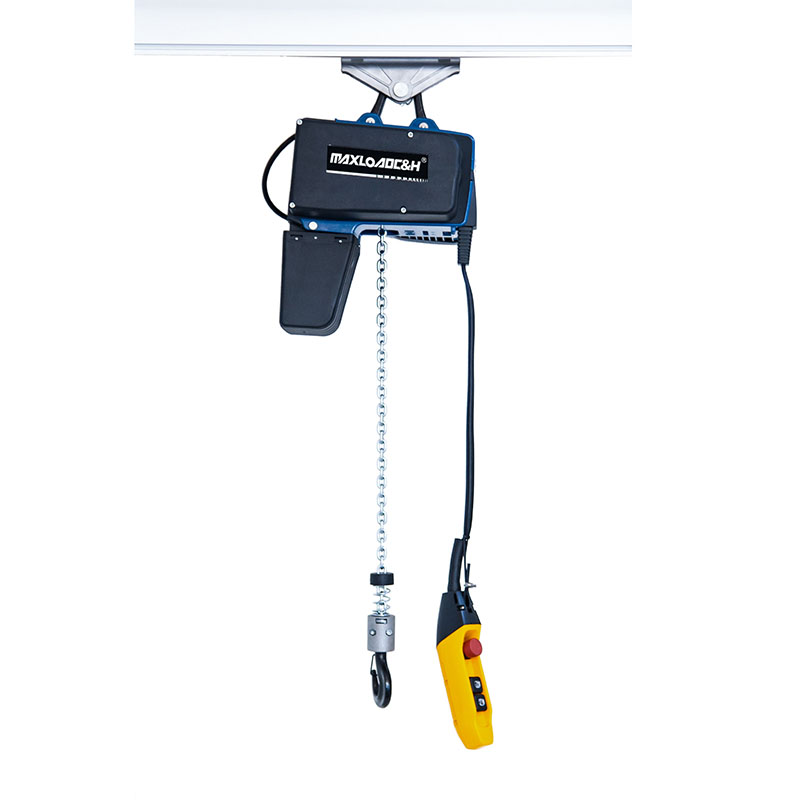
Ⅴ. Don't make the workstation an island
The layout of many workshops changes every three years. If you anticipate that the workstation will be extended or connected to an adjacent line in the future, the modular advantage of KBK becomes apparent. Rail routing, switches, and turntables can be added later, but only if the initial column and suspension structures have reserved interfaces. If you only use manual push now but might convert to electric drive in the future, when selecting the rail, choose a profile section that inherently allows for adding conductor bar brackets and electric drive trolleys — saving the trouble of complete replacement later.
A suitable KBK system must grow with the bones of the workstation. It doesn't have to be expensive, but it must fit into every inch of spatial constraints, adapt to the site's smells and temperatures, and keep up with your production rhythm. By thoroughly checking these environmental factors one by one, KBK crane and electric hoist will become the most diligent and trouble-free partner in your workshop.
 0086 156 1824 5535
 0086 156 1824 5535