Why does your workstation always feel awkward?
Many factory managers often encounter this situation: they purchase decent lifting equipment, but workers find it awkward to use. Either the hook can't reach the material storage area, or the rotation range is too limited, requiring repeated repositioning of the workpiece, or even the embarrassing scenario where the jib crane's column exactly blocks the forklift aisle.
This is not a quality issue with the equipment, but a failure to consider the "working environment" variable during the selection phase. The combination of an electric hoist and a jib crane may seem simple, but to make it truly convenient, efficient, and safe in your workspace, a field assessment must be conducted on the following dimensions.
Ⅰ. Space Dimensions: How Large a Piece of Equipment Can Your Worksite Accommodate?
The core advantage of a jib crane is its small floor space footprint, but that doesn't mean you can install it just anywhere.
First, measure the clear height. The installation height of the jib crane directly determines the lifting capacity – for the same electric hoist, a higher installation height gives a greater lifting range for the hook, but the jib itself also needs a corresponding height to ensure structural stability. If there are ventilation ducts, lighting cable trays, or fire sprinkler heads above the workspace, these will reduce the actual usable height. A common mistake is only measuring from the floor to the ceiling, ignoring the maintenance clearance and safety spacing required above the equipment.
Second is the jib rotation radius. The coverage area of a jib crane is a circular area, but this circle cannot be fully drawn. Walls, columns, and other equipment around the workspace become obstacles during rotation. Ideally, there should be no fixed obstacles within the rotation range, leaving at least 150 mm of clearance. If the workspace is against a wall, a wall-mounted jib crane can be considered, but the wall's load-bearing capacity needs to be reviewed by a structural engineer.
One more easily overlooked aspect: the ground condition of the operating area. Although a jib crane does not rely on floor rails, the column base has specific requirements for floor flatness and load-bearing capacity. If the ordinary concrete floor is insufficient in thickness or already has cracks, long-term bearing of the crane's self-weight and lifting loads can cause ground subsidence, which in turn affects the jib's levelness, ultimately leading to problems like jerky electric hoist travel and hook misalignment.
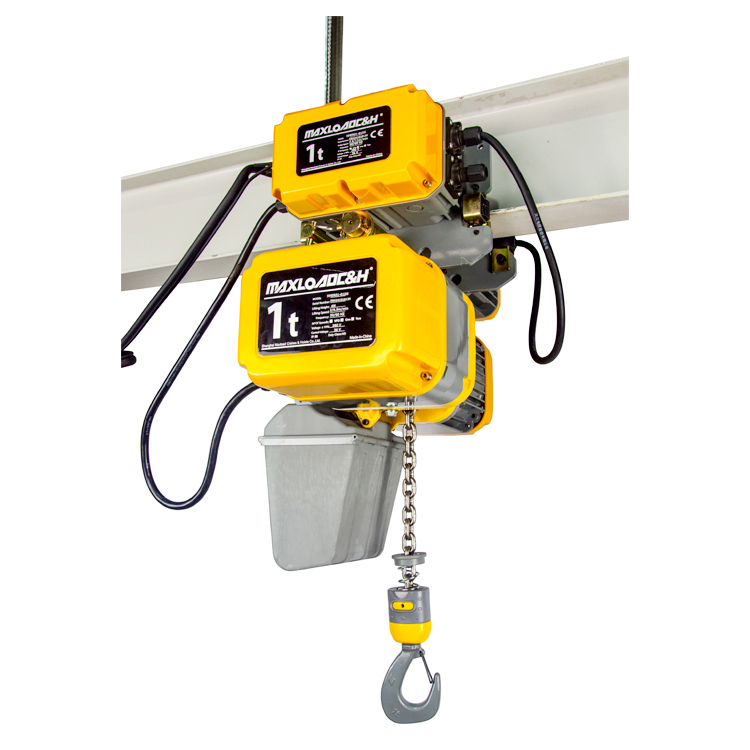
Ⅱ. Load Characteristics: It's More Than Just the "Weight" Number
Every piece of equipment has a rated lifting capacity, but this number is measured under "ideal conditions." The actual load characteristics in your workspace will change the meaning of this number.
The size and shape of the load determine the type of electric hoist. For long, slender workpieces, such as steel pipes or sections, longer lifting attachments and more precise control are needed. In this case, a chain electric hoist is more suitable than a wire rope hoist, because chain hoists have slower speeds and smaller start/stop impacts, making it harder for the workpiece to swing significantly. For bulky, heavy loads with a low center of gravity, the hoist's lifting speed requirement is higher; choosing one that is too slow will severely affect work efficiency.
The position of the load's center of gravity affects the jib selection. If the workpiece's center of gravity is not directly below the hook, or if you need to adjust the center of gravity using lifting attachments, the actual bending moment on the jib will exceed the theoretical value. A common practice is to have the electric hoist's effective travel on the jib cover as much as possible, both the workpiece storage area and the processing area, so that the workpiece does not need to be moved significantly during lifting, which actually reduces the impact on the jib.
The frequency and impact characteristics of the load are completely ignored by many factories during selection. Dozens of lifts per day on a single shift, versus dozens of lifts per hour on two shifts – this places completely different demands on the jib's slewing mechanism, the hoist's brake, and motor cooling. High-frequency use requires a heavy-duty design jib crane, a higher-grade slewing bearing, and a correspondingly higher electric hoist duty rating.
Ⅲ. Operation Workflow: Equipment Must Follow the Operator's Movements
The jib crane and electric hoist are tools, not conductors to command the operator. The equipment's operational logic must match the operator's work habits.
First, understand the positional relationship between the lifting start and end points. Is it point-to-point lifting, then swinging to another fixed point for unloading? Or is it the need to flexibly adjust the landing point within a circular area? For the former, the hoist's travel range can be limited to the straight-line path between two points; for the latter, the jib needs full rotation, and the hoist must be able to reach any position along the jib.
The operator's position is also critical. The length of the pendant control determines where the operator can stand. Other equipment or material stacks in the workspace can restrict the operator's stance. There are two solutions: either lengthen the pendant cable, allowing the operator to stand in a safe position with good visibility, or choose wireless remote control. However, the remote control must be used cautiously in high electromagnetic interference environments – signal interruption or delay is unacceptable for lifting operations.
How to address blind spots? The jib crane's column itself blocks part of the view, and with racks, workbenches, etc., in the workspace, the operator may not see the exact landing point of the hook. In such cases, auxiliary observation measures must be added, either mirrors or a ground signal person; relying solely on the operator's "feel" is not acceptable.
Ⅳ. Environmental Factors: Those "Invisible" Challenges
The workspace environment is not just about spatial dimensions; it also includes temperature, humidity, dust, corrosive gases, and other factors.
High-temperature environments, such as a foundry or a workspace next to a heat treatment station, pose heat dissipation problems for the electric hoist's motor and electrical components. Standard motors operating continuously in high temperatures are prone to overheating and tripping. You need to select a motor with a higher temperature rating or add heat insulation measures.
Dusty and corrosive environments are even more insidious. Near a grinding station, fine abrasive dust can enter the electric hoist's brake and limit switches, causing malfunctions. In chemical plants or near electroplating stations, corrosive gases can erode the jib crane's bearings, the hoist's chain and wire rope. In these cases, additional protection for critical components is necessary, such as higher sealing ratings, thicker surface coatings, or using stainless steel for the chain.
Vibration environments are easily overlooked. If the jib crane is installed next to large stamping equipment or a forging press, the periodic vibrations experienced by the equipment itself will accelerate wear on the slewing mechanism and even affect the stability of the column foundation. Such workspaces require more frequent periodic inspections, focusing on whether anchor bolts have loosened and whether the clearance in the slewing bearing has increased.
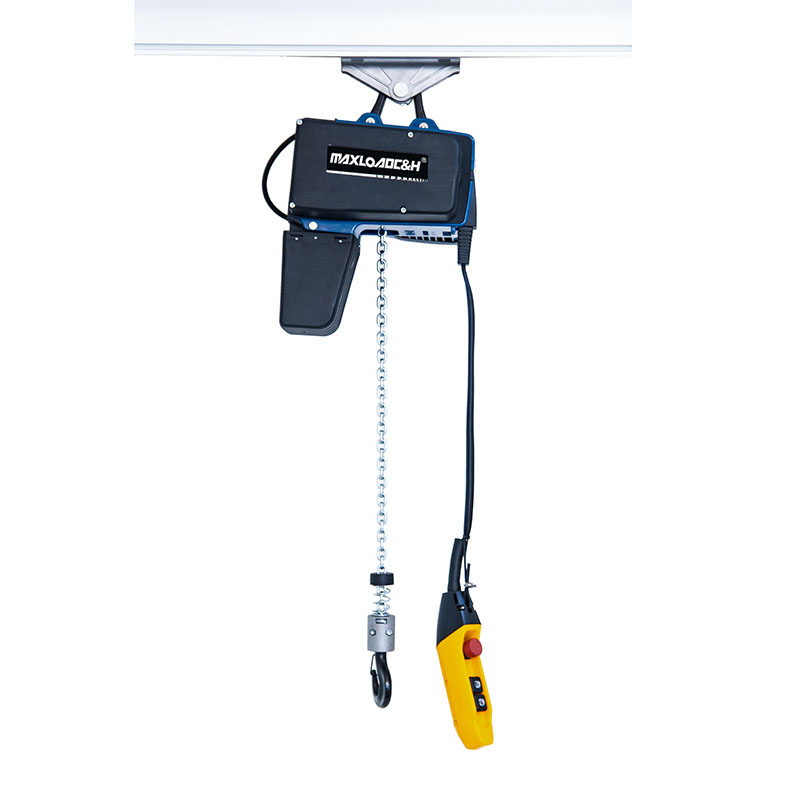
Ⅴ. Installation and Maintenance Lead Tim
Once the equipment is selected, the questions of whether it can be installed smoothly and whether it will be easy to repair later must be considered during the selection phase.
The installation access path is a practical issue. The jib crane's column and jib are large components. Can the workshop door or aisle allow these components to be brought in smoothly? Some factories end up having to demolish a wall or rent a large crane to lift components through the roof, incurring high additional costs.
Maintenance space is equally important. The electric hoist requires periodic replacement of the chain, wire rope, and brake pads. These operations require sufficient working space for the technician. If the jib crane is installed flush against a wall or column, future disassembly of the electric hoist will be very difficult. The slewing mechanism of the jib also needs to be inspected from above or the side; if there are obstructions above the access point, the equipment must be moved to perform maintenance.
Accessibility for daily inspections determines how long the equipment will last. The operator needs to check for chain wear, limit switch function, and smooth jib rotation daily before use. If these checkpoints are hidden in hard-to-reach places, inspections become a formality, and small problems turn into major failures.
Conclusion: The Distance Between "Usable" and "Easy to Use"
Choosing the right combination of electric hoist and jib crane is not simply a matter of looking at parameter sheets. The same model of equipment can perform vastly differently in different workspaces.
The truly professional selection approach is: first, thoroughly understand what your workspace actually needs – how much space it has, what special requirements the loads have, how the operation workflow goes, what environmental challenges exist, and how future maintenance will be handled. Only by taking the answers to these questions when selecting equipment can you buy the combination that truly makes your workspace run smoothly.
If you're still unsure after reading this, here's a low-tech but effective method: find an open area, mark out the jib crane's coverage area with chalk, use a long pole to simulate the jib's rotation path, and have someone stand at the operator's position to walk through the complete lifting process. While rough, this physical simulation can uncover many problems that are not visible on drawings.
 0086 156 1824 5535
 0086 156 1824 5535