Workstation Lifting Equipment Selection Guide
In factory workshops, maintenance workstations, or assembly lines, the efficiency of material handling directly impacts production cycle times and operator workload. A common mistake made by many companies during procurement is either blindly pursuing a "higher capacity is safer" approach or directly copying the configuration of another workshop. In reality, the selection of workstation lifting equipment should be based on the operating environment and revolve around four core factors: coverage area, load characteristics, space constraints, and frequency of use.
Although jib cranes and KBK cranes both fall under the category of workstation-level lifting equipment, their design logic and application scenarios differ fundamentally. Below, we analyze the equipment matching logic for different workstation environments from a practical operational perspective.
Circular Coverage Needs: The Natural Advantage of Jib Cranes
The structure of a jib crane dictates that its working range is a sector or circular area. When a workstation requires circular operations around a fixed center point, a jib crane is the most direct solution.
Typical scenarios include:
Machine tool loading/unloading workstation: The operator needs to take parts from a rack, load them into the machine, unload finished parts, and place them in a finished goods area. If these three points are distributed along an arc with a radius of 2–4 meters around the machine tool, a single column-mounted jib crane can fully cover them. When the jib rotates smoothly, the operator can easily move the hook between the three positions with one hand, eliminating the need for repeated repositioning of a forklift or manual transport.
Welding or assembly workstation: When workpieces are heavy and require operations from multiple sides, a jib crane can lift the workpiece and rotate it, allowing operators at different positions to work sequentially. The key here is not the lifting height, but the jib length and rotation angle. During selection, the distance to the farthest lifting point should be measured, and the jib length should be at least 0.5 meters longer than that measurement to leave an operating margin.
Maintenance workstation: For disassembling and assembling large components such as engines or transmissions, the advantage of a jib crane is that it does not occupy floor space. The column is fixed in a corner of the workstation, and the jib swings in for the job. When not needed, the jib can be rotated to the wall, leaving the area completely clear for personnel and carts.
It is important to note that jib cranes are not suitable for scenarios requiring frequent changes of the lifting center point. If the center of gravity of the work area changes often—for example, lifting at point A today and point B tomorrow, requiring repositioning of the equipment each time—then a jib crane is not the optimal choice.
Rectangular Areas and Dense Operations: The Use Case for KBK Cranes
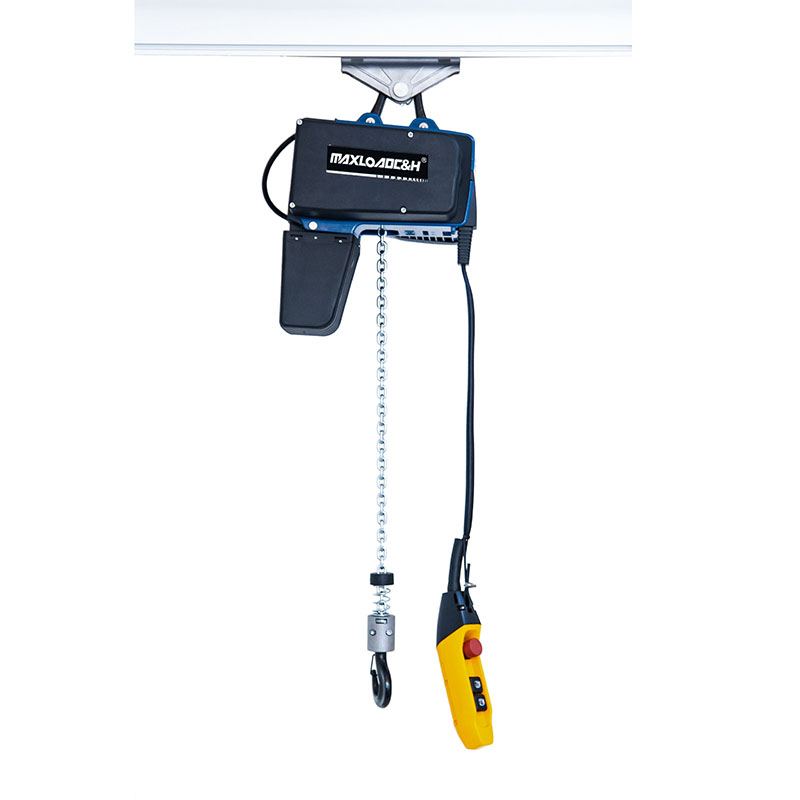
The KBK crane is a flexible, modular crane system consisting of rails, traveling trolleys, electric chain hoists, and lifting attachments. The rails can be arranged in straight lines, curves, multiple branches, or even loops. Its working range is a rectangular or irregularly shaped area.
Scenarios suitable for KBK cranes often have the following characteristics:
Narrow workstations or along assembly lines: For example, on a 10-meter-long assembly line where workers at each station need to take parts from a rack and install them onto products. A jib crane cannot cover the entire line due to its limited jib length, requiring multiple units. A KBK crane, on the other hand, can have a main beam installed along the assembly line, with rails running from one end to the other, allowing a single hoist to cover all stations. For example, in electronic component assembly, a 10-meter line with 5–6 stations spaced about 2 meters apart, operators can pull the hook along the line with more continuous movement than with a jib crane.
Dense operation areas: When multiple workstations share the same overhead space, KBK cranes can use intersecting rails or turntables to enable switching between multiple paths. For instance, in an automotive parts workshop where washing, inspection, and packing stations are arranged in an L-shape, KBK rails can extend from above the washing machine to the inspection table and then to the packing area, allowing workpieces to be transferred overhead without floor-based handling.
Operations requiring precise positioning: The hoisting mechanism of a KBK crane is typically an electric chain hoist or a pneumatic balancer, and combined with the low‑resistance traveling characteristics of the KBK system, it allows millimeter-level fine adjustments. This is particularly important in precision assembly, mold repair, and similar scenarios. In contrast, the jib of a jib crane has a larger rotational inertia, making fine hook positioning less flexible than that of a KBK.
Load Characteristics: More Than Just Weight
Many procurement professionals focus only on "maximum lifting capacity" while neglecting another dimension of the load: size and shape.
Long workpieces: For example, a 3‑meter‑long shaft or pipe. When lifted at a single point by a jib crane, the workpiece tilts, requiring an equalizer beam or dual lifting points. A KBK crane, however, can be designed with a double‑girder structure, allowing two hoists to operate synchronously for horizontal lifting. From this perspective, it is not that a jib crane cannot lift long items, but that KBK offers higher customizability.
Frequent start/stop operations: The rotation of a jib crane relies on manual pushing and pulling, with starting and stopping determined by operator feel. This is not suitable for operations requiring frequent inching and alignment. A KBK crane equipped with a frequency‑controlled electric hoist enables soft starts and slow creeping movements, providing a more comfortable operation. At a lifting frequency of more than 300 lifts per day, operator fatigue is significantly lower with a KBK crane than with a jib crane.
Uneven load distribution: Some workstations lift lightweight items of 50 kg or less 90% of the time and occasionally lift a heavy item of 500 kg. In such cases, if a jib crane is selected based on the heavy load, the rotational resistance of the jib will be high, making it feel clumsy when handling light loads. With a KBK crane, the hoist can be configured for light loads, while heavy loads can be handled with auxiliary supports or a manual chain hoist, resulting in a more reasonable investment.
Space Constraints: Often Overlooked Dimensions
Headroom below 2.5 meters: Low ceiling height is a pain point in many older workshops. A jib crane, considering the column height, jib thickness, and hoist headroom, typically requires more than 2.8 meters of installation space. A KBK crane, however, can be customized with a low-headroom solution, such as a side‑mounted electric hoist or an ultra‑low‑headroom hoist, enabling normal operation under a ceiling height of just 2.2 meters.
Column interference: A jib crane requires a fixed column as its foundation. If a building column is exactly in the center of the workstation, the rotation of the jib crane is restricted. In this case, either a wall‑mounted jib crane (fixed to the wall) or a KBK crane should be chosen. KBK rails can be suspended from roof beams or floor slabs via hangers, avoiding ground‑level obstacles.
Above doorways or passageways: Some workstations require lifting workpieces to the outside of a door or across a passageway. When a jib crane's jib swings out of the door, the column becomes an obstacle in the middle of the passage. A KBK crane, however, can have its rails extended directly outside the door, enabling unobstructed crossing. For example, in a die‑casting workshop, when molds are moved from a storage area to a press, crossing a forklift passageway in between, KBK rails can be installed 2.5 meters above the passageway, allowing forklifts to pass normally while lifting operations continue unaffected.
Economic Assessment Based on Frequency of Use
Another often overlooked factor is the frequency of use.
Low-frequency use: A jib crane combined with a manual chain hoist or manual trolley has low investment and simple maintenance. A manual jib crane requires no power supply or control panel and has looser requirements for installation position.
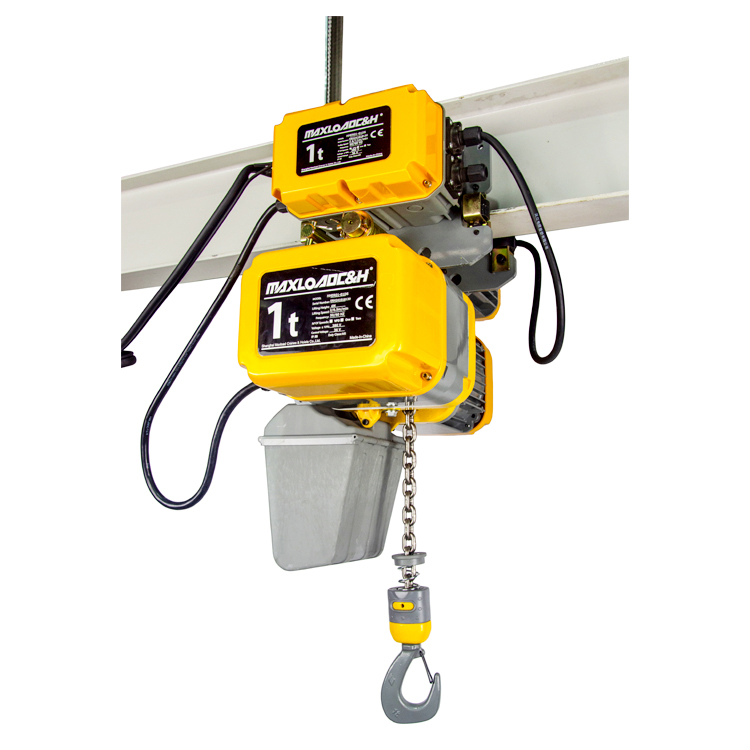
Medium to high frequency use: Electrically driven KBK cranes offer clear advantages. Both lifting and traveling are motor‑driven, requiring the operator only to push buttons, minimizing physical exertion. At 150 lifts per day, a manual approach would require an operator to walk about 3 kilometers extra and perform 500 push‑pull actions. Switching to an electric KBK crane reduces this physical consumption to nearly zero.
Very high frequency use: Wear resistance and heat dissipation become important. KBK rails and wheels are made with a special cross‑section design that offers better wear resistance than the rotating joints of standard jib cranes. Additionally, KBK cranes can be equipped with two‑speed or stepless speed control to reduce impact from high‑speed operation.
Hidden Constraints of Installation Conditions
Finally, note the differences in installation requirements.
A jib crane column requires a poured concrete foundation with embedded anchor bolts and a curing period of at least 7 days. If the workstation is temporary or subject to frequent rearrangement, this requirement is difficult to meet. A wall‑mounted jib crane requires high wall strength; brick walls cannot support it—only concrete structural walls.
KBK crane installation mainly relies on the load-bearing structure of the factory roof. I-beams, concrete beams, and grid structures can all serve as suspension points, but load capacity must be verified. If the roof structure has insufficient load‑bearing capacity, additional columns can be added for support, but this turns it into a self-supported structure and increases cost.
Certain specialized workstations also involve cleanliness requirements. Industries such as food, pharmaceuticals, and electronics are highly sensitive to equipment debris and oil drips. Jib cranes have many moving parts, like slewing bearings and wheels that often use open gears or plain bearings, from which grease can easily escape. KBK's sealed roller bearings and enclosed rail system perform better in this regard.
 0086 156 1824 5535
 0086 156 1824 5535