Selecting KBK Cranes Based on Workstation Environment
In industrial workshops, the selection of workstation lifting equipment directly affects operational efficiency and safety. As a light-duty flexible suspended crane, the KBK crane has become increasingly common in various workstation scenarios in recent years. However, many people have a misconception when selecting a KBK system—they think that simply buying a KBK track and pairing it with an electric chain hoist will solve the problem. In reality, differences in workstation environments dictate entirely different matching logic between the KBK structure and the hoist type.
Matching Lifting Capacity with Workspace Constraints
The first factor to consider in a workstation environment is the lifting capacity and working radius. KBK cranes typically have a standard lifting capacity ranging from 125 kg to 2000 kg, but different workstations have vastly different requirements. For example, in precision assembly workstations, the components to be lifted are usually within 300 kg, so a single-rail KBK with a chain electric hoist is sufficient. However, if the workstation involves mold changes or equipment maintenance, the lifting capacity may exceed 1000 kg, where a single-rail structure would lack rigidity. In such cases, a double-girder KBK structure is needed to distribute the load.
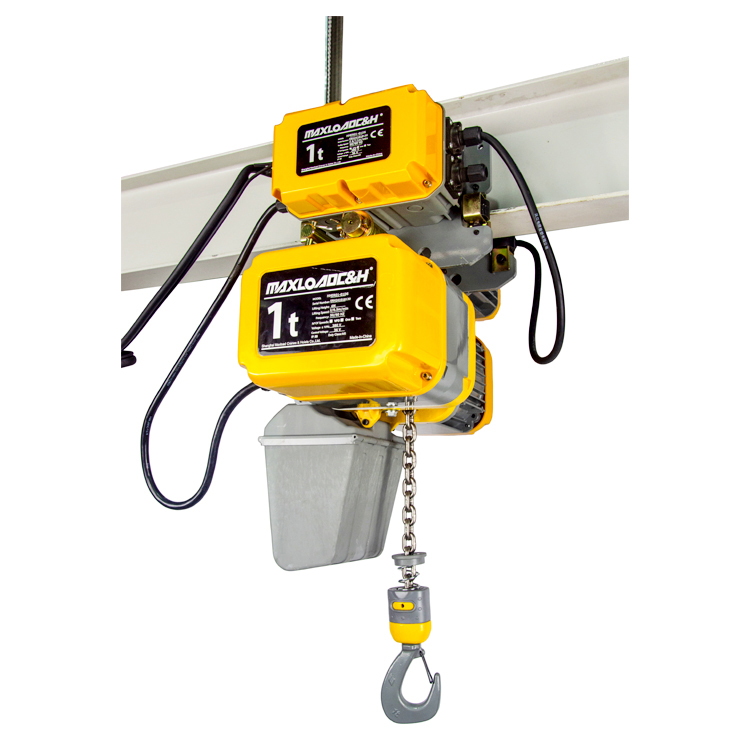
Height limitations in the workstation are also critical. Some workshops have pipes, cable trays, or ventilation systems near the ceiling, leaving less than 3 meters of clear height. In such cases, using a standard-height KBK suspension system would compress the hoist's lifting stroke, making it impossible for the operator to lift heavy objects high enough to clear obstacles. The solution is to adopt a low-headroom design—mounting the KBK track directly under the lower flange of the I-beam and using a low-headroom electric chain hoist. The minimum distance from the hoist hook to the track surface can be kept within 500 mm, saving more than 300 mm of vertical space compared to conventional configurations.
Impact of Workstation Layout on Track Configuration
The shape of the workstation area determines the layout and orientation of the KBK track. For a rectangular assembly workstation, the best way to cover the entire area is to use two parallel main beams plus a transverse auxiliary beam, forming a rectangular working zone. If the workstation is L-shaped or irregular, laying out a rectangular track would leave some equipment idle. Instead, two independent straight-rail KBK systems, each serving one area, are more suitable.
Some workstations are placed tightly against a wall or equipment, with limited access on the operating side. In this case, a cantilever KBK structure offers advantages—installing a cantilever KBK on a column, with the track extending over the workstation, allows the electric hoist to move along the cantilever and cover work points near the wall. However, it should be noted that when the cantilever length exceeds 3 meters, deflection at the end of the track increases significantly. When the hoist moves to the end, the hook will swing to one side, affecting precise positioning.
Lifting Frequency and Hoist Type Selection
The lifting frequency of the workstation directly affects the duty class and operation mode of the hoist. For high-frequency workstations, such as material replenishment on an assembly line with more than 20 lifts per hour, a chain hoist with a pendant control is not ideal. The operator would frequently press buttons, leading to arm fatigue, and repetitive positioning accuracy would be difficult to maintain. A better match is a KBK combined with a pneumatic balancer or an intelligent lifting device. A balancer allows infinitely variable speed and floating mode, where the operator can control lifting by hand-guiding the workpiece, doubling positioning efficiency compared to a pendant control.
For low-frequency workstations, such complexity is unnecessary. A maintenance workstation might use the hoist only two or three times a day, so a standard chain electric hoist with a pendant control is sufficient. However, attention should be paid to the hoist's lifting speed—slow speed is better for precision positioning, while fast speed suits purely repetitive handling. Most general-purpose chain hoists are single-speed; if the workstation requires both conditions, a dual-speed hoist is preferable.
Environmental Constraints on Equipment Selection
Temperature, humidity, and dust conditions in the workstation are often overlooked. In foundry or grinding workstations, airborne metallic dust and grinding wheel debris are abundant. Standard KBK track wheels are made of engineering plastic, and dust will adhere to the contact surfaces between wheels and tracks, accelerating wear. In such cases, all-steel wheels with sealed bearings are required, and the track surface must be hardened. The electric hoist must also consider the protection rating. Ordinary IP44 hoists would not survive in such an environment for more than half a year; at least IP55 protection is needed, with dust-sealed motors and electrical enclosures.
High-temperature workstations are another matter. Workstations next to heat treatment furnaces may have ambient temperatures exceeding 60°C. Thermal expansion of the KBK track must be addressed—expansion joints should be left at track connections, and the constraints at suspension points should be changed from rigid to elastic. Otherwise, the track will bend from the heat and jam the traveling trolley. High-temperature modification for the electric hoist is even more complex. Standard hoists typically have a heat resistance rating of 40°C; in high-temperature environments, the motor's thermal overload protection will trip frequently. Solutions include replacing the motor with class H insulation or relocating the hoist's control components outside the high-temperature zone, leaving only the mechanical parts inside.
Operational Convenience and Additional Features
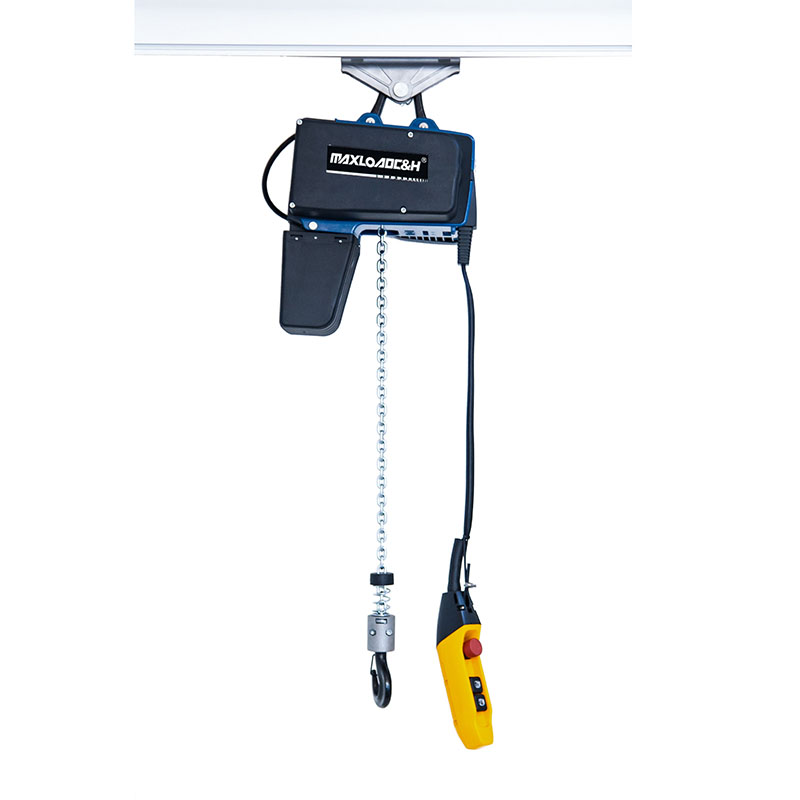
The height of the workstation operating plane determines whether wireless remote control is needed. Some workstations are elevated, making it difficult for an operator on the floor to reach the pendant control's hanging point, or the pendant cable frequently gets caught on workpieces. In such cases, equipping the electric hoist with a wireless remote control is very useful. However, note that the travel motor of the KBK trolley is typically contactor-controlled, which works fine with a wireless remote. If the hoist is inverter-controlled, the wireless remote must be communication-matched with the inverter; otherwise, signal delay may cause unresponsive operation.
Some special workstations require anti-sway functionality. For example, when lifting slender workpieces or liquids, the sway of a standard hoist during start/stop may cause spills or collisions. Anti-sway can be achieved in two ways: one is to add mechanical brake rails to the KBK trolley to limit inertial sway during start/stop; the other is to use an electronic anti-sway algorithm via the hoist's inverter. The former is lower in cost but less effective; the latter works well but requires the hoist motor to be inverter-controlled.
Installation Conditions and Subsequent Maintenance
Finally, back to the most practical issue—installation conditions. Many workstations have no load-bearing structure above; only a corrugated steel roof panel exists. In such cases, the KBK cannot be directly suspended from the roof panel. Instead, I-beam support beams must be installed first, transferring the load to the workshop columns. The span, cross-section, and arrangement of suspension points for the support beams must be designed based on the KBK track layout—empirical estimation is not sufficient.
Maintenance accessibility should also be considered in advance. The collector rails inside the KBK track are prone to wear; during selection, confirm whether the inspection access points for the collector rails are easy to reach. The hoist's load chain requires periodic lubrication and replacement; check whether the chain container is easy to disassemble. In some compact workstations, the chain container is positioned directly under the track, leaving no room to insert a hand. Replacing the chain would require removing the entire hoist, increasing maintenance time several times over.
In summary, there is no fixed formula for matching a KBK crane with an electric hoist. The selection must be analyzed item by item based on the workstation's lifting capacity, spatial dimensions, frequency of use, environmental conditions, and operational habits. The process should start by clarifying these parameters, then determining the KBK structure, track layout, and hoist features accordingly, in order to arrive at a solution truly suited to the workstation.
 0086 156 1824 5535
 0086 156 1824 5535