Practical Guide to Electric Hoist Matching
Walk into any machining shop, assembly line, or warehouse, and you’ll always see jib cranes busy at their workstations. Unlike overhead cranes that cover an entire workshop, it is precisely this “dedicated to a single workstation” characteristic that makes jib cranes the most direct solution for local material handling problems. However, many people focus only on lifting capacity and price when purchasing, ignoring the specific details of the workstation environment, resulting in awkward usage.
A truly suitable jib crane is not just “able to lift” – it must form a smooth working system with your workstation, your operating habits, and your electric hoist.
First, look at the workstation layout, then decide the jib type
There are three basic types of jib cranes: wall-mounted, floor-mounted column type, and mobile. Which one to choose depends on “how much space is left” at your workstation.
If your workstation is against a wall, and the wall is a load-bearing structure, a wall-mounted jib crane may be the best solution. Its column is fixed to the wall or a structural column, with the jib extending outward, occupying zero floor space. In this case, you need to pay attention to the rotation range of the jib – wall-mounted types typically rotate only about 180 degrees. If your workstation requires 360-degree full coverage, this won’t suffice.
The floor-mounted column type is the most common. A column stands on the floor, and the jib rotates 360 degrees around it. This type is suitable for workstations where operation is needed all around, such as an assembly station that picks parts from the left and assembles them onto a product on the right. Its disadvantage is that the column itself occupies a floor area. If your workstation is already crowded with tool cabinets and workbenches, the column may be in the way.
The mobile jib crane travels on wheels mounted on its base. It is suitable for non-fixed workstations or scenarios where lifting is only needed occasionally. However, note that mobile jib cranes typically have a lower lifting capacity, and moving them requires a flat floor. If your workstation floor has rail grooves or potholes, pushing it will be very difficult.
A common mistake is that someone buys a mobile jib crane for convenience and uses it daily at a fixed workstation, resulting in rapid wheel wear and poor rotation. Fixed workstations should use fixed cranes; mobile cranes are designed for mobility.
Rotation radius and height: Don't calculate too tightly
The rotation radius and lifting height of a jib crane are two parameters that are often “precisely calculated”. Many people measure the distance from the centre to the farthest pick-up point in the workstation and choose the radius based on that number. But in practice, you’ll find that when the jib rotates to certain angles, the load under the hook may hit the column, or the electric hoist chain may rub against the pulley cover at the end of the jib.
Therefore, leave a margin on the radius. It is generally recommended to add 300 to 500 mm to the measured maximum distance. Also, pay attention to the difference between the “effective radius” and the “theoretical radius” of the jib crane – there is a zone at the end of the jib where the electric hoist reaches its limit and cannot actually lift a load because the wire rope or chain would be at too steep an angle.
The same applies to lifting height. From the floor to the highest hook position, this number should consider that the load clears the floor. You must account for the height of the electric hoist itself, the height of the lifting accessories, and the tallest obstacle the load needs to clear. Many people buy a jib crane only to find that when the hook is raised to the top, the bottom of the load hasn’t even cleared the machine tool’s work surface – that’s insufficient height calculation.
Electric hoist matching: Not just hanging any hoist
The jib crane is just a structure; the real work is done by the electric hoist. The matching between the hoist and jib is often overlooked.
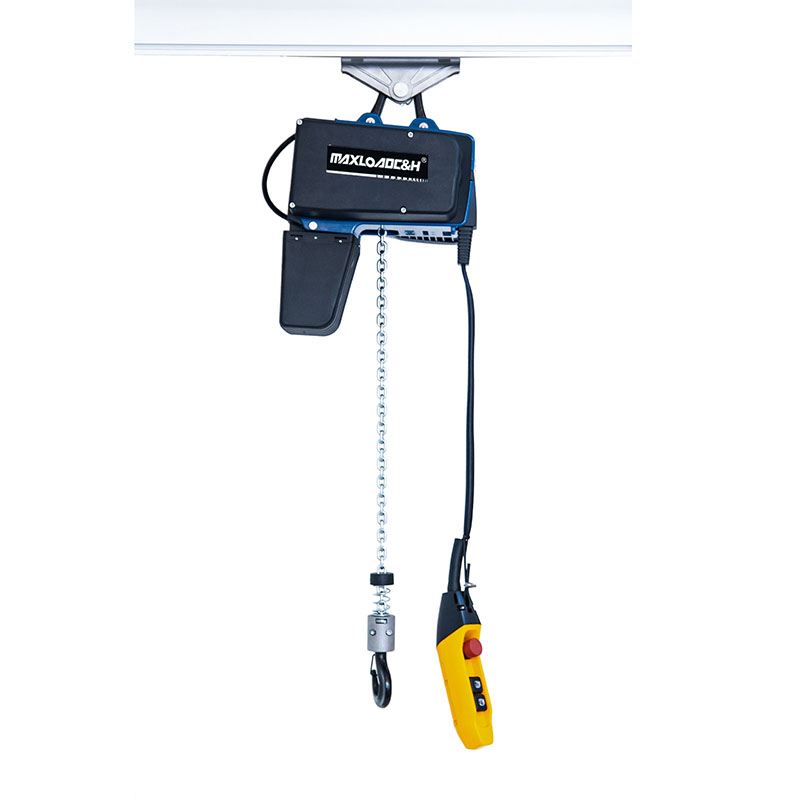
First, the travel method. Electric hoists travel along the jib in two ways: manual push/pull and motorised trolley. Manual push/pull is suitable for light loads and low-frequency use. The operator pushes the hoist by hand along the jib – simple and reliable, but pushing it hundreds of times a day will tire the arms. A motorised trolley uses a motor to drive the hoist, suitable for frequent use or heavier loads.
But motorised trolleys bring a problem: cable management. As the hoist moves, the power cable must follow. The most common solutions are cable trolleys or drag chains. If your jib crane has a large rotation range, routing the cable inside the column is much cleaner, but repair and replacement are more difficult. An external cable is simple but tends to tangle during rotation. A practical rule of thumb: if the jib rotation angle is less than 270 degrees, an external cable with rotation limit stops is sufficient; beyond 270 degrees, it’s better to use a slip ring or route the cable inside the column.
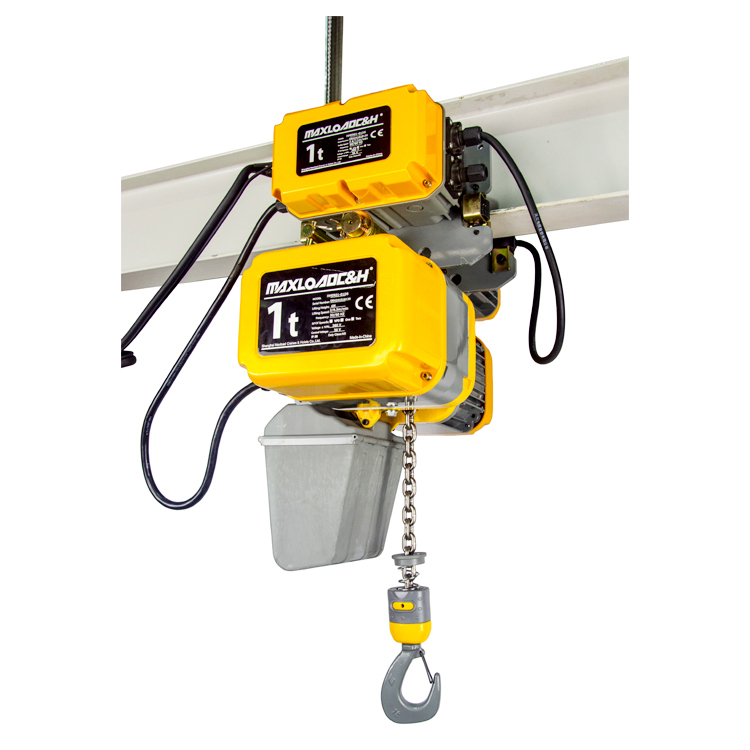
Another often-ignored aspect is the hoist mounting configuration. Chain hoists have the chain drop from the middle or side of the hoist body, and mounting dimensions vary greatly between brands. If the height under the jib flange is already fixed, and you choose a hoist with a large overall height, you may find that when the hook is fully raised, the chain container almost hits the jib – this is not uncommon.
Wire rope hoists offer greater lifting height, but wire rope tends to loosen and tangle under light loads, and it has a significant rotational tendency, causing single-point lifted loads to spin. Chain hoists are much better in this regard, but chain hoists generally have slower lifting speeds. For frequent light-load lifting, wire rope hoists are more efficient; for workstations requiring precise positioning or lifting long workpieces, chain hoists offer better control.
Duty cycle determines configuration level
Many people ignore the duty cycle classification of jib cranes, but this is exactly what determines whether the equipment lasts five years or fifteen years.
For a workstation with no more than 20 lifts per day and loads less than half the rated capacity, a standard-duty jib crane is perfectly adequate. But if your workstation lifts every few minutes, hundreds of times a day, you need a heavy-duty model. Heavy-duty means larger slewing bearings, thicker steel plates, and more wear-resistant bushings.
Electric hoists have the same duty cycle classification. Using a light-duty hoist in a high-intensity application results in frequent motor thermal overload trips, premature gear wear in the reducer, and worn-out brakes. Conversely, using a heavy-duty hoist in a light-duty application has no downside except higher cost.
A real case: At a finishing station in an auto parts factory, a workpiece was lifted every two minutes. The original standard-duty chain hoist lasted less than a year – the chain wore beyond limits, and the motor burned out once. After replacing it with a heavy-duty hoist (thicker chain, larger motor), no further problems occurred.
Special environment considerations
If your workstation is in a dusty environment, standard dust protection ratings for electric hoists are insufficient. Dust can enter the motor and brake, causing failures. In this case, choose a dust-protected hoist with sealed motors and brakes.
High-temperature environments also require attention. The grease in the jib crane’s slewing bearing can drain away at high temperatures, requiring high-temperature grease. The rubber cables on electric hoists harden and age in high heat, needing silicone rubber cables or heat-resistant sheathing.
Explosion-proof environments are another major topic. If your workstation has flammable gases or dust, both the jib crane and electric hoist need explosion-proof configurations – explosion-proof motors, explosion-proof limit switches, and copper or beryllium-copper alloy explosion-proof hooks. Note that explosion-proof hoists are significantly more expensive than standard ones, but this is not an area to cut costs.
Installation details determine user experience
Many jib cranes are uncomfortable to use because of installation issues.
The verticality of the column directly affects the smoothness of jib rotation. If the column is tilted, the jib will feel stiff or difficult to turn at certain angles. During installation, use a level or theodolite to correct verticality – the tolerance should be within 1/1000.
The pre-tightening force of the anchor bolts is also important. Many factories install the crane themselves, tightening the anchor bolts casually, only to have the column wobble after some use. The jib crane column withstands significant overturning moments; anchor bolts must be tightened to the specified torque, and grouting must be dense.
The bolts on the slewing bearing also need to be re-tightened after one month of use, because initial operation can cause slight loosening. This detail is rarely noticed, but if you wait until the slewing bearing is already loose, wear has likely already occurred.
 0086 156 1824 5535
 0086 156 1824 5535