Your Workspace Environment Determines Which Type of Overhead Crane You Need
Walk into any machining workshop or warehousing and logistics center, and chances are you’ll see lifting equipment suspended overhead. But if you look closely, you’ll notice that different factories use different setups. Some have just a straight track with a hoist hanging from it, while others feature large gantry-style cranes with two legs that can move across the entire workshop. Many people assume this is a matter of budget – spend more for a big crane, settle for a small one if funds are tight. But anyone with hands‑on shop floor experience knows the real reason is far more straightforward.
What truly determines which type of overhead crane and electric hoist you should use is the physical environment of your workspace. In other words, you don’t choose the equipment – your workspace environment chooses you.
Clearance Height Is the First Hurdle
Start by looking up – how high is your factory ceiling? This is the most common and often most overlooked issue. During many old‑plant renovations, owners buy standard‑size electric hoists and cranes, only to discover after installation that even at its highest point, the hook is less than two meters off the floor. What does that mean? Workers cannot lift loads over slightly tall equipment, and there isn’t even enough room for a forklift to unload.
In a low‑clearance environment, you need a specially designed low‑headroom electric hoist paired with an offset‑rail box‑girder crane. This combination minimizes the vertical space occupied by the hoist and the rail – sometimes to as little as 30‑40 centimeters. Every extra centimeter of clearance you gain translates into operating flexibility down the road.
Conversely, if your building is tall enough, you can opt for a standard electric hoist with a conventional overhead bridge crane. In that case, there is no need to pay extra for compact designs – standard configurations offer better maintainability and parts commonality.
Floor and Load-Bearing Wall Capacity
The second hard constraint is your floor and walls. This is especially critical in older plants. Many people think that because the crane hangs in the air, the floor doesn’t matter – but that’s completely wrong. For any gantry‑style crane with legs, or any bridge crane that requires floor‑mounted rails, the total weight of the equipment plus the lifted load is ultimately transferred to the floor foundation.
Some workshops have only ordinary concrete floors, poured without piles or reinforcement. You install a crane weighing several tons or even over ten tons, lay the rails, and after the crane travels back and forth for a few months, the floor settles and cracks, the rails deform, and the wheels start grinding against the rails – at that point, no amount of regret will help.
In such a case, your only option is to transfer as much load as possible to the walls. That means choosing a suspended crane, where the rail is hung from the building’s roof beams or bracket columns, letting the wall structure carry the load instead of the floor. If a suspended crane is also impractical, consider a lightweight semi‑gantry crane with a rail design that spreads the load as evenly as possible.
Workspace Layout Determines Crane Travel Path
Look at how your equipment is arranged. The fixed positions of machining centers, assembly stations, material storage areas, and finished‑goods zones directly dictate how your crane should move.
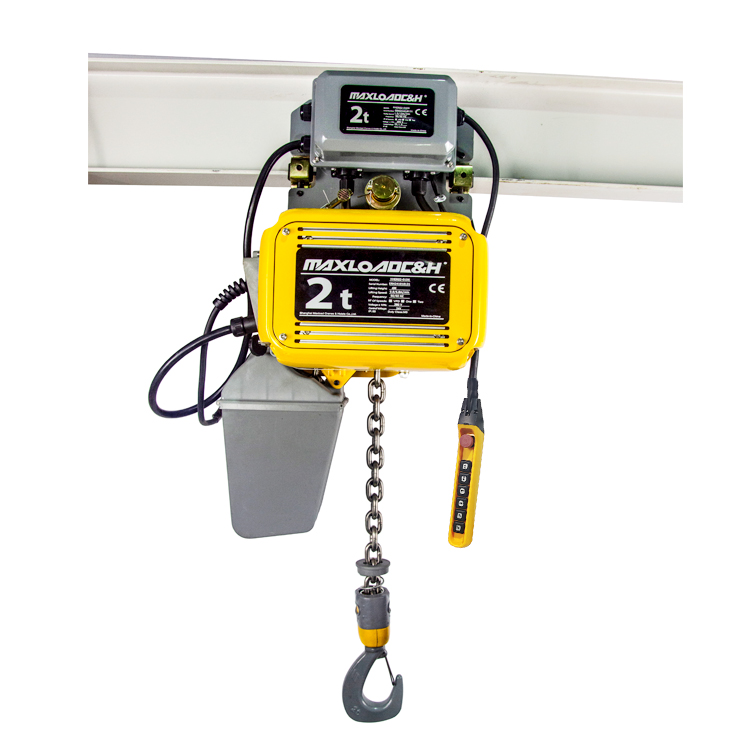
If your workspace is essentially a straight line – for example, a long assembly line where you only need to move materials from one end to the other – why spend extra money on a full‑area bridge crane? A single‑beam suspended monorail with a properly rated electric hoist and a traveling drive unit is all you need. This setup is simple, inexpensive, and easy to maintain.
However, if you are dealing with a rectangular work area where several pieces of equipment are spread out and materials must be shuttled back and forth between them, you need a double‑girder bridge crane. The double‑girder configuration allows the bridge to travel along the length of the workshop, while the trolley moves across the bridge, and the hoist handles vertical lifting motion in all three directions, covering the entire area.
One special situation deserves attention: if your workspace has platforms or pits at different levels, you must check whether the hoist’s lift height can reach both the highest and lowest points. Many people only consider the horizontal coverage and forget the vertical differences. The result: even with the hook fully lowered, you still can’t reach a workpiece in a pit – a classic selection error.
Duty Cycle and Ambient Temperature
These two factors are often overlooked in the early stages, but problems will become obvious within six months of use. What is a duty cycle? It is how many starts and lifts your crane performs each day. Some workspaces only need the crane a dozen times per day – in that case, a standard M3 or M4 duty rating is perfectly adequate. But on a production line with a two‑minute cycle and hundreds of lifts per day, using a standard‑duty unit will cause the motor and gearbox to overheat and burn out within six months. You must choose an M5 or even M6 heavy-duty configuration with a more powerful motor and a more robust cooling system.
Ambient temperature is just as critical. In a normal machine shop at room temperature, a standard electric hoist works fine. But if your crane is in a foundry, heat‑treatment department, or next to a steel mill where summer temperatures can reach 50–60 °C or higher, the electrical components inside a standard hoist’s control panel will malfunction, and the motor’s insulation class will be insufficient. You need a high-temperature version with Class H motor insulation, a control panel located away from heat sources, and possibly an independent cooling fan for the motor.
On the other end of the spectrum, some food‑processing workshops or cold storage rooms operate below freezing year‑round. Standard wire ropes become stiff, and grease solidifies. You must use low‑temperature‑rated wire ropes, low‑temperature grease, and cold‑resistant rubber cables.
Nature of the Load Dictates Details
This final point many people never think about. Look closely at the shape of the items you need to lift. If they are regular boxes, pallets, or coils, a standard hook is fine. But if you need to lift long, slender profiles, steel pipes, or sheets, the crane and hoist alone are not enough – you need a specialized lifting attachment below the hoist, possibly with dual‑point or even four‑point synchronized lifting.
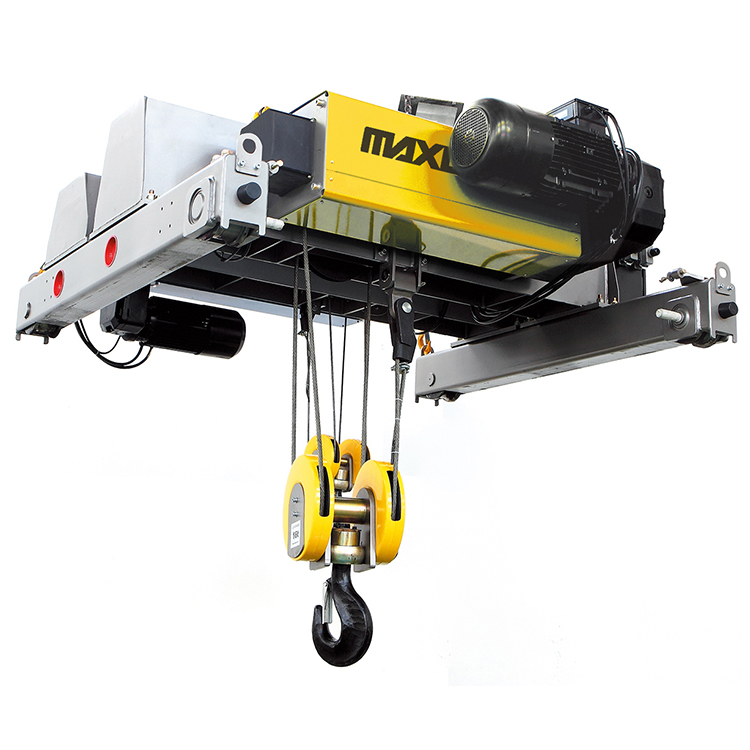
That means your crane structure must be adjusted accordingly. A single-hook hoist cannot keep a long, slender load horizontal – one end will be higher than the other, the load will tilt, and it may slip or collide. You need a dual‑hoist synchronized system, where two hoists are mounted on the same beam and electrically controlled to lift and travel together, so you can safely handle a six-meter-long I-beam.
Some loads are easily damaged, such as precision‑cast blanks or finished parts with a surface treatment. For those, the crane must move slowly – you need variable‑frequency drive (VFD) control for hoisting, bridge travel, and trolley travel, all with smooth, slow speed control. Combined with specialized soft slings or vacuum lifters, this ensures the workpiece is not damaged.
 0086 156 1824 5535
 0086 156 1824 5535