Selecting the Optimal Combination of Overhead Crane and Electric Hoist Based on Workstation Environment
In many factory workshops, a common sight is equipment that feels awkward to use after purchase. Either the crane moves with bumps and clashes, or the electric hoist is just a bit short of reaching the load. Simply put, the initial selection focused only on lifting capacity while ignoring the actual workstation environment.
In reality, the overhead crane and electric hoist are not isolated pieces of equipment; they are an integrated system. The crane is responsible for spatial movement, and the hoist handles vertical lifting. How well they work together directly determines daily efficiency and even safety. Today, let's discuss how to select the right combination based on your actual workstation environment.
Understand Your Spatial Layout First, Then Decide on the Rail Type
The shape of your workspace is the primary constraint. Different workshop structures require different crane rail configurations.
If your workspace is a standard rectangular workshop with evenly spaced columns, the most straightforward solution is an overhead bridge crane with a standard electric hoist. The bridge crane's rails are mounted on the runway beams along both side columns, with the bridge spanning the workshop and the hoist traveling along the bridge. The main advantage is extensive coverage – the entire rectangular area is within lifting range, making it suitable for batch production line material handling.
However, if you only have a narrow aisle or workstations arranged against a wall, an overhead bridge crane would be overkill. In this case, a jib crane with an electric hoist is more practical. The jib crane's pillar is fixed in a corner, and the jib arm can rotate 180 or even 270 degrees, with the hoist hanging underneath. Although the coverage area is a sector, it is perfectly adequate for local workstation loading/unloading and costs significantly less.
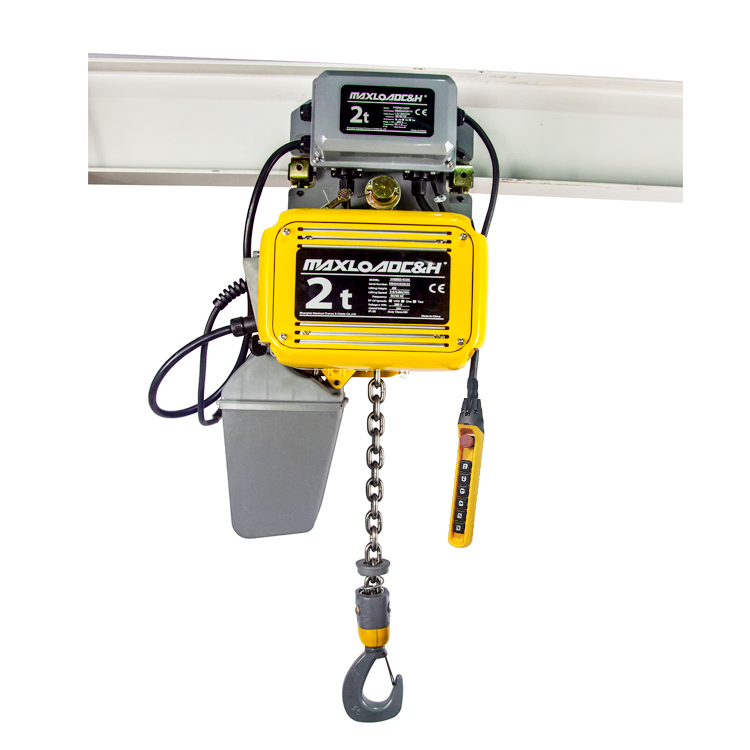
Another tricky scenario is when the space above the workstation is cluttered with pipes, air ducts, or equipment platforms, leaving insufficient headroom for a standard crane. Here, a low-headroom electric hoist is the answer. These hoists have a more compact design, with a much shorter distance from the hook to the rail surface compared to standard models. Do not underestimate those extra centimeters – in headroom-constrained environments, it can mean the difference between being able to lift a piece of equipment or not.
Duty Cycle and Load Characteristics Determine Hoist Configuration
Once spatial issues are resolved, the next step is to examine how you work. Two core metrics matter: how many lifts per day, and the nature of the loads.
Let's start with frequency. Some workstations only require a few lifts per day – for example, equipment repair areas or sample prototyping zones. A standard electric hoist is perfectly adequate; no need to overspend. But if it's a production line station requiring a basket of parts every few minutes, totaling hundreds of lifts per day, the situation is different. Frequent starts and stops stress the hoist's brake, gearbox, and motor. In such cases, you should select a dual-speed or variable frequency controlled (VFC) hoist. The slow speed is for precise positioning, and the fast speed is for empty hook return, saving time and reducing impact.
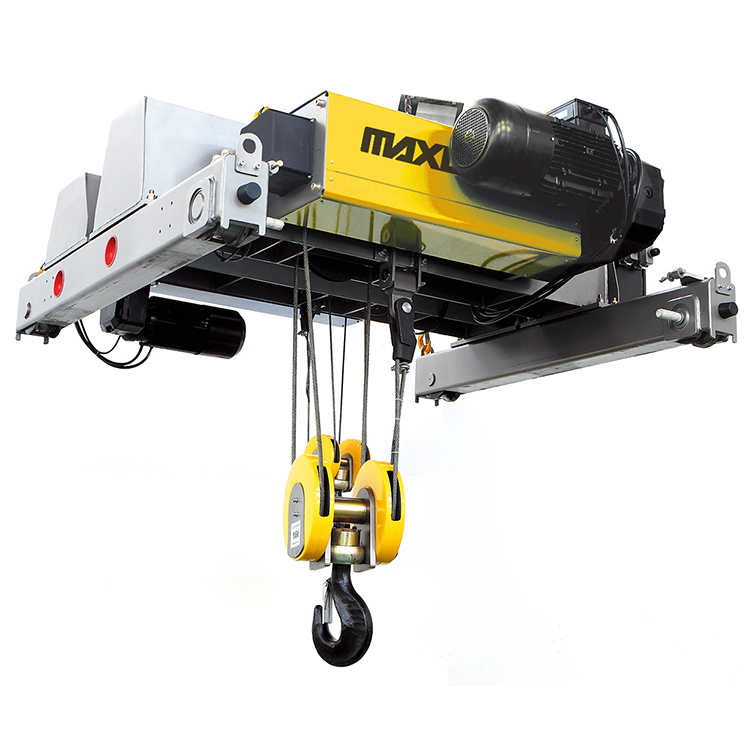
Now consider load characteristics. Some workstations handle regular loads – bundled steel bars, uniform boxes of parts – with a clear center of gravity, lifting smoothly. Here, a standard four-rope reeving hoist suffices. However, other workstations are less forgiving. For instance, a mold repair station lifting irregularly shaped molds, or a foundry lifting a ladle of molten metal, where the load may swing or tilt. In these cases, the hoist needs better stability. Solutions include increasing wheel spacing, adding guiding devices, or even considering a dual-hook hoist to suppress sway.
Special mention goes to harsh environments: acid mist, dust, high heat, or explosion-proof requirements. In these conditions, standard electrical components and wire ropes will have drastically shortened lifespans. Selection must include targeted protection features – for high heat, use heat-resistant wire ropes and thermal insulation; for hazardous areas, use explosion-proof motors and limit switches. These are not optional; they are mandatory.
Operational Convenience is Often Severely Underestimated
Many people focus solely on tonnage and span when selecting cranes and hoists, only to find the operation awkward once in use. This is especially noticeable in smaller workstations.
The most common pain point is the pendant control cord being too short or getting in the way. Operators have to walk alongside the load, and the cord dragging on the floor gets run over by forklifts or crushed by workpieces, leading to damaged insulation and shorts. Two solutions: either switch to a wireless remote control, allowing the operator to stand in the best position for visibility; or install a festoon cable system on the rail, so the pendant travels with the hoist and the cord never touches the floor.
Another easily overlooked issue is visibility. If your workstation has tall equipment or shelving that blocks the line of sight as the crane moves, the operator cannot see the hook position and must rely on feel or shouted instructions from below. In this situation, it is highly recommended to install a wireless camera on the hoist, transmitting the view under the hook to a small screen on the remote control. This feature is not expensive but drastically reduces collision accidents.
Some workstations require operating two hoists simultaneously – for example, lifting a long workpiece needing two synchronized lifting points. In this case, consider dual-hoist synchronized operation. A common approach uses two independent hoists, which are hard to synchronize. A better solution is a master-slave hoist with synchronized control, where a single remote controls both, keeping lifting and traveling movements coordinated.
An Often Overlooked Detail: Maintenance Access
Having discussed "what to choose," a final reminder about "how to install." Many workshops install cranes without ever considering future maintenance. When the hoist eventually fails, the maintenance worker climbs up only to find the motor side flush against a wall or adjacent equipment, with no room to insert a wrench.
Therefore, the selection phase must include maintenance access and operating space. For example, leave sufficient buffer distance at the rail ends so the hoist can travel to a serviceable position. The hoist's own layout matters too: easily worn components like the control box and limit switches should face the accessible side. In truly tight spaces, consider a hoist with an integrated maintenance platform, allowing workers to stand on the platform without needing extra scaffolding.
Conclusion
Matching an overhead crane and an electric hoist is, ultimately, a matter of compatibility. No single combination works for all situations. The best choice is the one that aligns most closely with your specific workstation environment, operational characteristics, and handling habits. Do not just stare at specification sheets. Spend time standing by the actual workstation, identify any obstructions, and think about the daily hassles faced by the operators. Once you've thought through these details, the equipment you select will truly help you work smoothly.
 0086 156 1824 5535
 0086 156 1824 5535