Workstation Environment Determines Configuration
Walk into any processing workshop or assembly station, and you will notice an interesting phenomenon—the same lifting equipment can perform vastly differently in different workstations. Some stations operate smoothly, with workers handling loads effortlessly; others are constantly plagued by issues, where the equipment looks fine but feels awkward to use. The key often lies not in the equipment itself, but in whether the selection process accurately assessed the workstation environment.
The combination of a KBK rail system and an electric hoist is currently the most widely used solution for workstation-level lifting. However, this combination is not a "universal plug"—the spatial structure, load characteristics, frequency of use, and environmental conditions of different workstations directly affect what configuration will truly work well. Below, we break down how to make the right match based on workstation environment, from several core dimensions.
First, Understand the Workstation's "Skeleton" – Spatial Layout and Suspension Point Conditions
The greatest advantage of the KBK system is its flexibility and adaptability, but the prerequisite is to clarify the load-bearing capacity of the overhead structure and the distribution of suspension points.
In workshops with clear steel structures and ample load-bearing capacity, a standard suspended KBK can be used, with suspension point spacing controlled within 6–8 meters. In such cases, a single-girder or double-girder straight rail solution is sufficient for most linear handling needs.
However, in retrofitted workshops or spaces with limited headroom, the situation differs. For example, if there are dense pipes or air ducts overhead, or if the workshop has an old truss structure with uneven load distribution, two factors need consideration: first, whether to use more suspension points to distribute the load, and second, whether to switch to a freestanding KBK system.
Another common but easily overlooked scenario: the workstation is not rectangular but L-shaped, annular, or even has height differences. In such cases, standard straight tracks are insufficient. You will need to use KBK curved rails, turntable rails, or even sections to achieve full coverage. Remember one principle: the coverage of the rail layout should extend at least 30–50 cm beyond the actual working area of the workstation; otherwise, operators will always feel short when working at the ends.
The "Temperament" of the Load Determines Hoist Selection
The selection of an electric hoist should not only consider the rated lifting capacity but also the load's motion characteristics and operational rhythm.
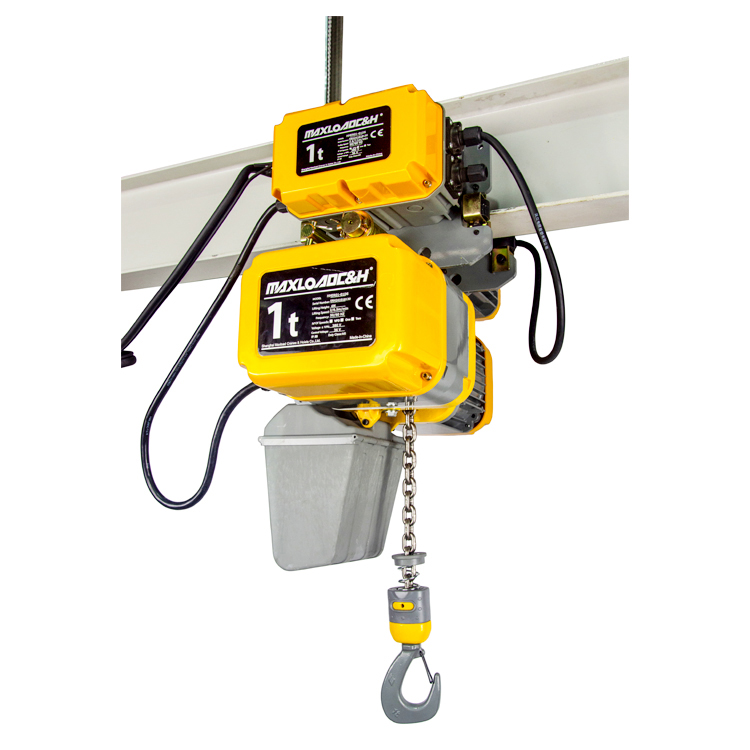
For regular loads with even mass distribution and a clear center of gravity—such as molds, material bins, or standard workpieces—a standard wire rope hoist or chain hoist will suffice. However, pay attention to one detail: if the load tends to swing easily during lifting (e.g., a long workpiece with a center of gravity at the lifting point), it is advisable to choose a hoist with a variable frequency lifting function. This ensures smoother starts and stops, reducing the impact of inertial swing on positioning accuracy.
For loads that require frequent flipping, tilting, or alignment during installation, consider whether the hoist offers fine inching capability and a dual-hook configuration. Some workstations require transferring workpieces from one fixture to another, with alignment tolerances of millimeters. In such cases, a standard hoist with simple jog control is insufficient; you must choose a model with a slow speed mode or stepless speed regulation.
A common misconception about lifting capacity: some people think it's safer to leave a large margin, so they equip a 500 kg workstation with a 2-ton hoist. This actually creates problems—a larger-capacity hoist is heavier and has larger dimensions, severely crowding the workspace in a small station, and its low-speed control precision is often inferior to that of smaller-capacity models. A reasonable principle is: the maximum load should not exceed 80% of the hoist's rated capacity, but also not fall below 50%. Within this range, the hoist offers the best balance of controllability and economy.
Frequency of Use – A Severely Underestimated Decisive Factor
The intensity of use for workstation-level lifting equipment varies enormously. Some workstations are used only two or three times a day, while others operate every two minutes on a production line. These two scenarios impose entirely different demands on equipment.
For low-frequency, low-intensity workstations—such as maintenance stations or lab preparation areas—the requirements for continuous duty are modest. A standard chain hoist with simple push-button travel is sufficient. Choose a motor duty rating of M3 or M4; there's no need to pay for performance you won't use.
However, for loading/unloading stations on an assembly line, with more than 20 lifts per hour or even continuous production, you must carefully consider the duty rating. In such cases, the hoist's lifting motor should reach M5 (intermediate duty), and the travel wheels of the KBK rail trolley should be selected with higher wear resistance grades. Otherwise, within half a year, the rail contact surfaces will show significant wear, the hoist motor will frequently overheat and trip, disrupting production.
Another easily overlooked consumable: the cable. In high-frequency stations, the hoist's suspended cable bends back and forth as the trolley moves. Ordinary PVC-jacketed cables will crack within a few months; you need to opt for reinforced rubber-jacketed cables or a festoon cable system.
Environmental Factors – Often the "Invisible Killers"
Temperature, humidity, dust, and corrosive gases in the workstation environment all affect equipment selection.
In conventional, normal-temperature, dry workshops, standard configurations are sufficient. But in high-dust environments like foundries or grinding stations, you must consider the protection rating of the motor and electrical control box—at least IP55. Otherwise, dust ingress into the motor will accelerate bearing wear and insulation aging. Additionally, the rail system should be equipped with trolley wheels that have automatic dust scrapers; otherwise, dust accumulation in the rail groove will increase running resistance.
Cold storage or low-temperature environments are another extreme. Below -20°C, ordinary wire ropes become stiff and brittle, lubricating grease solidifies, and plastic cable jackets freeze and crack. In such cases, you need low-temperature wire ropes, low-temperature grease, and cold-resistant cables. The hoist motor should also be a model with a heating belt to avoid overload during cold starts.
In workstations with corrosive gases or liquid splashes, all exposed metal parts require additional corrosion protection. Standard galvanized parts are insufficient—you need hot-dip galvanizing or even stainless steel, and contact surface linings should be made of corrosion-resistant materials.
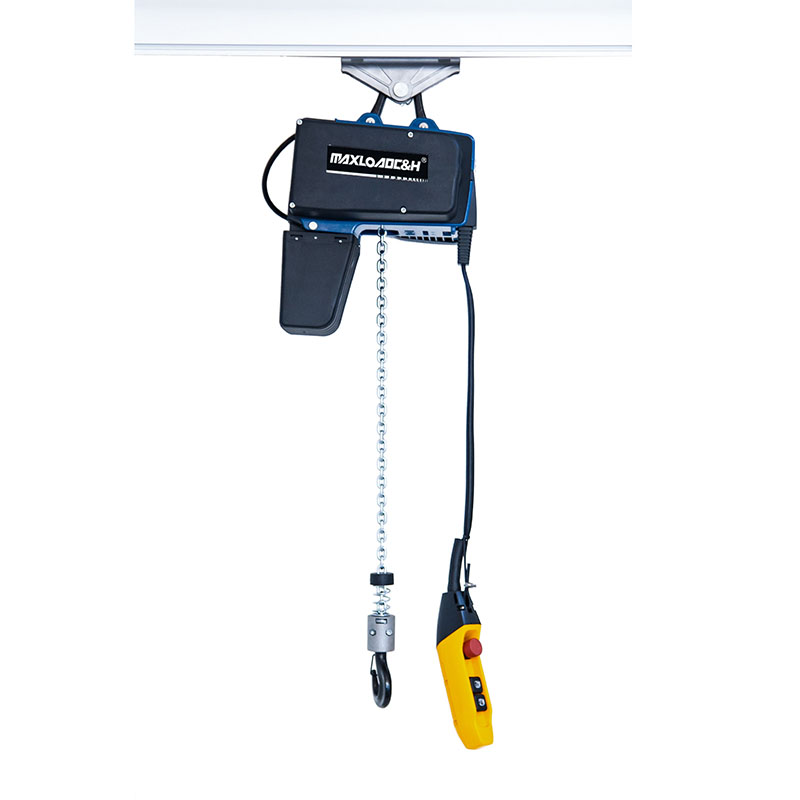
There is no "best" lifting configuration, only the "most suitable" match for the workstation. Oversizing wastes money, takes up space, and results in poor usability; undersizing feels frustrating and even creates safety risks. The key is to return to the workstation's real needs, thoroughly understand the four dimensions of space, load, frequency, and environment, and then make targeted trade-offs.
One small suggestion: before finalizing the configuration, talk to experienced lifting technicians or on-site operators. They often articulate the most genuine pain points—"When lifting here, I always hit that pipe," or "That hoist jerks and jerks when inching, I can never align it properly." These insights from the front line are more valuable than any product brochure.
 0086 156 1824 5535
 0086 156 1824 5535