Choosing the Most Suitable Overhead Crane Based on Worksite Conditions
Walk into any machine shop, assembly line, or storage area, and a basic fact quickly becomes apparent: no two workstations have identical lifting and handling needs. In some workshops, the ceiling is crowded with air ducts and cable trays; in others, the floor is packed with equipment; some require frequent handling of precision components, while others operate in persistently humid or dusty environments. For this reason, applying a standardized KBK crane solution often fails to solve real‑world problems and may even create new ones.
The combination of a KBK crane and an electric hoist is, in essence, a flexible material handling system. Its strengths lie in modular design and adjustability, but this also means that selection cannot be based solely on rated capacity and span. What truly determines whether the system performs well is the actual conditions at the workstation. The following analysis considers three dimensions—spatial conditions, operational characteristics, and environmental factors—to help users match the most suitable system to their specific worksite.
Spatial Conditions: Ceiling Height Determines the Scheme, Layout Determines the Direction
The clear height above the workstation is the first measurement to take on site. In many older factory buildings, the clear height under the crane runway may be only about 3 meters. If a standard solution—single‑girder KBK with a conventional electric hoist—is adopted, the hoist’s own height plus the lower limit position of the hook often severely reduces the effective lifting travel, and operators will clearly feel that the hook “can’t reach far enough.” According to GB/T 3811‑2008 Design Rules for Cranes and JB/T 8906‑2018 Jib Cranes, when the workshop ceiling height is below 5 meters, the lifting height of a traditional crane after installation is significantly constrained.
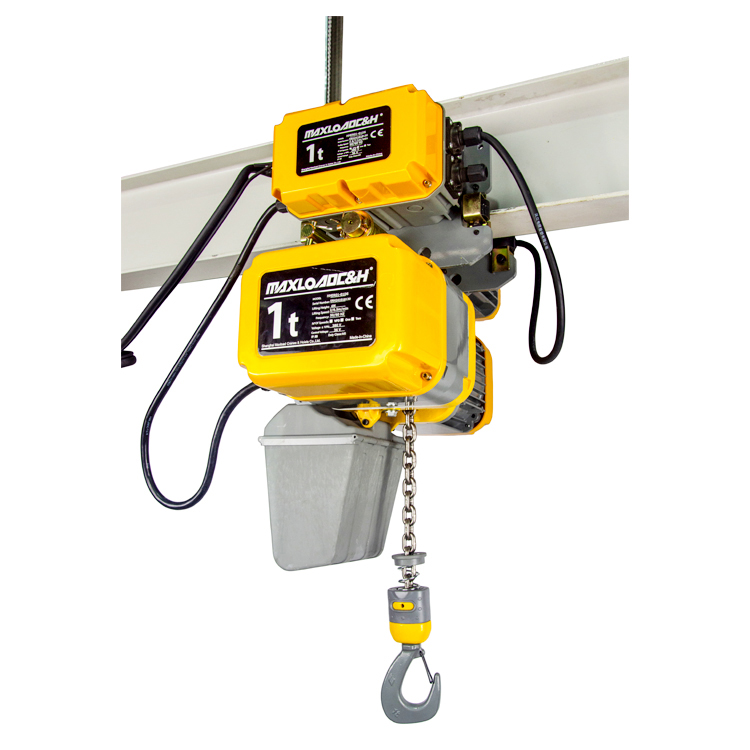
In such cases, a low‑headroom electric hoist with a flat‑rail KBK system should be chosen. By altering the lifting mechanism layout—offsetting the motor from the drum side—a low‑headroom hoist can save 200 to 300 millimeters of height compared to a standard hoist of the same capacity. Do not underestimate these 200–300 mm; in practice, they determine whether workers have to bend down or stand on tiptoe to attach slings, and whether workpieces can be accurately placed on the second shelf of a low‑level rack. With a low‑headroom KBK solution, a workshop with a 4‑meter ceiling height can achieve a hook lifting height of over 2.2 meters, improving vertical space utilization by more than 30% compared to a standard solution.
The plan‑view shape of the workstation also affects the track configuration. L‑shaped or U‑shaped workstations require curved tracks and turntable components. In such cases, the turning radius of the KBK rail must match the wheelbase of the hoist trolley. Some sites are forced to use small‑radius curves due to column positions; if a long‑wheelbase twin‑wheel trolley is selected, it may cause jamming, rail gnawing, or even derailment on tight curves. The correct approach is first to determine the curve radius and then select the hoist wheelbase and model that are compatible.
The relative positions of workstations also determine whether the track should be straight, L‑shaped, U‑shaped, or looped. In‑line flow lines work well with straight tracks; L‑shaped layouts need one corner; U‑shaped layouts need two; island‑style multi‑point workstations benefit from loop‑type or main‑branch layouts. Workspace layout is the starting point for KBK selection—choosing a KBK without considering the workstation is like decorating a house without looking at the floor plan; the result is equipment that works but is never quite convenient.
Operational Characteristics: Load Determines Capacity, Frequency Determines Duty Class
Electric hoists are classified into different duty classes, a factor often overlooked by many users. Many people focus only on rated capacity—for example, buying a 2‑ton hoist for a production line with more than 300 lifts per day, only to find the motor burns out and gear tooth pitting appears within six months. This is not a quality problem; it is a failure to consider the duty class.
To determine the correct duty class, one must count the number of full‑load lifts per shift, the average lifting height, and the travel distance. For example, a KBK station on an automotive parts assembly line handles one assembly every two minutes, accumulating over 200 lifts per day. Such a duty cycle requires at least an M5 or even M6 class hoist, preferably with a variable frequency drive to reduce start‑stop impacts. In contrast, a mold maintenance workshop may use its KBK only a few hundred times a year, where an M3 single‑speed hoist is perfectly adequate—paying extra for a higher‑spec model would be wasteful.
The duty class reflects the combined index of usage frequency and load intensity for an electric hoist. Domestically, it ranges from M3 to M8 and is not directly related to tonnage. Selection should match the actual working conditions to the appropriate duty class, rather than simply purchasing by capacity.
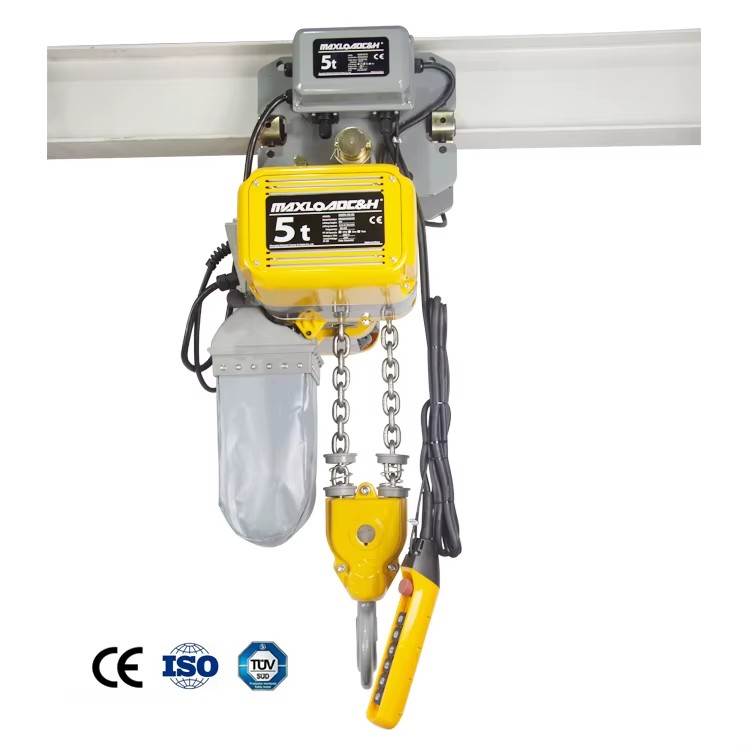
Lifting speed must also match the application. For precision assembly or machine tool loading where accurate positioning is required, a two‑speed hoist is preferable—fast speed for long moves to improve cycle time, and slow speed for precise positioning. Single‑speed hoists are only suitable for rough handling where positioning accuracy is not critical. Additionally, chain hoists and wire‑rope hoists differ in their applicable scenarios: chain hoists are compact, lightweight, and low‑noise, making them ideal for most light‑to‑medium duty KBK applications; wire‑rope hoists offer greater lifting heights and are suitable for situations requiring higher lifts.
Regarding lifting capacity, KBK systems typically cover a range from 0.125 tons to 2 tons. When selecting, one should consider not only the maximum weight of a single workpiece but also the dead weight of the lifting attachment and the influence of dynamic load factors.
Environmental Factors: Temperature, Dust, and Corrosion Each Have Their Countermeasures
Different working environments impose widely varying performance requirements on lifting equipment. High‑temperature workshops require motors and components made of heat‑resistant materials. Clean rooms (e.g., electronics assembly, pharmaceutical industries) need dust‑sealed designs to prevent oil drip or metal particle contamination. Humid environments demand rust‑proof and anti‑corrosion treatments. In machine shops with heavy dust, electric hoists with sealed enclosures should be selected to reduce the ingress of debris that could affect operation.
In terms of environmental adaptability, the KBK system itself offers various options. Aluminum rails are lighter than standard steel rails and require less push/pull force, making it less tiring for operators to frequently move the hoist alongside the production line. Surface finishing processes also directly affect the service life of the equipment in specific environments—multi‑step processes such as fine shot‑blasting, powder coating, and high‑temperature baking improve rail surface smoothness and corrosion resistance.
The workstation environment is the sole yardstick for selecting the appropriate KBK and electric hoist combination. Discussing specifications in isolation from site conditions will only yield a system that “works but not well.” By measuring the space accurately, thoroughly understanding the duty cycle, and calculating the frequency precisely, you can ensure that this flexible handling system truly serves the production rhythm rather than becoming yet another idle fixture in the workshop.
 0086 156 1824 5535
 0086 156 1824 5535