How to Choose the Most Suitable Jib Crane Based on Site Conditions
Walk into any machine shop, assembly line, or warehouse, and you’ll see jib cranes busy at work across various workstations. Unlike large overhead cranes that cover an entire plant, the greatest value of a jib crane lies in its dedication to a single workstation—it provides an independent lifting solution for a specific workplace, saving operators from wasting precious time waiting for the main shop crane.
However, many companies focus only on capacity and price when purchasing, ignoring the specific details of the workstation environment. As a result, after installation, the equipment feels awkward to use—either the slewing range is insufficient, the column blocks forklift aisles, or frequent movement causes excessive wheel wear. A truly suitable jib crane isn’t just about “being able to lift”; it must form a smooth working system with your workstation layout, operating habits, and the electric hoist.
Pillar-Mounted Jib Crane: The Most Common Workhorse
The pillar-mounted jib crane is the most common type. A single column is fixed to the ground, with the boom rotating 360° around the column, and the electric hoist suspended from the boom’s track to enable horizontal movement. The biggest advantage of this structure is rigidity—the column is secured to the foundation or embedded parts via anchor bolts, leaving no room for wobble. For operations requiring precise positioning—such as placing workpieces onto machine tables or lifting precision parts to assembly stations—the stability of a pillar-mounted jib is unmatched by other types.
The working range of a pillar-mounted jib is a regular circular area. The boom can rotate 360°, and combined with the hoist’s transverse movement along the boom, it covers the entire circle. If the workstation is arranged within this circular area, operations become very convenient. A typical configuration is one pillar-mounted jib crane serving one manufacturing cell—lathes, milling machines, and drill presses arranged around the column, allowing the operator to cover all equipment with a simple turn.
But pillar-mounted jibs have clear drawbacks. The column itself occupies floor space, and although the footprint is small, in a cramped workshop, that pillar might sit right in the middle of a logistics aisle. Moreover, once installed, the position is fixed and almost impossible to relocate. Additionally, the boom length limits the working range—if workstations are spread out in a long, narrow area, a pillar-mounted jib becomes quite awkward: if the boom is too short it can’t reach the far end, and if it’s too long the near side is wasted.
When should you choose a pillar-mounted jib? When workstations are relatively concentrated, operation frequency is high, positioning accuracy is required, and the floor can accommodate a foundation. Typical applications include small-parts assembly lines, machine loading/unloading stations, mold-changing areas, and maintenance bays. Capacity ranges typically from 250 kg to 15 tons, with boom lengths from 3 to 12 meters. Note that the column requires a concrete foundation; floor bearing capacity, anchor bolt groups, and secondary grouting must all be verified through load calculations. The longer the boom and the heavier the end load, the more significant the bending moment on the foundation, demanding greater base plate thickness and reinforcement.
Wall-Mounted Jib Crane: The Best Solution When Space Is Tight
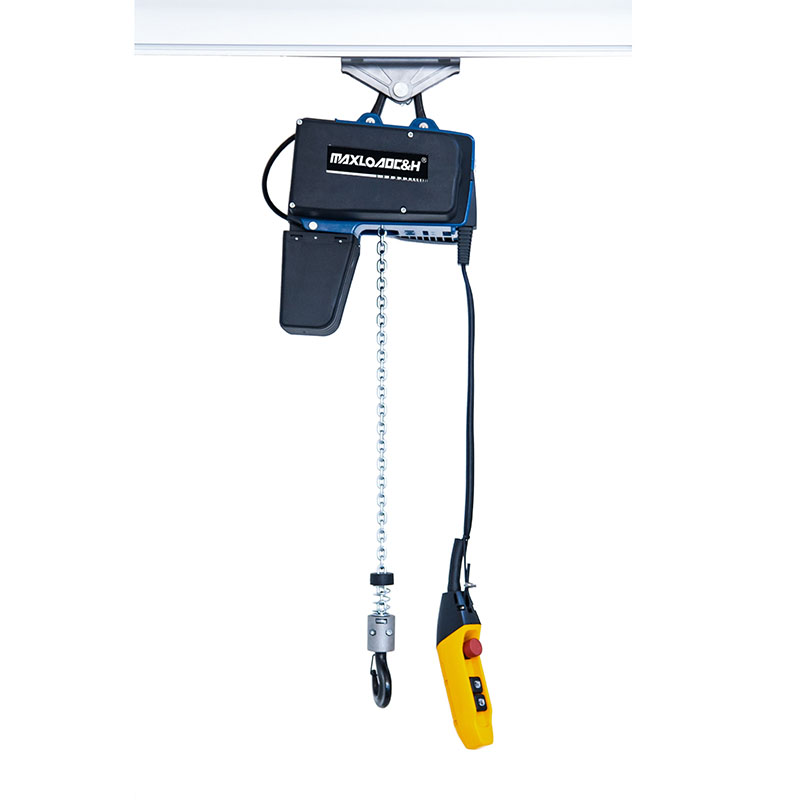
The wall-mounted jib crane is a variant of the pillar-mounted type—the difference is that it doesn’t sit on the floor; instead, its slewing support is fixed to the building’s load‑bearing wall or structural column, with the boom extending outward and the electric hoist suspended beneath the boom.
The biggest selling point of this configuration is that it takes up no floor space. Floor space is the most valuable resource in any workshop—forklifts need to run, racks need to stand, and people need to walk. Eliminating a column makes a real difference. A wall‑mounted jib runs along the wall, and the space under the boom remains clear for personnel and vehicle passage. For already crowded workstations, this is a very practical advantage.
However, wall‑mounted jibs have a hard prerequisite—the wall or structural column must be able to bear the loads. A wall‑mounted jib transfers all horizontal reaction forces and bending moments to the building’s load‑bearing columns or walls. In older plant renovations, undersized columns are common, and structural verification often fails. When using chemical anchors or post‑installed through‑bolts, dynamic loads, fatigue, and concrete edge distances must also be considered. A practical rule of thumb: wall‑mounted jibs are suitable for light loads and strong columns—if the load exceeds 2 tons or the boom exceeds 6 meters, a structural assessment is mandatory before installation.
The slewing range of a wall‑mounted jib is typically between 180° and 270°. If the workstation requires full 360° coverage, a wall‑mounted jib won’t meet the need. Lifting capacity is usually below 2 tons, and boom length is generally no more than 8 meters. It is suitable for line‑side installations along assembly lines, sorting and packaging areas, and corner spaces in workshops where floor space is tight.
Mobile Jib Crane: Flexible, But Don’t Overuse It
A mobile jib crane has wheels on its base and can be pushed around. It is suitable for non‑fixed workstations or for occasional lifting tasks. One end has the boom and electric hoist, while the other end carries a counterweight for balance. Typical capacities for mobile jibs range from 125 kg to 500 kg, with boom lengths generally between 2 and 3 meters.
However, mobile jibs are often misused. A common scenario: someone buys a mobile unit for convenience, then uses it every day in a fixed workstation, causing rapid wheel wear and increasingly stiff slewing. Fixed workstations should use fixed cranes—mobile jibs are designed for “movement.” Additionally, mobile jibs have requirements for floor flatness—if the workshop floor has rail grooves or potholes, pushing it becomes very difficult. Some workshops lay localized steel track plates to reduce floor damage.
Electric Hoist Matching: Don’t Just Look at Capacity
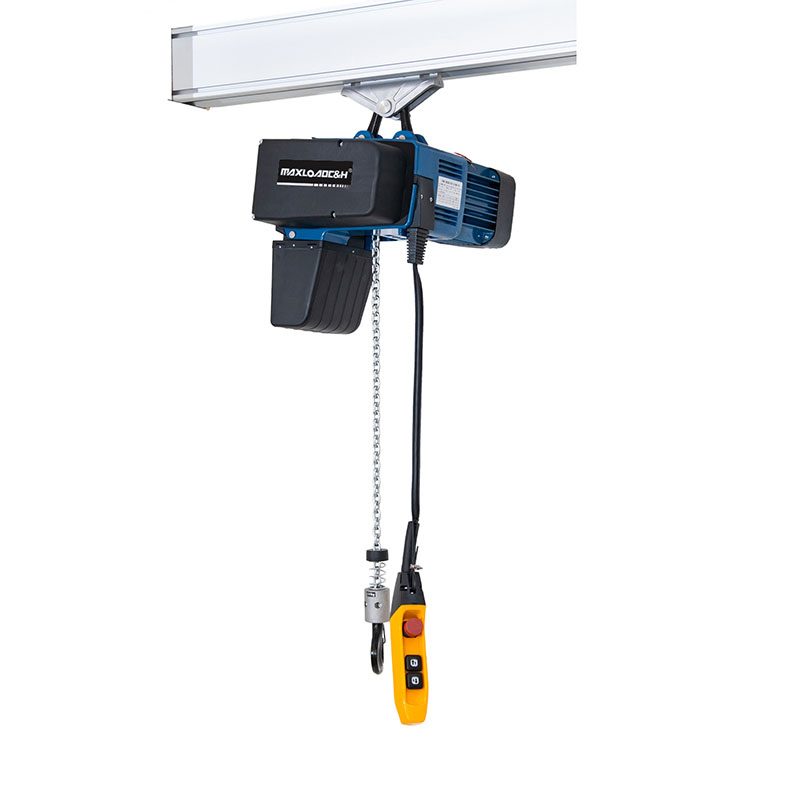
The rated capacity of a jib crane does not equal the rated capacity of the electric hoist. In actual calculations, the rated load must also account for the hoist’s own weight, the weight of the lifting accessories, and possible impact factors. With longer booms, a heavier hoist can significantly reduce the effective lifting capacity.
In compact spaces, chain hoists often have advantages over wire‑rope hoists. Chain hoists use a chain and sprocket engagement, with small axial dimensions, allowing for a lower headroom. This is especially important for low‑ceiling buildings or workstations with limited lifting height. The lifting speed of the hoist also matters—for operations requiring precise positioning, a two‑speed hoist is more practical than a single‑speed: fast speed for empty‑hook movement, and slow speed for accurate alignment when approaching the workpiece.
Parameters That Are Easily Overlooked
Slewing radius and lifting height are two parameters that are often “precisely calculated.” Many people measure the distance from the workstation center to the farthest pick‑up point and select the radius based on that number. But in actual use, when the boom swings to certain angles, the load under the hook may hit the column, or the hoist chain may interfere with the pulley cover at the boom tip. Therefore, leave a margin in radius—generally it’s recommended to add 300 to 500 mm to the measured maximum distance. Also note the difference between “effective radius” and “theoretical radius”—at the boom tip, there is a section that the hoist cannot actually reach because the wire rope or chain angle becomes too steep. The same applies to lifting height: the figure from floor level to the highest hook position must consider the hoist’s own height, the rigging height, and the required clearance after the load is lifted off the ground.
Though small, jib cranes play an irreplaceable role in workstation‑level material handling. Choose correctly, and it becomes a productivity multiplier for your workstation; choose poorly, and it becomes a column in the way or an immovable decoration. Start from your workstation environment, not from a product catalog, and you’ll make the truly right choice.
 0086 156 1824 5535
 0086 156 1824 5535