Workshop Environment Determines Selection
In the field of workshop material handling, the combination of a jib crane and an electric hoist is almost a standard solution. A jib crane occupies little floor space, offers flexible slewing, and together with the hoist's vertical lifting and horizontal travel along the boom, it can handle loading, unloading, turning, and assembly operations within a sector or circular area.
However, this seemingly simple combination often runs into problems in actual projects – the hoist won't move, hook height is insufficient, cables twist and break, or wheel flanges grind against the rail. Most of these failures are not due to the quality of individual machines, but because the jib crane and electric hoist were not designed as an integrated system from the start.
The starting point for selection is not the lifting capacity on the specification sheet, but first a clear understanding of your workstation environment.
Look at the workstation first, then at the equipment
Many procurement staff start by looking at the tonnage on the selection chart – which is certainly important, but a more fundamental question than tonnage is: how large is your working area?
Measure your workstation with a tape measure. Identify three key positions: material storage point, processing station, and finished goods temporary stacking area. From the column center to the farthest point, add 200 to 300 mm, and that is basically the effective boom length you need.
But a detail is often overlooked: when the boom slews, the trajectory of the hook at the end is an arc. If your workstation is tight against a wall or next to another production line, at certain slewing angles, the end of the boom may not reach the position where you want to place the material. In this case, you either shorten the boom or consider an offset base, moving the column away from the center of the workstation to gain effective coverage.
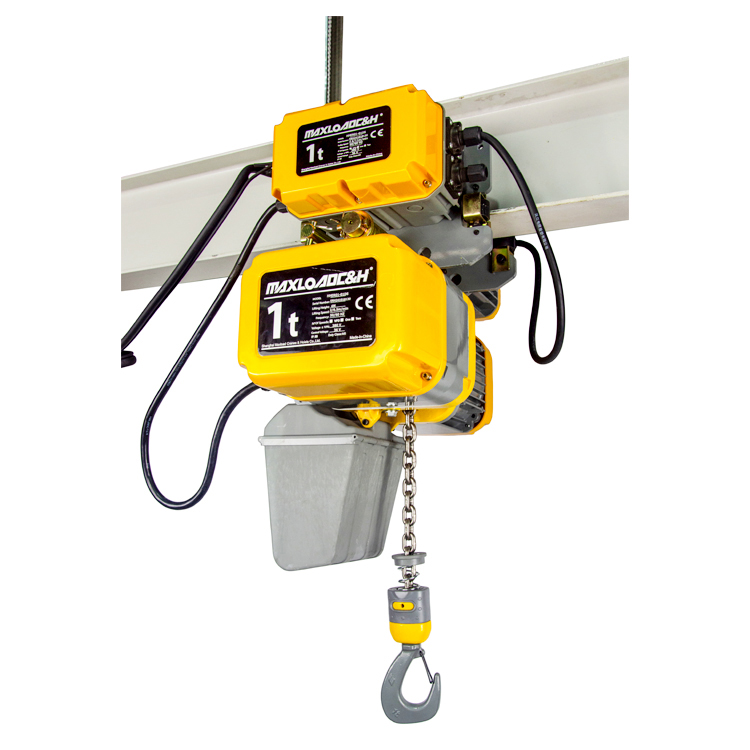
Vertical space is often tighter than horizontal space. Measure from the floor to the underside of the roof, subtract the hoist's own height dimension, then subtract the safety clearance between the hook at its highest position and the underside of the boom – the remainder is the actual available lifting height. Many workshops have fire sprinkler pipes, cable trays, and lighting fixtures under the roof, leaving an actual clear height of just over three meters, yet they choose a standard hoist configuration. When the hook reaches its top limit, nearly half a meter of empty clearance remains, and workpieces that could otherwise be lifted cannot enter the equipment due to insufficient height. In such cases, either switch to a low‑headroom electric hoist – where the hoist body and trolley are arranged side‑by‑side rather than stacked vertically, reducing height by more than 30% – or reconsider the type of jib crane.
Three types, three logics
Jib cranes are mainly available in three structural forms: pillar‑mounted, wall‑mounted, and portable (mobile). Each imposes different constraints on the electric hoist.
The pillar‑mounted type is the most common. It does not rely on building columns and independently resists the entire overturning moment. Its advantage is a small footprint – only a base plate is needed – making it very suitable for "one‑to‑one" auxiliary handling next to machine tools or in space‑constrained workstations. A pillar‑mounted jib can slew from 270° to 360°, offering a large working range. However, the problem it brings to the electric hoist is power supply – as the boom slews, the hoist's supply cable twists. The conventional solution is to install a slip ring at the top of the column to transfer power and control signals to the revolving boom, and then route them along the boom via a cable trolley system or a flat cable to the electric hoist. Sufficient circuits must be reserved in the slip ring – in addition to the main power, if the hoist has two‑speed control or a wireless remote receiver, the control circuits and emergency stop signal must also be connected. If a spiral cable is used instead of a slip ring, frequent slewing will quickly wear out the cable insulation, leading to earth faults or short circuits.
The wall‑mounted type is fixed to a building column or wall, and its slewing angle is typically between 180° and 270°. Its greatest value is that it completely frees up floor space. But the problem is that the mounting point is close to the building column or wall, leaving very limited lateral space for the electric hoist. In this case, the overall width of the hoist and the extreme lateral position of the hook must be carefully checked. With wire‑rope electric hoists, special care is needed – the drum and motor protrude to one side, and the safe clearance of the hook may be insufficient on both the far side and the wall side. Therefore, wall‑mounted jib cranes are usually paired with compact chain electric hoists, and must adopt a low‑headroom design, otherwise the effective lifting height will be significantly reduced.
The portable (mobile) type can be moved around the workshop on trolleys. Its lifting capacity is usually smaller, generally between 125 kg and 1000 kg. The selection criteria for mobile types are entirely different from those for fixed types – the hoist's self‑weight has a critical impact on the overall stability of the machine. The counterweight design of the mobile jib base must account for both the hoist's self‑weight and the rated load to prevent overturning when the load is at the boom tip.
The matching logic for the hoist itself
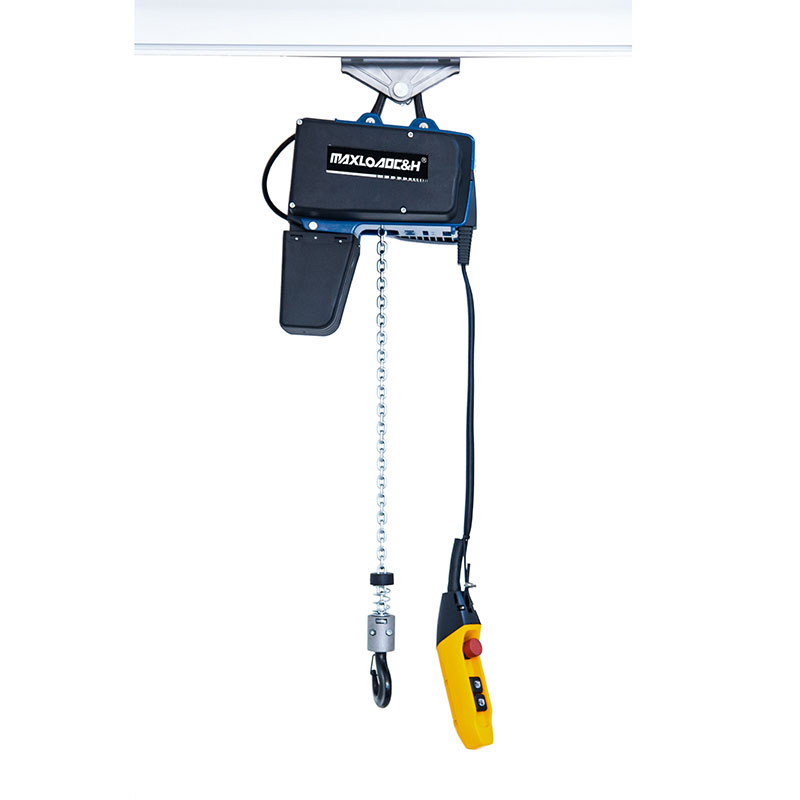
When matching an electric hoist with a jib crane, headroom is often the first conflict to resolve. The effective lifting height in a workshop is usually limited, and the jib boom itself already takes up a certain height, leaving limited space for the hoist. The advantage of a low‑headroom chain electric hoist is evident here – the hook can be retracted very close to the underside of the beam, freeing up more effective lifting height. Although wire‑rope electric hoists are robust and durable, suitable for heavy‑duty high‑frequency applications, they do lose out in terms of headroom.
Electric hoists themselves are divided into two main categories: wire‑rope type and chain type. Wire‑rope hoists have advantages in lifting capacity and lifting height, and can more easily achieve duty classifications of M5 and above, making them suitable for frequent heavy‑load applications. Chain hoists are compact, clean, and have good tolerance to frequent jogging and impact, making them more common in assembly lines and clean workshops. Whichever type is chosen, if smooth lifting and precise positioning are required, a variable frequency drive (VFD) is recommended, enabling micro‑positioning at low speeds and avoiding load swing caused by sudden stops. If the boom is equipped with electric slewing, coordinated VFD control of slewing and hoist travel can significantly improve the working cycle efficiency.
Load calculation is where errors most often occur – the problem is usually not the maximum lifting capacity, but forgetting to include the hoist's self‑weight when calculating the boom load. For example, a pillar‑mounted jib with a 5m span, paired with a chain hoist weighing about 80 kg – the hook and rigging must also be added. These moving loads concentrated at the boom tip produce bending moments that can sometimes be more significant than the rated load, especially when the hoist travels near the boom tip, where deflection increases sharply. The design input should be based on this, checking the bending stress and deflection of the boom cross‑section. Generally, under 1.1 times the rated load, the vertical deflection at the boom tip should not exceed 1/500 to 1/400 of the boom length; for high‑frequency use or precision assembly workstations, tighter values should be adopted.
The determination of duty classification must not be taken lightly. The load combination for the lifting mechanism cannot simply use the rated lifting capacity – factors such as the lifting dynamic coefficient, travel impact coefficient, and occasional light‑load high‑speed impacts must all be considered. Determining the duty classification according to actual operating conditions is the fundamental way to prevent structural steel fatigue and rapid wear of mechanisms.
Foundation design is equally important. The column base plate and embedded anchor bolts must be capable of resisting the maximum overturning moment, and the concrete foundation weight and bearing capacity must have sufficient margins to prevent loosening under repeated alternating loads. Standard warehouse or factory floors are often inadequate, and many installations require dedicated concrete foundations.
The combination of a jib crane and an electric hoist solves the "last meter" problem of workstation‑level handling. The essence of selection is not to pick a single piece of equipment, but to calculate the boom radius, hoist headroom, power supply method, and structural strength according to your workstation shape, space dimensions, load characteristics, and usage frequency. Measure the workstation with a tape measure first, then consult the specification sheets – with the right order, your selection will not go far wrong.
 0086 156 1824 5535
 0086 156 1824 5535