Not That the Equipment Isn’t Good Enough – You Didn’t Choose the Right Match
Anyone who has worked on a shop floor knows this: even the best equipment is useless if it’s placed in the wrong spot.
I’ve seen plenty of factories spend hundreds of thousands on a lifting system, only for workers to find it awkward to use, productivity to remain flat, and the equipment to break down every few days. Where was the problem? Not the equipment quality, but that the selection process never really took the workstation environment into account.
The KBK crane plus electric hoist combination is nothing new in manufacturing workshops. But many people still think of it as “just being able to lift something,” and that’s where trouble starts. In essence, the KBK is a multi‑point material handling system, not a single‑point lifting tool. The workshop layout directly determines the rail routing, switch points, coverage area, and the overall rationality of the solution – choosing a KBK without looking at the workstations is like renovating a house without looking at the floor plan. The equipment works, but it’s not user‑friendly. You spend the money, but productivity doesn’t improve.
Figure out exactly what you need to lift and how heavy it is
This is the most basic step, yet it’s often overlooked. Many buyers just throw out a lifting capacity figure without thinking, only to find it’s either insufficient or grossly oversized in actual use.
Lifting capacity isn’t simply the weight of the heaviest item. Have you included the weight of the slings/attachments? Does the workpiece have an irregular centre of gravity? Is there any possibility of product upgrades or heavier loads in the next one to two years? Industry practice usually recommends a 20% margin above the rated load – that’s not waste, it’s contingency.
The mainstream load limit for KBK systems is around 2000 kg, meaning they are naturally suited for light‑to‑medium lifting applications – workshop assembly, warehouse loading/unloading, precision part handling, and the like. If you regularly need to lift 3‑5 tonnes, you should be looking at overhead bridge cranes, not forcing a KBK to do the job.
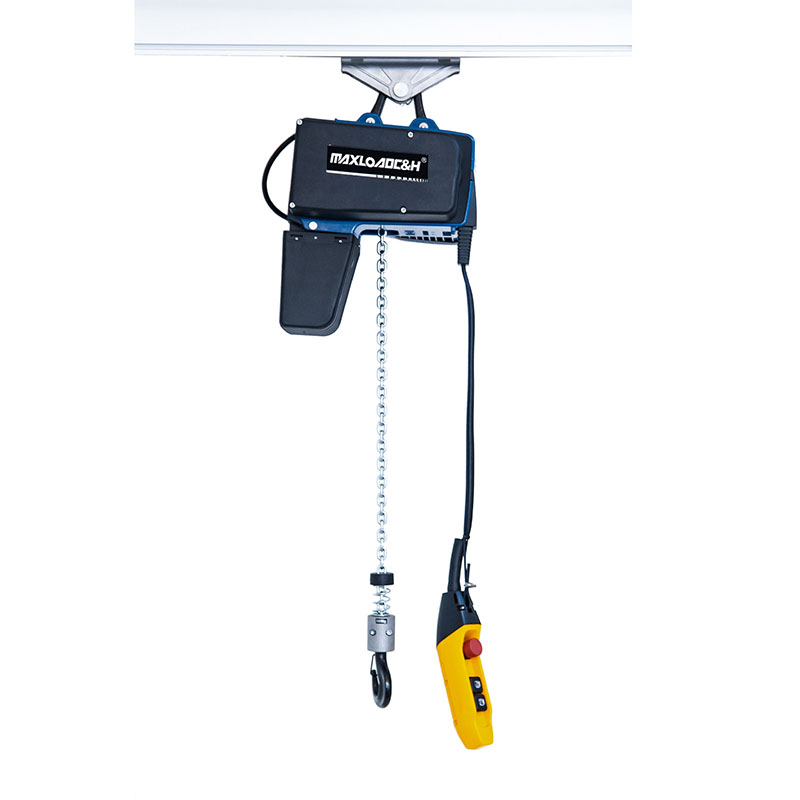
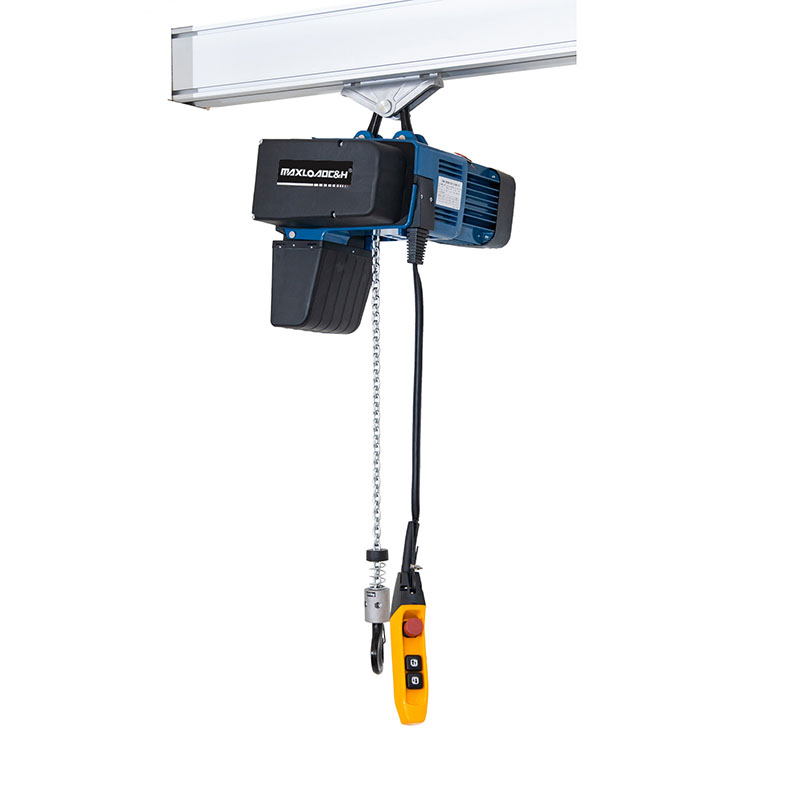
For electric hoists, below 5 tonnes, the priority should be chain hoists. They are compact, lightweight, and quiet, performing particularly well in light industry, electronics, food processing, and similar sectors. Only above 5 tonnes should you consider wire rope hoists.
Calculate the lifting height accurately – don’t let the equipment “fall short”
Lifting height is more complicated than you might think.
The actual effective lifting height is not simply your building’s ceiling height. The formula is:
Actual effective lifting height, Track mounting height – hoist dead space (headroom) – maximum workpiece height – safety clearance below.
Example: if the shop clearance is 10 m, the hoist itself takes 1.5 m, and the hook block adds 0.5 m, the usable lifting height is only about 8 m. Many people don’t do this math, and only after installation do they realise the hook can’t reach the floor.
For workshops with low ceilings, prioritise low‑headroom solutions. A combination of a low‑headroom suspension crane and a compact electric hoist can achieve over 2.2 m of hook lift even in a building with only 3.5 m clear height. Vertical space utilisation can be improved by more than 30%. If your shop clearance is less than 4 m, don’t hesitate – go straight to a low‑headroom design.
Duty classification – the “hidden parameter” is more important than capacity
This is the most easily overlooked aspect of selection, and the one with the most serious consequences.
Duty classification reflects how often the equipment is used and the load conditions. Many buyers only look at capacity and ignore duty class, only to have the equipment fail prematurely.
Take two 1‑tonne hoists: one is used 50 lifts per day, the other 200 lifts per day. Can the same equipment really meet both demands? If high‑frequency usage is paired with a low‑duty hoist, the motor can overheat, parts wear faster, and the equipment's life might drop from 5 years to just 1‑2 years.
For a standard single‑shift or two‑shift operation, duty class A4 is usually sufficient. But for three‑shift, high‑frequency work, you need to go up to A6 or higher. Any money saved by skimping here will be paid back many times over in repairs and production losses.
Workshop layout dictates the track routing – this is the soul of KBK selection
If you get this step wrong, all the previous calculations are useless.
The relative positions of workstations determine whether the track runs straight, L‑shaped, U‑shaped, or circular. Workstations in a straight line need only a straight track; L‑shaped layouts need a corner; U‑shaped layouts need two corners; island‑style or dispersed layouts may require a circular track or even a main track with branches and switch systems.
Span also has rules. For a single‑girder KBK, the recommended span is within 6 m – beyond that, the trolley will wobble and the track joints will sag. For a double‑girder KBK, the maximum span should not exceed 12 m. The span formula is: longest workpiece length + 300 mm safety margin on each side. Also consider the positions of columns in the workshop – go around them when necessary, and use curved rails where needed.
Also note: the loading and unloading points at each workstation must fall within the KBK’s coverage area. If a workstation is outside the track coverage, workers have to do additional manual handling, which cuts the system’s value by half.
Building conditions are hard constraints – don’t force it
Older factory buildings have limited roof load‑bearing capacity – prioritise lightweight solutions to avoid extra reinforcement costs. The KBK system itself is 20‑30% lighter than a traditional crane of the same capacity – that’s one of its inherent advantages.
Also, pay attention to safety clearances. For KBK cranes, the net distance between all moving parts and fixed building parts should not be less than 0.05 m; not less than 0.1 m from any railing or handrail; and not less than 0.5 m from access areas. These figures aren’t arbitrary – missing any of them during installation can create safety hazards.
A few common selection pitfalls
First pitfall: thinking of KBK in terms of an overhead travelling crane. An overhead crane covers the entire workshop with a large‑span lifting device; KBK is a small‑area system that precisely covers workstations. If you apply overhead‑crane standards to a KBK, you’ll either end up with grossly oversized equipment or fail to leverage the KBK’s flexible layout advantages.
Second pitfall: over‑engineering. More workstations don’t mean more switches. Only install switches for high‑frequency flow paths; for low‑frequency paths, manual transfer is fine. More switches mean higher complexity, higher cost, and more potential failure points.
Third pitfall: not allowing for future expansion. One of the KBK’s biggest strengths is its modularity – initially, you can use a single‑girder covering one workstation, and later expand by adding rails and end beams to cover multiple workstations. Leave that possibility open during selection – it’s far easier than tearing down and rebuilding later.
Selecting a KBK with an electric hoist, in one sentence: let the equipment adapt to the workstation, not the other way around.
Choose an adequate lifting capacity – don’t oversize. Calculate the lifting height carefully – don’t assume. Select the duty class based on actual usage frequency – don’t cut corners here. The track routing and span depend entirely on how the workstations are laid out. If building conditions allow, go ahead; if not, consider alternative solutions or modifications.
Get these steps right, and the equipment you choose may not be the most expensive, but it will certainly be the most suitable.
 0086 156 1824 5535
 0086 156 1824 5535