How to Choose the Most Suitable Electric Hoist Based on Your Workstation Environment
In factory workshops, warehouse yards, or various production workstations, electric hoists are among the most common lifting devices. However, many people focus only on the "lifting capacity" when selecting a model, ignoring the actual conditions of the workstation environment. The result? After installation, they discover that the lifting height is insufficient, dust and debris contaminate the products, or the hoist cannot be used at all in flammable or explosive areas. This article helps you sort out the key considerations for selecting an electric hoist based on your workstation environment.
First Things First: Wire Rope Hoist or Chain Hoist?
This is the first choice you face in the selection process. The core difference lies in the load‑bearing component – wire rope hoists use a drum to wind and unwind steel wire ropes, while chain hoists use a sprocket to drive a load chain. This difference determines their respective suitable applications.
Wire rope electric hoists
Offer high lifting speed, high lifting height, smooth operation, and are ideal for high‑frequency, high‑load continuous work.
Their capacity ranges widely, from 0.5 t to 50 t, and for heavy loads above 5 t, wire rope hoists are the dominant choice.
Disadvantages include relatively heavy dead weight, inconvenient disassembly and transport, and slightly higher replacement cost for wire ropes.
Chain electric hoists
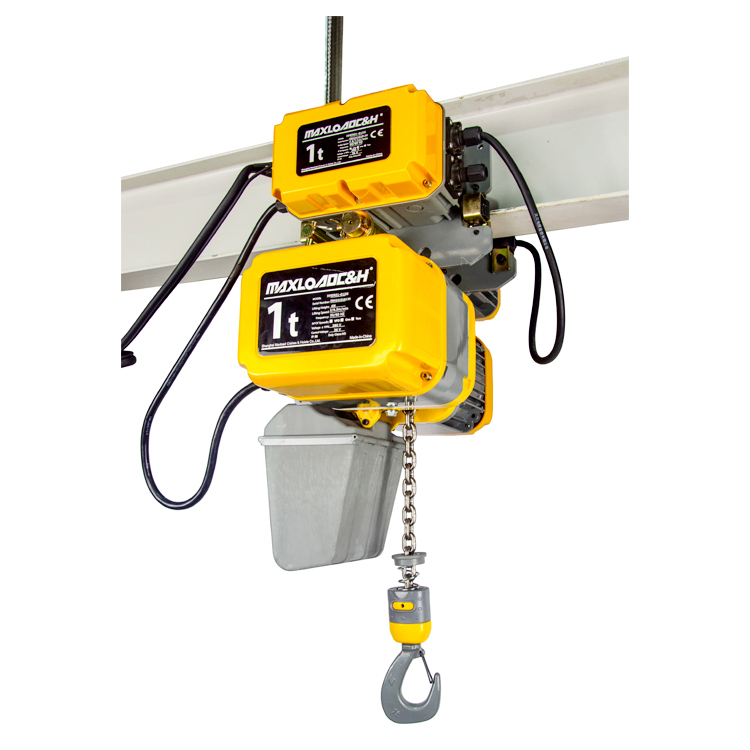
Are lighter and more compact, with a smaller footprint for the same capacity.
They are easy to assemble and disassemble, allowing flexible transfer between workstations.
The chain has good toughness and can tolerate a certain degree of inclined pulling.
Disadvantages are a slower lifting speed, typically a lifting height of only 3–12 m, slightly higher operating noise, and the need for regular lubrication and rust prevention of the chain.
Chain hoists are mostly used for small‑ to medium‑capacity lifts under 5 t, common in assembly lines, small‑warehouse stacking, and similar applications.
Selection advice
Choose a wire rope hoist if your workstation requires frequent lifting of loads over 5 t, or a lifting height exceeding 12 m, or if you need rapid lifting and high‑frequency operation.
Choose a chain hoist if your workspace is compact, the load is modest, and lifting speed is not a critical requirement – it is more economical and practical.
Hazardous (Explosion‑Proof) Environments: This Is Not Optional – It Must Be Done Correctly
If your workstation involves petrochemicals, paint production, pharmaceutical plants, natural gas processing, military fuel filling, or similar places, the electric hoist must be explosion‑proof. This is not about performance – it is a safety red line.
The core of an explosion‑proof hoist is: electrical components are explosion‑proof‑designed, and mechanical parts use non‑sparking materials to minimise the risk of ignition. The most critical selection factor is matching the hoist’s explosion‑proof rating to the hazardous area classification of your workstation.
Common explosion‑proof markings include Ex d ⅡB T4andEx d ⅡC T4. Here, "d" stands for flameproof enclosure, "Ⅱ" for industrial (non‑mining) equipment, "B" and "C" indicate the gas group (C is more stringent than B, suitable for more hazardous zones), and "T4" denotes the temperature class. In short, for gaseous explosive atmospheres in chemical plants (e.g., hydrogen, acetylene), it is recommended to choose Ex d ⅡC T4 or higher.
Fordust environments– such as flour mills, coal‑dust handling shops, fireworks manufacturing, etc. – you need dust explosion‑proof ratings, e.g., Ex tD A21 IP65. In such settings, dust itself can form explosive mixtures, and the protection logic differs from gas environments – do not mix them up during selection.
Another often‑overlooked point: the operating temperature range of explosion‑proof hoists. Generally, they are rated for –20°C to +40°C. Outside this range, customisation is required. For outdoor workstations in northern winters or in high‑temperature workshops, be sure to confirm this parameter during selection.
Cleanrooms: The Biggest Enemy Is the Equipment Itself
In cleanrooms for semiconductor manufacturing, biopharmaceuticals, medical devices, food production, and similar industries, strict air cleanliness requirements apply. Standard electric hoists generate substantial fine particles during operation – metal wear debris from gears, lubricating oil mist, powder from wire rope friction – which are negligible in ordinary workshops but catastrophic in cleanrooms.
Cleanroom hoists are designed with an opposite philosophy: they prioritise minimising contamination over lifting capacity. Specific measures include:
Fully enclosed housing to prevent internal grease and particles from escaping;
Stainless steel or special coated shells with smooth, easy‑to‑clean surfaces;
Low‑particulate non‑metallic materials for moving parts;
Electrical components with dust‑sealing ratings of IP65 or higher;
Sealed, maintenance‑free lubrication designs for bearings and drums to eliminate oil drips.
Cleanroom hoists are available from 50 kg up to 32 t capacity and can suit environments up to Class 1000 cleanliness. Match the specific cleanliness level of your workstation with the corresponding configuration.
A critical reminder: a cleanroom hoist cannot be replaced by a standard hoist with a simple cover. Its materials, sealing structure, and lubrication methods are specially engineered. Using a standard hoist in a cleanroom may not show immediate issues, but over time, accumulated particle contamination can ruin entire batches of products – and that loss far outweighs the price difference of the equipment itself.
Don’t Overlook These "Minor" Details
Beyond the three major environmental categories above, several selection parameters are often neglected:
Duty classification (working grade)
Electric hoists are rated from M3 to M8 based on frequency and load factor. M3–M4 are light-duty, suitable for repair shops, warehouses, and infrequent use. M5 is medium-duty, appropriate for machine shops, assembly lines, and regular patterned use. If your workstation operates all day continuously, but you choose a low‑grade hoist, the motor and gearbox will soon fail.
Low‑headroom requirements
Some workshops have limited overhead space, and a standard hoist may not provide enough lifting height. Low‑headroom electric hoists use structural optimisation to reduce the hoist’s own height, "squeezing" more lifting room from the available ceiling height. If your workstation has pipes, cable trays, or other obstacles above, be sure to measure the actual usable height.
Control methods
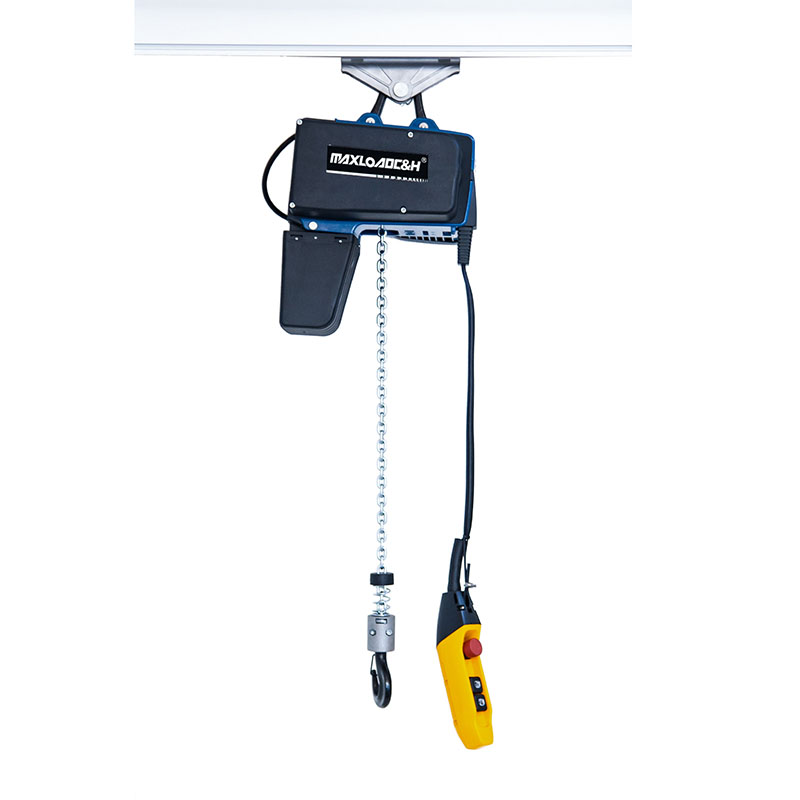
For fixed‑point lifting at a stationary workstation, a wired push‑button pendant suffices. If the operator needs to move with the load, a wireless remote control is more convenient. In cleanrooms, consider whether the control method itself introduces additional contamination sources.
There is no one‑size‑fits‑all answer for electric hoist selection. Even for the same one‑ton capacity, a chain hoist may be enough for an ordinary workshop, but an explosion‑proof model is mandatory in a chemical plant, and a cleanroom version is required in a semiconductor fab. The core selection logic is not "which is better" but "which best matches your workstation environment." Start by clarifying these four factors –lifting capacity, lifting height, usage frequency, and environmental characteristics (flammable/explosive, cleanroom, or general)– and then compare them against the equipment specifications. Only then will you choose a hoist that is truly durable, cost‑effective, and safe to use.
 0086 156 1824 5535
 0086 156 1824 5535