Selecting an Electric Hoist Based on the Workstation Environment: A Practical Guide
On the manufacturing shop floor, the electric hoist is arguably one of the most unassuming yet indispensable pieces of equipment. When many companies purchase an electric hoist, their first instinct is to ask, "What tonnage do I need?" While capacity is certainly important, focusing solely on tonnage often leads to the wrong choice. What truly determines whether a hoist performs well and lasts long is the workstation environment. Below, we’ll discuss how to choose the right hoist for different scenarios based on actual working conditions.
Standard Workstations: Wire Rope Hoist vs. Chain Hoist
The vast majority of shop-floor workstations—machining, assembly, warehousing, and equipment maintenance—fall into the category of "standard environments." The most common dilemma in this scenario is choosing between a wire rope electric hoist and a chain electric hoist.
The wire rope electric hoist is the most prevalent type on the market, known for its compact structure, high parts interchangeability, and ease of operation. Its advantages lie in its large lifting height and wide tonnage coverage—mature models are available from 0.5 tons up to 32 tons, with lifting heights of several tens of meters being no issue. It is suitable for large equipment manufacturing, metallurgy, machining, construction, and installation industries.
The chain electric hoist is smaller and more compact in structure, but its tonnage generally does not exceed 5 tons, and its lifting height is relatively limited. It is ideal for small workstations, low-clearance workshops, and scenarios requiring multiple synchronized lifts.
How to choose? Look at tonnage and height. For loads over 5 tons or lifting heights exceeding a dozen meters, a wire rope hoist is essentially the only option. For loads under 5 tons, with limited height and confined spaces, a chain hoist offers greater flexibility. Additionally, the operational smoothness of a chain hoist is inferior to that of a wire rope hoist. If lifting stability is critical, the wire rope hoist is the more reliable choice.
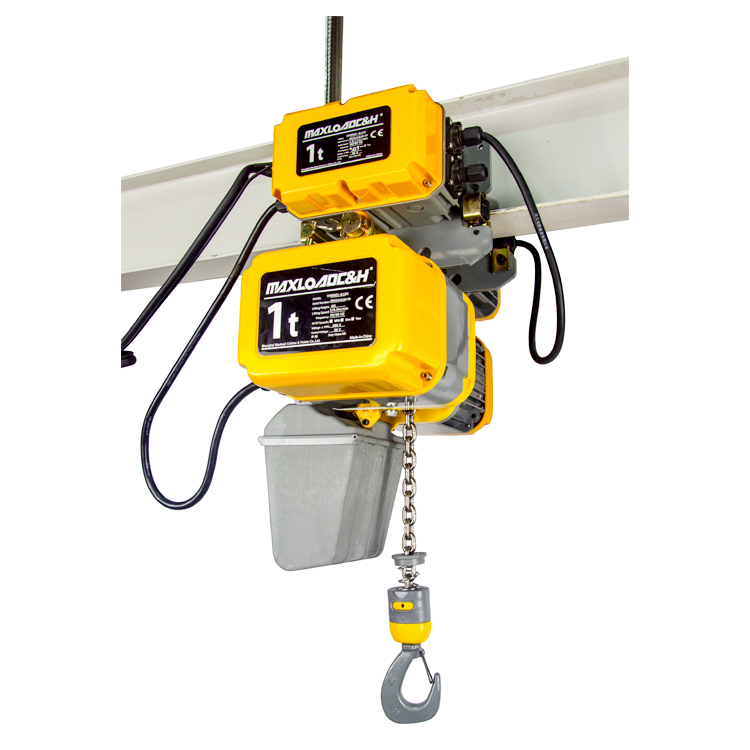
Flammable and Explosive Environments: Explosion-Proof Hoists Are Not Just "Adding a Cover"
In places like the petroleum, chemical, coal mining, spray painting, and high-dust-concentration industries, explosion-proofing is a mandatory requirement, not an option.
Many mistakenly believe that an explosion-proof hoist is simply a standard hoist fitted with an explosion-proof housing—this is a dangerous misconception. A genuine explosion-proof hoist has all external components made of special non-sparking materials to prevent mechanical sparks from friction or impact between moving parts. The gearbox uses fully enclosed oil-bath lubrication to prevent sparks from gear transmission. The entire system, from motor to brake to electrical components, is redesigned according to explosion-proof standards.
Explosion-proof ratings have clear classifications. Common gas explosion-proof ratings, such as Ex d ⅡB T4 Gb, are suitable for Zone 1 or Zone 2 hazardous areas with explosive gas mixtures, with a maximum surface temperature of 135°C. More demanding applications may require Ex d IIC T4, suitable for more hazardous gas environments. For underground coal mines, the rating is Ex d I. Before purchasing, it is essential to clarify the hazardous area classification and gas group at the workstation. Choosing a rating too low poses a safety risk, while choosing a rating too high wastes the budget.
Explosion-proof hoists are available with lifting capacities ranging from 1 ton to 32 tons and can be configured as either wire rope or chain types. Application scenarios include fully mechanized coal mining faces, underground metal mines, explosion-proof zones in chemical plants, and hazardous material transfer on oil platforms.
Clean Environments: Invisible Particles Are the Biggest Enemy
In industries such as semiconductors, biopharmaceuticals, medical devices, precision electronics, and food production, the particles generated by the equipment itself are a source of contamination.
During the operation of a standard electric hoist, motor cooling, friction from chains or wire ropes, bearing lubrication, and gear meshing all generate a significant number of fine particles. In a Class 1000 cleanroom—where particles of 0.1 micrometers are limited to no more than 1000 per cubic meter—a standard hoist is simply unusable.
Cleanroom hoists are specifically designed for this purpose. The main body is typically made of stainless steel, and the drive structure is completely sealed. Components requiring lubrication, such as bearings and drums, feature sealed, maintenance-free designs with anti-leakage measures to prevent oil drip. Surfaces are treated for anti-static and anti-corrosion properties. Lifting capacities range from 50 kg to 32 tons, adaptable to various cleanliness level requirements.
The key to selecting a cleanroom hoist comes down to two words: cleanliness level. ISO Class 5 (Class 100) and above typically require fully stainless steel construction and extreme sealing configurations. ISO Class 6 to Class 8 (Class 1,000 to Class 100,000) can be equipped with corresponding configurations based on specific process requirements. The higher the cleanliness requirement, the more demanding the sealing design and material specifications become, leading to significant price differences.
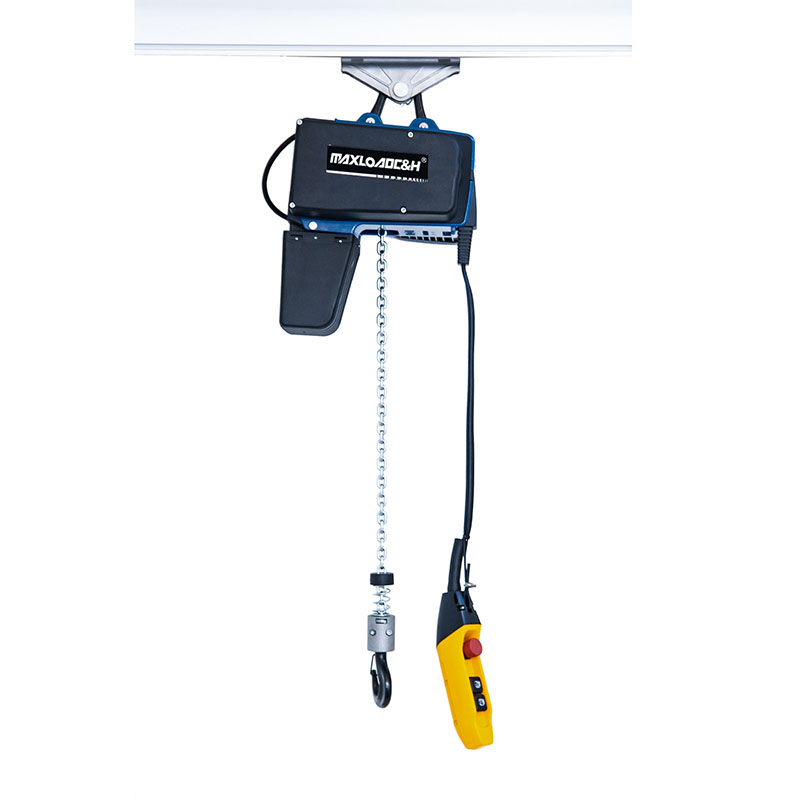
Special Spaces: Low Headroom
Many older workshops or temporary structures have limited clear height. In such cases, after installing a standard electric hoist, the effective travel of the hook is significantly reduced by the hoist's own structural height—a workshop with 4 meters of clearance might only yield a usable lifting height of just over 2 meters.
Low-headroom electric hoists are designed for these scenarios. Using a side-mounted motor and a flat-profile gearbox design, they can reduce the headroom requirement by 200 to 500 millimeters compared to standard models. Their compact structure, combined with large-diameter drums, effectively increases the lifting height while reducing the clearance needed for left/right limit switches and crane blind spots, providing operators with more usable space.
This type of hoist is particularly suitable for low-clearance environments with a ceiling height not exceeding 4 meters, or for temporary setups where major structural modifications to the workshop are undesirable. When selecting, pay close attention to two critical dimensions: the actual headroom required after the hoist body is installed, and the effective travel distance between the highest and lowest points the hook can reach. Simply looking at the lifting height specification is insufficient—you need to measure the actual clearance from the rail to the floor on-site and subtract the hoist's structural dimensions to determine the usable space.
Final Selection Process:
Start by assessing the load and height to determine the basic tonnage and travel requirements. Then, check the workstation's clear height—if space is tight, prioritize a low-headroom solution. Next, evaluate environmental risks—if there is an explosion risk, go the explosion-proof route; if there is a cleanliness requirement, go the cleanroom route; if neither applies, return to the standard wire rope vs. chain hoist decision. Finally, determine the duty cycle based on the actual frequency of use.
There is no single "best" model for electric hoist selection, only the "most suitable" configuration. Once you have a thorough understanding of the actual conditions at the workstation, the choice becomes clear.
 0086 156 1824 5535
 0086 156 1824 5535