Choosing the Most Suitable Jib Crane Based on Your Workstation Environment
Walk into any machine shop, assembly line, or warehouse, and you will see jib cranes busy at work across various workstations. Unlike overhead bridge cranes that cover an entire workshop, the greatest value of a jib crane lies in its dedication to a specific workstation—it is the most direct solution for local material handling. However, many buyers focus only on lifting capacity and price, overlooking the specific details of the workstation environment. As a result, after installation, the equipment feels awkward to use—either the slewing range is insufficient, the column blocks the forklift aisle, or frequent movement causes excessive wheel wear.
A truly suitable jib crane is not just about “being able to lift”; it must form a smooth working system with your workstation layout, operating habits, and electric hoist. Starting from the workstation environment, let’s discuss how to choose among the three main types.
Look at the Workstation First, Then Decide on the Type
There are three basic types of jib cranes: column‑mounted (floor‑mounted), wall‑mounted, and portable (mobile). Which one to choose depends first on “how much space is left” at your workstation.
Column‑mounted jib crane is the most common type. A vertical column is fixed to the floor, the boom rotates around the column, and the electric hoist runs along the I‑beam rail of the boom for horizontal movement. The lower end of the column is secured to a concrete foundation via anchor bolts.
The biggest advantage of this structure is its independence—it does not rely on the building’s walls or columns to support the load, so it can be installed anywhere in the plant that has a suitable foundation. The boom can rotate 360°, and with the electric hoist moving transversely along the boom, it covers a full circular area. If the workstation is arranged within this circle, operation is very convenient—for example, placing lathes, milling machines, and drilling machines around the column, so the operator can cover all equipment with just a turn.
Another advantage of the column‑mounted type is its rigidity. The column is embedded in the ground or bolted to the base plate, leaving no room for wobbling. For tasks that require precise positioning—such as placing workpieces onto machine tables or lifting precision parts to assembly stations—the stability of the column‑mounted type is unmatched by other types. In terms of load capacity, standard column‑mounted jib cranes can achieve relatively high tonnages.
However, the column‑mounted type also has obvious drawbacks. The column itself occupies a certain floor area. Although the footprint is small, in a cramped workshop, this pillar may exactly block the material flow aisle. Moreover, once installed, its position is fixed and moving it is nearly impossible. Additionally, if the workstations are distributed along a long and narrow area, the column‑mounted type can be awkward—if the boom is too short it cannot reach the far end, and if it is too long the near side is underutilised.
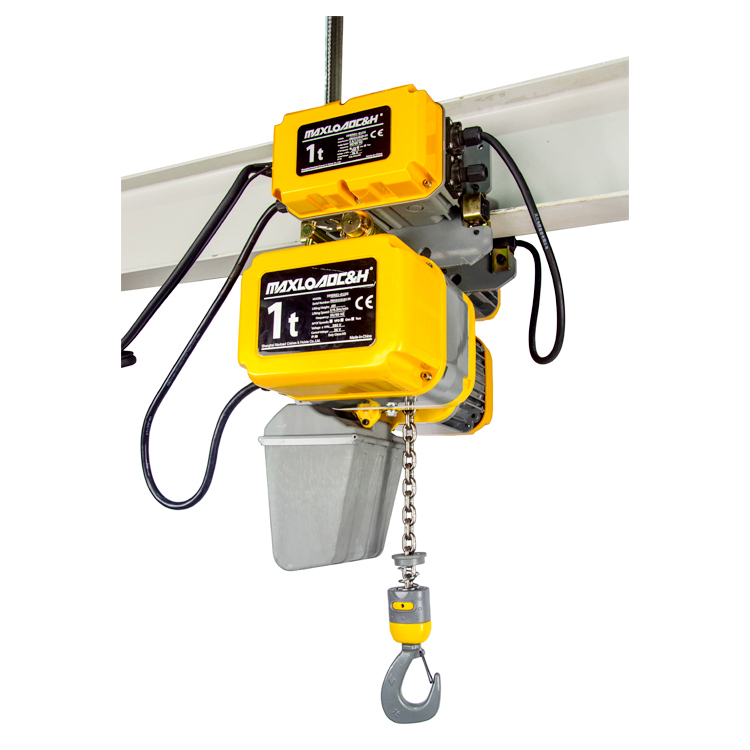
When to choose column‑mounted?
When the workstations are relatively concentrated, operation frequency is high, positioning accuracy is required, and the floor allows anchor bolting. Typical applications include small‑part assembly lines, machine tool loading/unloading stations, mould change areas, and equipment maintenance stations.
Wall-mounted jib crane can be seen as a variant of the column‑mounted type. The difference is that it does not occupy floor space; instead, the slewing support is fixed to the building’s load‑bearing wall or structural column, with the boom extending outward.
The biggest selling point of the wall‑mounted type is that it takes up no floor space. Floor space is the most valuable resource in a workshop—forklifts need to run, racks need to be placed, and people need to walk. One less pillar means more flexibility. Mounted along a wall, the space under the boom can still be used for passage or storage. At the same time, installation costs are usually lower—no concrete foundation is required, saving both expense and time.
But the limitations of the wall‑mounted type are also clear. First, the slewing range is typically limited—usually about 180° and at most 270°, so it cannot achieve 360° full coverage. Second, the load capacity is restricted by the wall or column strength, generally not exceeding 2‑3 tons. Most critically, installing a wall‑mounted crane requires that the wall or structural column has sufficient structural strength, which must be verified by structural calculations. Not every wall can support it.
When to choose wall‑mounted?
When the workstation is against a wall, the wall or structural column is strong enough, full 360° coverage is not required, and floor space is tight. Typical applications include corner workstations, narrow aisle areas, and assembly stations arranged along a wall.
Portable (mobile) jib crane is completely different from the previous two types. Its base is fitted with wheels, allowing it to be pushed as a whole to different workstations as needed.
The core value of the portable type lies in its flexibility. It requires no fixed installation and can be moved wherever needed. For non‑fixed workstations or occasions where lifting is only needed occasionally, the portable type is very practical. It also does not require a foundation or a load‑bearing wall, making the entry threshold low.
However, the price paid for mobility is reduced load capacity and stability. The lifting capacity of portable cranes is usually relatively low, generally under 1 ton. Moreover, there is a conflict between moving and lifting—an industry rule of thumb is “no lifting while travelling, and no travelling while lifting.” That is, you cannot move the crane while it is carrying a load, and you cannot carry a load while moving the crane. In addition, the portable type has requirements for floor conditions—the floor must be flat; if there are rail grooves or potholes, moving it becomes very difficult. Another common mistake: some people buy a portable crane for convenience but end up using it at a fixed workstation every day, causing rapid wheel wear and unsmooth slewing.
When to choose portable?
When multiple workstations share the crane, for temporary jobs, maintenance stations, or where cargo storage locations are not fixed. Typical applications include sporadic lifting in large warehouses, temporary lifting during equipment repairs, etc.
How to Choose the Electric Hoist?
The jib crane itself is only a supporting and slewing structure; the actual lifting operation is performed by the electric hoist suspended from the boom.
Electric hoists are mainly divided into two categories: chain electric hoists and wire rope electric hoists. Chain hoists are compact in structure and small in size, commonly used in light‑duty workstations and space‑constrained areas. Wire rope hoists have advantages in lifting capacity and lifting height, operate more smoothly, and are suitable for frequent, heavy‑load conditions. Generally, chain hoists are common for capacities under 5 tons; for larger tonnages or where higher lifting heights are required, wire rope hoists are more appropriate.
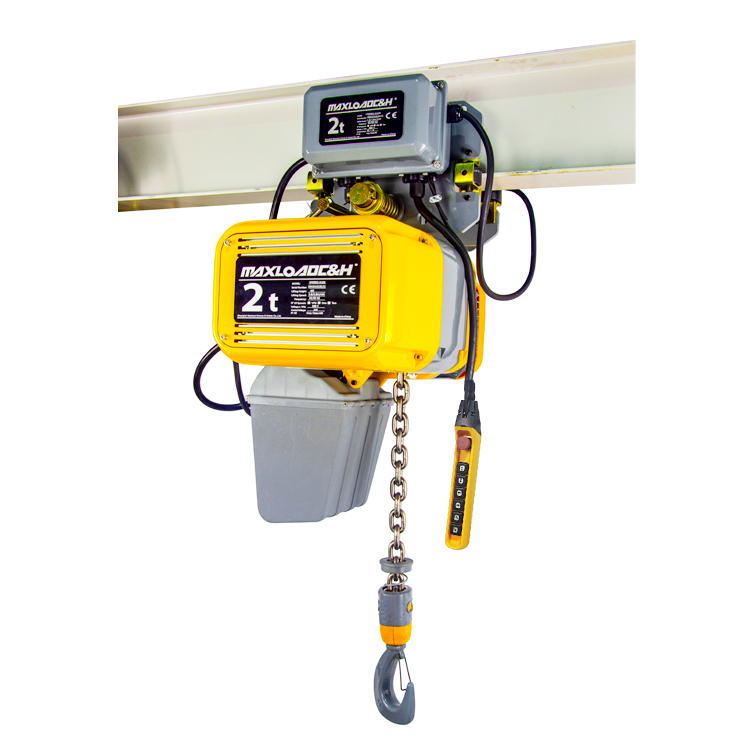
When selecting an electric hoist, pay attention to the following points:
1. Do not neglect the hoist’s own weight on the boom.
Many people calculate only the rated lifting capacity, forgetting to include the weight of the electric hoist itself. Suppose a column‑mounted jib crane with a 5‑metre boom is equipped with a chain hoist weighing about 80 kg, plus the hook and rigging. The concentrated load at the boom tip produces a bending moment that may be even more significant than the rated load itself, especially when the hoist runs to the boom end, where deflection increases noticeably. During design, the bending stress and deflection of the boom should be verified using 1.1 times the rated load. The vertical deflection at the boom tip should generally not exceed 1/500 to 1/400 of the boom length.
2. Consider whether variable frequency speed control is needed.
If the workstation requires precise positioning—for example, placing workpieces accurately into fixtures or aligning moulds with mounting holes—it is advisable to choose an electric hoist with variable frequency speed control. VFD technology enables low‑speed inching, soft starting, and soft braking, avoiding load swing from sudden stops and achieving millimetre‑level positioning accuracy. Boom slewing can also be motorised with variable frequency control to make the entire working cycle smoother.
3. Consider special environments.
If the workstation is in a flammable or explosive atmosphere, explosion‑proof configurations are required; in corrosive environments, stainless steel or anti‑corrosion coatings are needed; in low‑temperature environments (below ‑20°C), cryogenic treatment is necessary.
Common Pitfalls to Avoid
Radius calculated too tightly.
Many people measure the distance from the column centre to the farthest pick‑up point and choose the boom length based on that. In practice, when the boom rotates to certain angles, the load under the hook may hit the column, or the hoist chain may rub against the pulley guard at the boom end. It is recommended to add an extra margin of 300‑500 mm to the measured maximum distance. Also note the difference between “effective radius” and “theoretical radius”—there is a section at the boom end where the electric hoist, when reaching the limit, cannot actually lift anything because the wire rope or chain angle becomes too steep.
Height calculated too tightly.
The distance from the floor to the highest point of the hook should not be based only on the required lifting height of the load; you must also include the height of the electric hoist itself and the rigging.
Foundation not taken seriously.
The base plate and anchor bolts of a column‑mounted crane must be able to resist the maximum overturning moment. The weight of the concrete foundation and the bearing capacity of the soil should have sufficient margins; otherwise, under repeated alternating loads, the foundation may loosen. During installation, the column verticality deviation should be controlled within 1%. If an electric hoist is included, the foundation should also have embedded cables and grounding facilities, with grounding resistance not exceeding 4 ohms.
Choosing the wrong type.
A fixed workstation should use a fixed crane; a portable crane is designed for “mobility.” Similarly, if the workstation requires 360° full coverage, do not choose a wall‑mounted type just to save space—an 180° coverage range will not meet the needs.
Once these factors are clarified, the type to choose will naturally become apparent. The combination of a jib crane and an electric hoist may seem simple, but when used properly, it can genuinely improve workstation efficiency; when chosen poorly, it becomes a hindrance. The key lies in whether you take the workstation environment seriously during the selection phase.
 0086 156 1824 5535
 0086 156 1824 5535