JIB Crane Selection Logic
Walk into any machining workshop, assembly line, or warehouse, and you'll always see jib cranes busy at workstations. Many factories focus only on lifting capacity and price, neglecting the specific details of the workstation environment. As a result, the equipment is installed but feels awkward to use—either the rotation range can't reach the farthest workstation, the pillar blocks the forklift aisle, or frequent movement causes excessive wheel wear. A truly suitable jib crane should not just "be able to lift"; it must form a smooth working system with your workstation layout, operating habits, and the accompanying electric hoist.
I. First, Look at How Much Space Is Left at the Workstation
Jib cranes mainly come in three basic types: pillar-mounted, wall-mounted, and portable (mobile). Which type to choose depends first on "how much space is left" at your workstation.
If your workstation is against a wall, and the wall is a load-bearing structure, the wall-mounted type may be the most suitable solution. Its pillar is fixed to the wall or structural column, and the boom extends outward, taking up zero floor space. This is the biggest advantage of wall-mounted jibs—zero footprint. In a workshop, floor space is the most valuable resource: forklifts need to pass, racks need to be placed, and personnel need to walk. One less pillar means a wider aisle. However, wall-mounted jibs have obvious limitations: blocked by the wall, their rotation range is usually only 180 to 270 degrees. If your workstation requires 360-degree full coverage, the wall-mounted type won't suffice. Moreover, wall-mounted jibs transfer all overturning moments and horizontal reactions to the building structure. A structural engineer must verify the load-bearing capacity of the wall or column before installation. This is especially important in old plant renovation projects—many older buildings' walls cannot withstand additional dynamic loads.
If your workstation is in the center of the workshop and there are no load-bearing walls or structural columns nearby, the pillar-mounted type is the most conventional choice. A pillar stands on the floor, and the boom rotates 360 degrees around the pillar. This type is suitable for workstations that require operation around all sides—for example, an assembly station where parts are taken from the left and assembled onto a product on the right. The biggest advantage of the pillar-mounted type is its independence: as long as there is a suitable concrete foundation, it can be installed anywhere in the plant. Its rigidity is also the best among all types; the pillar is embedded in the ground or fixed to the foundation base plate with anchor bolts, with almost no sway. For operations requiring precise positioning—such as placing workpieces onto machine tool tables or lifting precision parts onto assembly stations—the stability of the pillar-mounted type is unmatched by other types. But the downside is obvious: the pillar itself takes up some floor area. Although the footprint is not large, in a cramped workshop, this pillar might just block the logistics aisle. And once installed, its position is fixed and almost impossible to move.
If your workstation is not fixed or if lifting operations are only occasional, the portable type may be the most flexible choice. Portable jib cranes have wheels at the base and can be pushed to anywhere in the workshop. Their advantage is "one machine, multiple uses"—several workstations can share one unit, used at Station A today and pushed to Station B tomorrow. However, the trade-off is that the lifting capacity is usually smaller, commonly ranging from 150 kg to 1 ton. Also, portability requires a flat floor—if the workshop floor has rail grooves or potholes, pushing will be very difficult. A common mistake in practice is buying a portable type for convenience, but then using it at the same fixed workstation every day, leading to rapid wheel wear and poor rotation. Fixed workstations should use fixed cranes; the portable type is designed for "moving," not for "staying put."
II. Don't Calculate the Turning Radius and Lifting Height Too Tightly
Turning radius and lifting height are two parameters that are often "calculated too precisely." Many people measure the distance from the pillar center to the farthest pickup point at the workstation and select the radius based on that number. But in actual use, when the boom rotates to certain angles, the load under the hook may hit the pillar, or the electric hoist's chain may rub against the sheave cover at the boom tip. Therefore, always leave a margin in radius; generally, it is recommended to add 300 to 500 mm to the measured maximum distance. Also, note the difference between the "effective radius" and the "theoretical radius" of a jib crane—at the end of the boom, there is a zone where the electric hoist cannot actually lift a load after traveling to its limit, because the wire rope or chain angle becomes too steep.
The same logic applies to lifting height. From the ground to the highest hook position, this figure must account for the load clearing the floor with enough headroom. You must include the height of the electric hoist itself, the rigging height, and any additional travel that may be needed during lifting. In many low-clearance plants, the biggest constraint when choosing a jib crane is not lifting capacity, but lifting height—the boom beam itself already takes up some height, leaving very limited space for the electric hoist.
III. Matching the Electric Hoist Is Not Just Hanging It On
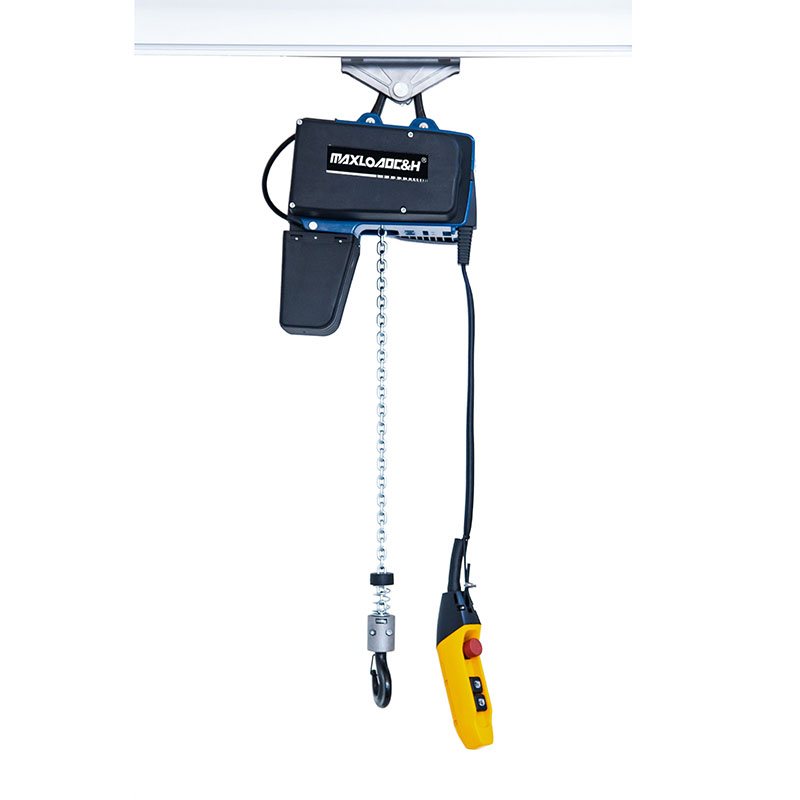
Jib cranes paired with electric hoists are almost the standard configuration for workstation lifting. But the match between the two is not just a matter of hanging the hoist on—many problems that arise in actual projects, such as the hoist not moving, insufficient hook height, twisted cables, or even wheel flange gouging, are not quality issues of individual devices but result from not treating the jib crane and electric hoist as an integrated system during the engineering design phase.
First is the relationship in lifting capacity. The rated load of the jib crane must be greater than or equal to the maximum lifting capacity of the electric hoist to ensure structural safety. But note: the crane's rated load is not the same as what the hoist can lift. The crane's rated load is the total weight that the boom tip can bear, and this total must include the self-weight of the electric hoist, the weight of the rigging, and any possible impact factors. When the boom is relatively long, a heavier hoist will significantly reduce the effective lifting capacity. Therefore, in compact spaces, a lighter chain electric hoist often has an advantage over a wire rope hoist—the chain and sprocket engagement of a chain hoist has a smaller axial dimension, allowing for a lower headroom height.
Second are the details of structural compatibility. The mounting point of a wall-mounted jib crane is close to the building column or wall, leaving very limited lateral space for the electric hoist. In this case, you must carefully calculate the overall width of the hoist and the extreme lateral position of the hook. If a wire rope hoist is selected, the drum and motor project out to one side, which may leave insufficient safety clearance on the far end or against the wall side. Therefore, wall-mounted jib cranes are typically paired with compact chain electric hoists, and they must adopt a low‑headroom design—otherwise, the effective lifting height will be significantly reduced.
A pillar-mounted jib crane can rotate 360 degrees and has a large working range, but it has a power supply challenge: the hoist's power cable twists as the boom rotates. The conventional solution is to install a collector ring (slip ring) on top of the pillar to transmit power and control signals to the rotating boom, and then route them along the boom via a cable trolley system or flat cable to the electric hoist. The number of slip ring circuits must be sufficient—in addition to the main power supply, if the hoist has two‑speed control or a wireless remote receiver, circuits for control signals and emergency stop must also be connected. If you neglect the slip ring and use a spiral cable for frequent rotation, the cable insulation will wear out quickly, leading to ground faults or short circuits.
For a portable jib crane, the whole machine can be pushed around the workshop, so you must consider the effect of the electric hoist's self‑weight on overall stability—the base counterweight design of the portable jib crane must account for both the hoist self‑weight and the rated load to prevent overturning when the load is at the boom tip.
IV. Don't Ignore Environmental Factors and Duty Cycle
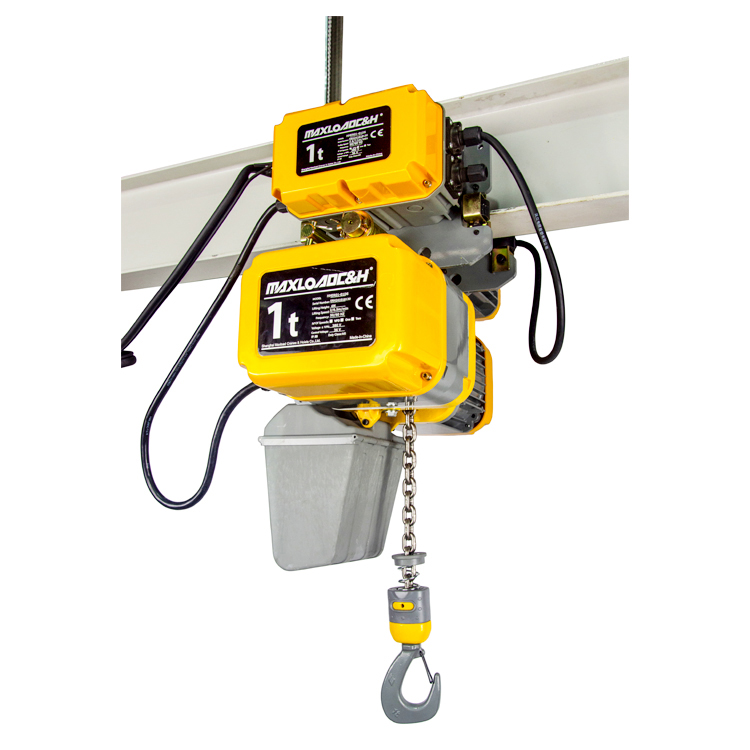
Beyond workstation layout and structural type, the operating environment also directly affects selection. Workshops with heavy dust, high temperatures, humidity, or corrosive gases require different material corrosion protection and enclosure ratings.
Duty cycle is equally important. A workstation that only lifts a few times per day and one that runs continuously have completely different requirements for the crane's duty classification. For high‑frequency use, the rotation drive, bearings, and the hoist's braking system all need higher durability grades.
V. Back to the Workstation Itself
In the end, there is no standard answer in selection—only "suitable" or "not suitable." The pillar‑mounted type is suitable for fixed workstations, high‑frequency operations, and scenarios requiring precise positioning; the wall‑mounted type suits workstations against walls, tight floor space, and budget‑limited scenarios; the portable type fits multi‑station sharing, temporary operations, and low‑frequency use. The core logic of selection boils down to four sentences: choose tonnage by load, choose type by workstation, choose materials by environment, and choose grade by frequency.
Before finalizing, it is recommended to take your workstation floor plan, mark all pickup and drop‑off points, measure the farthest distance, calculate the weight and dimensions of the largest workpiece, and then compare the characteristics of the three types to eliminate options one by one. If conditions allow, having the manufacturer conduct an on‑site survey is the best approach—many detailed issues simply cannot be discovered without being there. Choose right, and a jib crane can serve you for many years without major problems; choose wrong, and from the day of installation, it will be a series of compromises and makeshift fixes.
 0086 156 1824 5535
 0086 156 1824 5535