Practical Selection Guide for Electric Hoists
Many people, when selecting an electric hoist, instinctively focus on the rated load capacity—buy a hoist with a tonnage matching the heaviest load to be lifted. That logic isn't wrong, but it's incomplete. In practice, what often makes equipment perform poorly or wear out prematurely isn't an undersized tonnage, but rather the overlooked details of the workplace environment.
Lifting Height: First Measure Your Facility's Actual Clearance
Lifting height isn't simply the distance from the floor to the roof. You need to consider the effective travel between the highest and lowest positions of the hook. Many factory ceilings have pipes, cable trays, and lighting fixtures that reduce the actual usable space for the hoist.
Pay attention to these points when measuring: the installation height of the runway, the distance from the hook's top position to the runway surface, and the required clearance height after the load is in place. Don't wait until the equipment is installed to find that the hook can't reach the needed height, or that the operator has to stand on tiptoe to control the load after lifting.
Another often‑ignored factor—the reserved wraps of wire rope on the drum. Standards require at least two to three wraps of rope to remain on the drum, and this part is excluded from the effective lifting height. If you don't account for this margin, the actual lifting height will fall short of the rated value.
Duty Classification: More Important Than Tonnage
This is the most misunderstood parameter in selection. Many assume that a 5‑ton hoist can continuously lift 5 tons in any manner they wish. In reality, two 5‑ton hoists—one designed for occasional use and another for continuous operation—can have vastly different service lives.
Duty classification is determined by two factors: load state and frequency of use. Lifting 5 tons once an hour versus once a minute places entirely different demands on the equipment. For the former, light or medium duty is sufficient; for the latter, heavy duty is mandatory.
A practical reference: if total daily running time does not exceed two hours and most lifts are below rated load, choose light duty. If running four to six hours daily with varying loads, choose medium duty. For continuous operation at full load, heavy duty is essential. Underspecifying duty class can lead to premature failure—or worse, a breakdown during operation.
Power Supply: Conductor Bar or Cable Feed
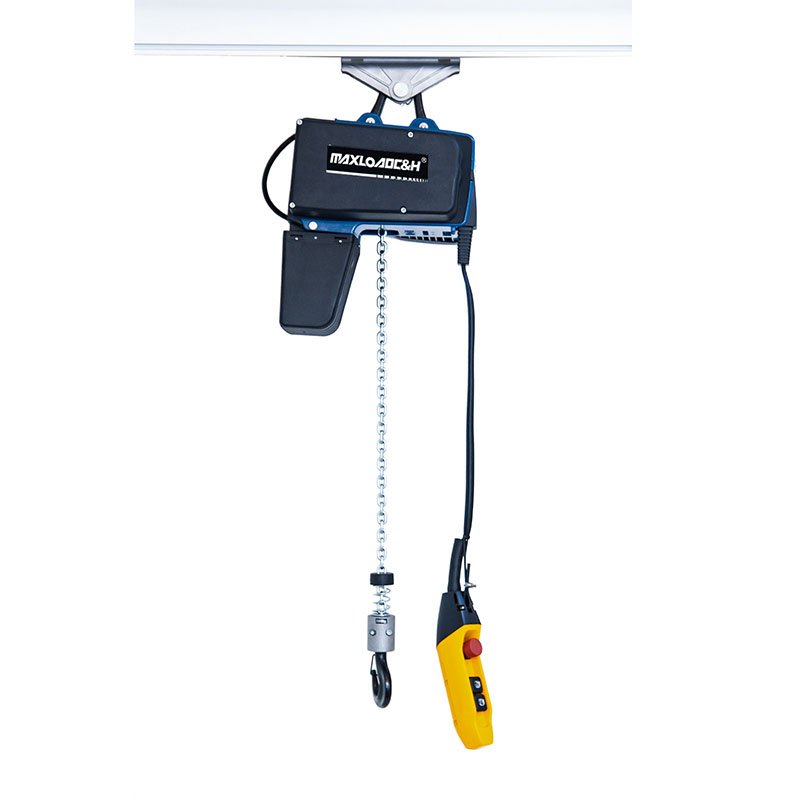
If an existing power rail is available at the workstation, select a model with a conductor bar pickup. For new installations, decide between laying a conductor bar system or using a cable reel or trailing cable.
Conductor bar supply suits long‑distance travel and frequent operation; its downsides are higher initial cost and strict installation accuracy requirements. Cable feed is suitable for short travel distances and low usage frequency—it's cheaper, but cables are prone to wear and require regular inspection and replacement. Track‑type power supply can suffer from poor contact in dusty or humid environments, so consider this in advance.
Control Method: Floor‑Operated vs. Cab‑Operated
Control method isn't just a matter of habit. Space constraints, limited visibility, or obstacles along the lifting path all influence the choice.
Floor control comes in wired and wireless versions. Wired pendants are inexpensive and reliable, but the operating range is limited by cable length, and the cable dragging on the floor can be a tripping hazard in narrow aisles. Wireless remotes offer flexibility, but battery life and signal obstruction can be issues.
Cab operation suits high lifting heights, frequent lifts, or applications requiring precise positioning. The cab itself adds extra weight, which must be included in the total load capacity. Also, while cab operation provides good visibility, operator comfort directly affects productivity—hot, stuffy, or cold environments lead to fatigue and reduced efficiency.
Lifting Attachments and Connection Methods
This depends on the shape of the load. Hooks work for loads with lifting rings; otherwise, spreader beams, C‑hooks, or custom grippers may be needed. If the load surface cannot be scratched, add soft liners to the attachments. Hot materials require heat‑resistant slings, and fragile items need cushioning devices. These details aren't complex, but they should be raised during selection—otherwise, you may find the attachments incompatible after installation and have to rework.
Installation Space Constraints
Clear height, column spacing, and aisle width—these physical dimensions determine which hoist model can be installed. In low‑headroom workplaces, standard hoists with large overall heights may reduce hook travel, so low‑headroom designs are necessary. If the runway is too close to a wall, leaving insufficient maintenance access, even a wrench won't fit—such scenarios require planning for service clearances during selection.
Some factory runways are curved or circular; standard straight‑track hoists won't work, requiring curved‑track travelling gear. Other workstations may need to cross equipment or obstacles, so the hoist's travelling mechanism must adapt to elevation changes along the runway.
Environmental Factors: Temperature, Humidity, Dust
These are most easily overlooked but often have the greatest impact.
High‑temperature environments—such as foundries or heat‑treatment stations—demand specific motor insulation classes and thermal protection. Standard motors in high heat experience accelerated insulation aging, leading to winding failures within a few years. For hot areas, choose Class H insulation, motors with cooling ribs on the housing, and control boxes located away from heat sources.
Wet or corrosive environments—plating shops, washing stations, outdoor exposed areas—require extra anti‑corrosion treatment for metal parts and higher enclosure ratings for control cabinets. Standard hoists in such places suffer surface rust and oxidised electrical contacts within six months, with sharply rising failure rates.
In dusty environments—woodworking shops, cement plants, grain processing—dust can infiltrate brakes, motor fan covers, and control boxes. Accumulation may cause short circuits or even fires. In such areas, choose enclosed designs with appropriate explosion‑protection ratings, and use surface‑cooling motors rather than fan‑cooled types that draw in dust.
Explosion‑proof environments are special cases and must comply strictly with hazardous area classifications for both explosion‑protection level and temperature class. There is no room for compromise—specifications must be followed precisely.
Common Selection Mistakes
Focusing only on tonnage while ignoring duty class—the most widespread issue. Buying a 5‑ton hoist and running it at full capacity continuously may lead to scrapping in just two years. With the same tonnage but different duty classes, service life can vary several‑fold.
Taking the lifting height from the drawing dimensions—drawing values are theoretical; actual installed runway heights and hook dimensions will have tolerances. Always leave a margin; otherwise, you may end up tens of centimetres short with no way to correct it.
Overlooking operator habits—some operators prefer inching (jogging) control, causing high shock loads on motors and brakes. If such usage is common, variable‑frequency drive (VFD) control is more durable and user‑friendly than contactor control.
Choosing low‑cost generic models—generic hoists work fine in standard conditions, but any deviation from that baseline invites trouble. Spending a bit more on a model tailored to your specific conditions pays off in reliability and lower total cost of ownership.
The core of electric hoist selection isn't to pick "one that works" but rather "one that performs well and lasts long in your specific workplace." Run through the factors above, and you'll greatly reduce the chances of costly mistakes.
 0086 156 1824 5535
 0086 156 1824 5535