Selection Logic for JIB Cranes and Electric Hoists
In workshops and assembly stations, a JIB crane paired with an electric hoist can turn repetitive material handling into one-handed operation—freeing up labor and improving cycle times. Yet a fact that is often overlooked is that for the same lifting capacity and boom length, pillar‑mounted, wall‑mounted, and portable models perform completely differently in terms of safety, convenience, and long‑term cost when applied to specific workstations. Choosing a type without considering the actual workstation environment is like buying a farm vehicle based solely on maximum horsepower—the numbers match, but the operating conditions don’t, and problems will follow. Below, starting from real‑world workstation conditions, we clarify the logic behind matching the three types of JIB cranes with electric hoists.
First, understand the workstation: four core variables that determine the selection
Before opening any catalogue, a few on‑site questions often matter more than any technical parameter.
1. Is the workstation permanently fixed, or does it need to be relocated from time to time according to project changes? This will immediately rule out one type of structure.
2. Can the floor be drilled for foundations? Is there a load‑bearing column or wall of sufficient strength nearby? If there are utility lines under the floor, underfloor heating, or the landlord does not permit damage to the floor slab, this must be clearly noted.
3. Clear headroom, obstacles within the swing radius, and floor passage requirements. For example, if there are air ducts or cable trays overhead, the boom length must allow for clearance; if the floor is a must‑pass route for forklifts, the large base plate of a pillar‑mounted crane can become an obstacle.
4. The actual lifting capacity and frequency of use—not peak values, but the daily average. This directly affects the duty classification of the electric hoist and the fatigue life of the cantilever structure. Treating “an occasional half‑ton lift” as the design basis will steer the selection in the wrong direction.
After answering these four questions, the boundaries of the three structural types become very clear.
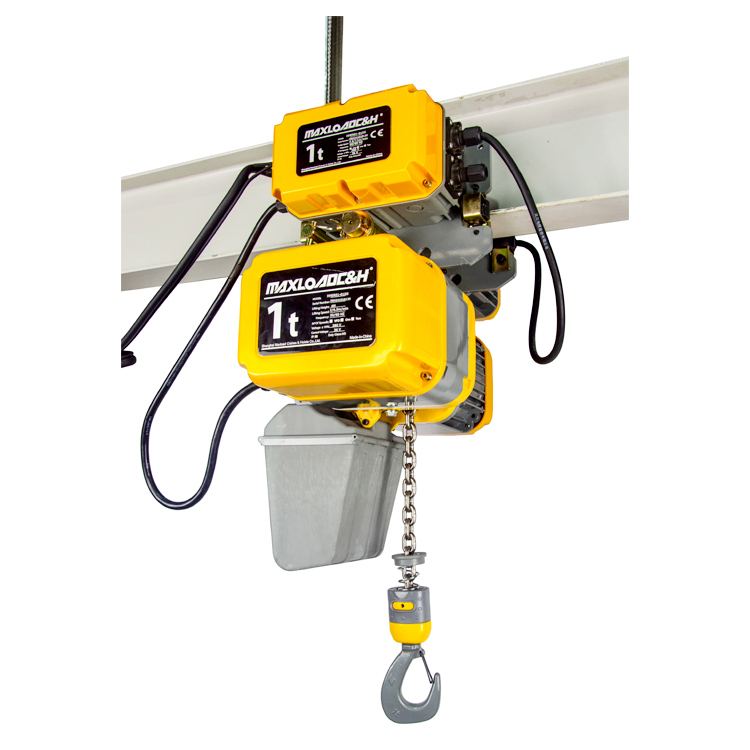
mounted JIB crane: independent support, full coverage
A mounted JIB crane uses a freestanding column fixed to the floor by a base plate, with a cantilever boom that can rotate 360°. Among JIB cranes, it offers the largest coverage area and the highest load‑carrying capacity. It does not depend on the building structure—as long as the floor conditions are suitable, it can be placed anywhere in the workshop.
The applicable workstations are very clear: fixed stations, with a floor that can be worked on, where lifting capacity and boom length requirements are high. Typical applications include machine loading/unloading, die repair areas, and material supply to assembly islands. Because it can rotate a full 360°, a single pillar‑mounted JIB crane can often serve two or three adjacent workstations with high efficiency.
The critical factor, however, is the foundation. The base plate requires embedded anchor bolts or chemical anchors fixed in a reinforced concrete foundation of adequate thickness—generally no less than 200 mm, with the concrete meeting the required strength grade. A common on‑site problem is that the floor has only a thin wear layer, which cannot provide the necessary resistance to overturning moment; in such cases, an independent pile foundation or a larger base plate is needed. If the workshop is already in production, excavation will disrupt logistics, and a trade‑off must be made.
When paired with an electric hoist, the mounted type has the advantage of a stable power supply. Cables can be routed up the column and, via a collector ring (slip ring), provide 360° rotational power delivery. The hoist can be operated by pendant control or remote control. A detail that is often overlooked is the deflection at the boom tip: for a long boom, when the hoist travels to the tip, the rail dips slightly, and the actual lifting height is reduced by the amount of deflection plus the hoist’s own headroom. Therefore, when determining the lifting height, the limiting value must be based on the hook’s lower limit at the boom tip, not the value at the column side. When selecting the electric hoist, a low‑headroom chain hoist can effectively gain a few tens of millimetres of valuable height—especially useful in low‑ceiling workshops where pillar interference is a concern.
Wall‑mounted JIB crane: leveraging the building, freeing the floor
A wall‑mounted JIB crane does not require a floor‑standing column; its cantilever boom is anchored directly to the plant’s load‑bearing columns or walls via a bracket. The swing angle is typically 180° to 270°, depending on the installation position, and it occupies zero floor space.
This is the first choice when floor space is extremely tight. It is commonly seen alongside assembly lines, beside auxiliary loading stations, or at maintenance positions along walls. Because the bracket must carry the entire overturning moment, the strength and stiffness of the mounting structure are extremely critical. The biggest pitfall in practice is “installing it because the column looks strong.” If a wall‑mounted JIB crane is attached to a secondary cast‑in‑place tie column, a non‑load‑bearing wall, or an unverified steel column without structural analysis, long‑term use can lead to bolt pull‑out or wall cracking, with serious consequences.
Therefore, selecting a wall‑mounted type requires a professional engineer to conduct a site survey and confirm whether the concrete column’s cross‑section and reinforcement, or the steel column’s wall thickness, can withstand the additional bending moment. If the capacity is insufficient, reinforcement or additional reaction structures are needed, and the cost may even exceed that of a pillar‑mounted type. In addition, because the boom length is limited by bending moment, wall‑mounted cantilevers are usually no more than 6 m, with lower lifting capacities, and tip deflection must be controlled more strictly.
For electric hoist matching, wall‑mounted types also need to address power supply; fortunately, because the swing angle is limited in most stations, a trailing cable or festoon conductor bar can be used. The mounting height of the hoist runway directly affects the effective lifting height. If the unit is installed under the roof beams, the clearance between the highest point of the hoist trolley and the lowest roof obstruction must be re‑checked. Sometimes the swing arm can be installed, but the hoist cannot fit—an awkward situation resulting from failure to fully verify the overall envelope dimensions.
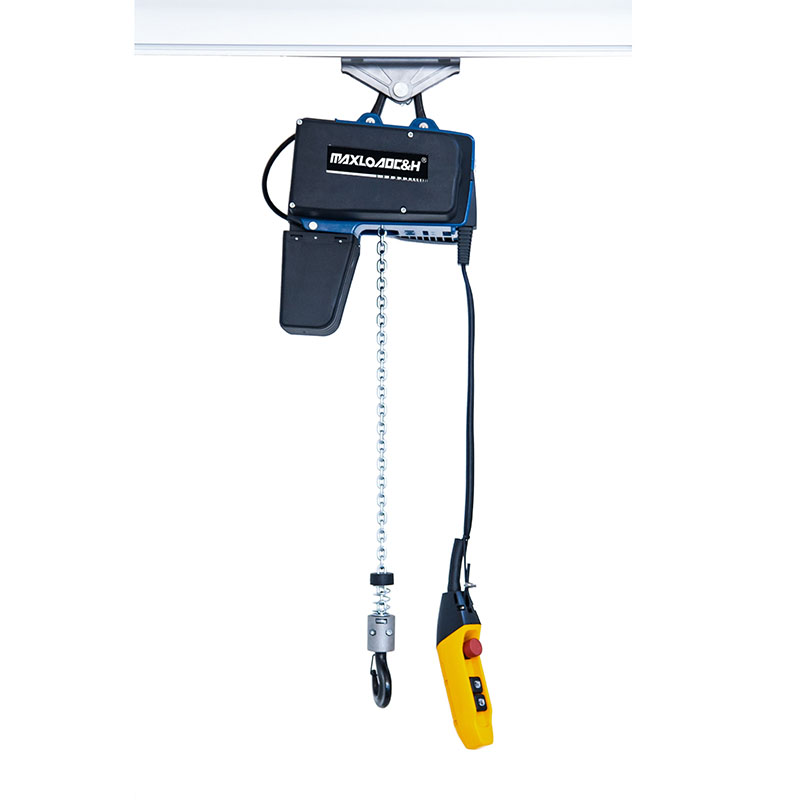
Mobile JIB crane: flexible deployment, no foundation required
A portable JIB crane is supported by a base with counterweights and is fitted with swivel casters or forklift pockets, so it can be pushed to different workstations as needed. Its greatest feature is “zero construction”—no foundation, no modification to the building structure, just move it and use it.
Its suitable environments are very specific: rented workshops where the floor cannot be damaged; temporary production lines, equipment maintenance positions, or laboratories; or situations where product types change frequently and workstations need periodic adjustment. Lifting capacity is generally small, typically 80 kg to 1 t, with boom lengths of 2 to 4 m. Because stability depends entirely on the base counterweight and floor flatness, the most fatal mistake in use is moving the crane with a load suspended. When the boom is fully loaded, the overall centre of gravity shifts forward; if someone pushes the unit and the floor is suddenly uneven or the movement is stopped abruptly, it can easily tip forward. The correct procedure is always: unload the hoist, stow the rigging, confirm no load, and then move; after repositioning, adjust the outriggers or lock the casters.
For power supply, most portable JIB cranes use electric hoists with lithium battery packs or long cable reels, allowing independent operation for several hours without a fixed power source. This is very convenient for outdoor sites or locations without nearby power outlets. It is important to note that the travel floor must be hard and level; otherwise, not only is the tipping risk high, but pushing resistance also increases, turning daily use into a physically demanding chore.
Selecting the electric hoist correctly completes the loop
The crane and the hoist cannot be considered separately. Regardless of the JIB type, the matching chain electric hoist must be verified for several workstation‑related details: single‑speed or two‑speed lifting; control method matching the operator’s habits; and environmental protection rating.
One small but critical calculation: the effective lifting height. The distance from the hook’s lower limit to the floor must account for the rigging height, workpiece height, and necessary operating clearance. At the boom tip, due to deflection and the hoist’s own dimensions, this value is usually the most critical and must be checked against the most severe working condition.
Selection pathway and common mistakes
Several recurring pitfalls are worth emphasising again: installing a wall‑mounted JIB on a seemingly solid non‑load‑bearing wall without load verification; moving a portable JIB with a full load, causing tipping; constructing the foundation for a pillar‑mounted type based on intuition without meeting the overturning safety factor; and ignoring boom‑tip deflection, resulting in the electric hoist reaching its upper limit but still being unable to clear the workpiece. All these stem from substituting rough estimates for actual measurements and calculations.
Ultimately, selecting a JIB crane with an electric hoist is not about ticking boxes on a data sheet—it is about treating the workstation environment as the design input, then working backwards to determine the structure, mounting method, and hoist parameters. It is advisable to invite the supplier’s technical staff to the site with measuring tools, laser distance meters, and levels to quantify headroom, floor condition, column status, access routes, and power supply. The resulting solution will then be truly tailored to the job. A selection made the first time correctly is a long‑term return on safety and efficiency.
 0086 156 1824 5535
 0086 156 1824 5535
 kimliu@chnhoist.com