An On-Site Dimensional Analysis for Electric Hoist Selection
In a factory workshop, two electric hoists with the same rated lifting capacity—one operating smoothly for a decade at Station A, the other breaking down frequently within six months at Station B—are not uncommon. The root cause is rarely a difference in intrinsic equipment quality, but rather a misjudgment of the workspace environment during the selection process. Electric hoists are not generic components; their structural form, protection rating, and operating parameters must precisely match site conditions. Otherwise, even the best equipment will struggle to adapt.
Mounting Configuration: Look Up First
The support structure available above the workstation directly determines the range of viable products. Typical site scenarios include:
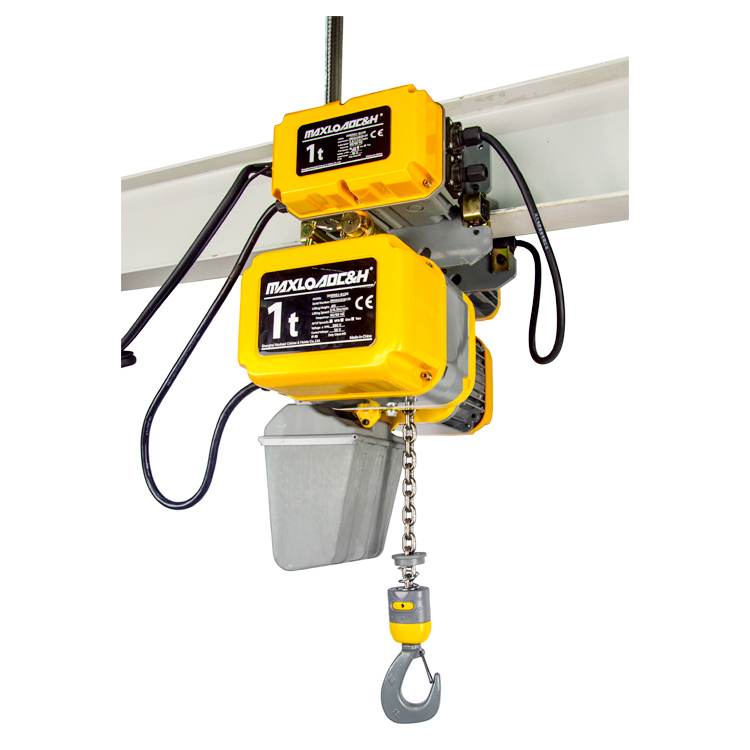
Workstations with crane runways are the most standard. The hoist can be suspended as a trolley under the lower flange of an I‑beam. In this case, a standard trolley‑type electric hoist meets the requirement, making selection relatively straightforward.
Workstations without crane runways but with only simple anchoring points often occur in temporary work areas or retrofit projects. Here, a fixed‑type electric hoist is a more pragmatic choice—the hoist body is anchored at a single point, and multi‑point lifting is achieved through guide pulleys. Though the travel range is limited, installation costs are low and lead times are short.
Curved or irregular tracks are commonly found in special process sections, such as turning segments of paint lines. In these cases, a special trolley with horizontal guide rollers must be used; otherwise, track gnawing or even jamming will occur at bends.
Low‑headroom workstations are the most problematic. Many old factory buildings have crane runways tight against the roof, leaving extremely limited installation space for the hoist. Standard hoists require room for wire rope coiling and upward hook travel, whereas low‑headroom hoists shorten the distance between upper and lower hooks, gaining dozens of extra centimetres of effective lifting travel at the same lift height. During selection, be sure to measure the actual distance from the hook's highest position to the track—this figure directly dictates which structural type you should choose.
Mounting configuration selection is essentially a geometric fit issue; selecting without on‑site dimensional data is meaningless. When you receive the workshop drawings, your first task is not to look at tonnage, but to measure the three critical dimensions of the installation space.
Power and Control: Where Does Power Come From, Where Does the Operator Stand?
Power supply conditions are a hard constraint often overlooked. The vast majority of domestic workstations use 380V/50Hz three‑phase power, but for export projects or imported production lines, non‑standard supplies such as 440V/60Hz may be encountered. Mismatched power leads to motor overheating and abnormal brake engagement. Always verify the site power parameters before selection and clearly specify them in the contract.
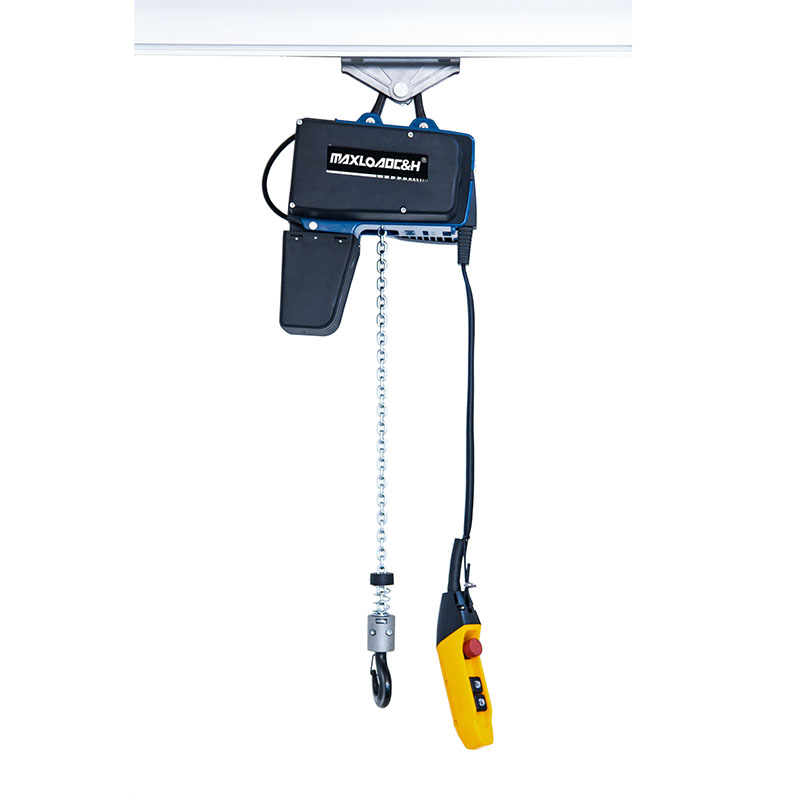
The choice of control mode depends on the workstation characteristics. A pendant push‑button is the most common wired control, suitable for workstations where the hook is accessible and the operator can walk alongside the load. It is low‑cost and reliable. However, for toxic, high‑temperature, or dusty environments where the operator cannot approach, wireless remote control is mandatory. In this case, consider whether the remote range covers the entire workstation and whether co‑channel interference exists—when multiple remote‑controlled hoists operate in the same area, frequency planning must be addressed in advance.
Differences in control interface ergonomics accumulate over time and directly impact operational efficiency and error rates.
Travel Path and Duty Cycle: The Hoist Does More Than Just Lift
The hook's travel path in the workspace determines the selection of the hoist's travel drive. Straight tracks mate with standard trolleys, but for cross‑workshop transfers—lifting at Station A and moving to Station B—consider dual‑side drive or a more powerful travel motor; single‑side drive may cause skewing on long‑distance tracks.
Duty class selection is often oversimplified, and this is a major reason for premature equipment failure. Duty class is not merely "light, medium, or heavy"—it is determined by two variables: load spectrum and frequency of use. For example:
Die‑change stations: few lifts per day, but each lift approaches the rated load—few cycles, heavy loads → choose a combination of high load spectrum and moderate frequency.
Production line loading/unloading stations: dozens of lifts per hour, but most loads are only 30‑50% of rated capacity—many cycles, light loads → choose a combination of moderate load spectrum and high frequency.
Equipment installation stations: used only a few times a year, but each lift is near full capacity—select the lowest duty class; there is no need to over‑invest for a "just in case" scenario.
Industry standards define duty classes from M3 to M8 (six levels). When selecting, clearly state the duty class requirement to your supplier, rather than just saying "I need a 5‑ton hoist"—that is how a professional buyer operates.
Environmental Factors: The Invisible Killers
Dusty environments: conductive dust can cause electrical shorts, while combustible dust poses explosion risks. In such cases, increase the electrical protection rating to at least IP54 and opt for explosion‑proof or dust‑ignition‑proof configurations.
Corrosive environments: irreversible attack on metallic structures requires upgrading surface coatings to heavy‑duty epoxy anticorrosive paints, and exposed wire ropes should be replaced with galvanised or stainless steel types.
Outdoor workstations: rain and lightning protection are essential; control boxes and motors need weatherproof covers, and the overall protection rating should be no lower than IP55.
If these environmental factors are not addressed at the selection stage, retrofitting after commissioning is extremely costly or even impossible. Informing the supplier of the true site conditions upfront is far more economical than frequent post‑installation repairs.
Easily Overlooked Critical Details
Hook‑lifting accessory match: The hook's opening size must allow smooth attachment to the slings or C‑hooks used on site. If the hook is too large, it will tilt and slip when attaching small slings; if too small, existing accessories cannot be fitted. Provide actual photos or dimensional drawings of your lifting accessories during selection—this is the only way to avoid the "won't fit" problem upon delivery.
Coordination of lift height and track length: Many sites only specify lift height while ignoring track length. Both ends of the track must be fitted with stops and bumpers, and the effective buffer stroke between the bumper and the trolley must meet standard requirements; otherwise, the trolley may run off the track at high speed.
Wire rope discard and replacement intervals: The fatigue life of wire rope varies dramatically with usage frequency. For frequent‑lifting stations, the rope may need replacement annually; for occasional use, it could last three to five years. While you may order a spare rope set at purchase, it is even more important to train on‑site personnel on daily inspection—they should be able to identify the four discard conditions: broken wires, diameter reduction, deformation, and rust.
Selection Process and Communication Points
A professional selection logic should proceed layer‑by‑layer:
Step 1 – confirm installation space and track conditions;
Step 2 – confirm power supply and control mode;
Step 3 – determine duty class based on operational duty cycle;
Step 4 – overlay environmental factors to adjust protection ratings and special configurations.
Once these four steps are completed, the equipment's technical specifications are essentially locked.
When communicating with suppliers, avoid saying merely "I need a 5‑ton hoist." Instead, provide the following information: workstation application, track height and length, number of lifts per day, typical load weight, site temperature and humidity, presence of dust or corrosion sources, and approximate distance from operator to hook. The more complete the information, the closer the supplier's proposal will match your actual needs.
In essence, electric hoist selection is about fitting equipment parameters to site conditions. When on‑site measurements are accurate and parameters are properly matched, installation and operation go smoothly. If site information is missing or inaccurate, even the best equipment will "fail on arrival." Spending half a day thoroughly understanding the workspace environment is far more cost‑effective than reworking after the equipment has been delivered.
 0086 156 1824 5535
 0086 156 1824 5535
 kimliu@chnhoist.com