The Workstation is the Battlefield: Precisely Selecting the Right Electric Hoist
When many companies purchase electric hoists, their approach is often overly simplistic: confirm the lifting capacity and lifting height, compare prices, and the procurement decision is hastily made. However, this "good enough" selection logic often leads to various problems once the equipment is put into use—inconvenient operation, frequent breakdowns, and even potential safety hazards. In reality, electric hoist selection is a systematic engineering process. Its core basis is not merely the specification sheet, but rather the actual working environment and usage logic of the workstation. The following five dimensions will help you establish a professional selection mindset.
First, Look at the "Job": Determine the Duty Class Based on Load Characteristics and Cycle
The first step in selection is not to browse the product manual, but to observe the workstation on-site. Two things need to be clarified: what is being lifted, and how often.
First is the load. You must consider not only the net weight of the workpiece but also the weight of slings, fixtures, and other attachments. A rough industry estimation method is: the hoist's rated capacity should be no less than 1.1 to 1.2 times the sum of "material weight + attachment weight." This margin is reserved to handle impact loads during startup. Never push the equipment to its limits—this is the basic bottom line for ensuring safety.
Second is the duty cycle, which is the most easily overlooked fatal detail in selection. If the workstation only requires a few lifts per day, it falls under the light-duty working class. However, if it's on an assembly line where lifts occur every few minutes for several consecutive hours, this falls under the heavy-duty working class. This corresponds to the working class parameter in the specifications. Many purchasers only focus on the "tonnage" while ignoring the "working class." If a high-frequency workstation mistakenly selects an M3 or M4 class hoist, the motor and brake will age prematurely due to heat buildup, potentially even leading to load-dropping accidents. For continuously busy workstations, it is recommended to prioritize evaluating M5 class or higher.
Next, Look at the "Site": Physical Space and Environmental Constraints
The physical space and environmental attributes of the workstation directly determine the hoist's "form factor" and materials.
Space Constraints: If there is ample overhead space in the factory, a standard-headroom wire rope electric hoist will suffice. However, if operating inside containers, in low-ceiling workshops, or near the underside of crane runways, a low-headroom hoist should be considered. This design optimizes the clearance between the hook and the rail, maximizing the effective lifting travel within a limited height.
Special Environmental Conditions: The workstation environment determines the hoist's "constitution." If located in a flour mill, chemical plant, or paint shop where flammable dust or gases are present in the air, sparks from a standard motor become a ticking time bomb. An explosion-proof electric hoist must be selected, as its motor and electrical components feature specialized flameproof treatment. If used in a cleanroom, a cleanroom-compatible hoist is required, featuring smooth surfaces, no dead corners, and special lubricants to prevent dust attraction or contamination. Additionally, high-temperature radiation in foundries and die-casting shops, as well as humid salt spray in seafood processing plants, necessitate choosing heat-resistant or anti-corrosion coated models accordingly.
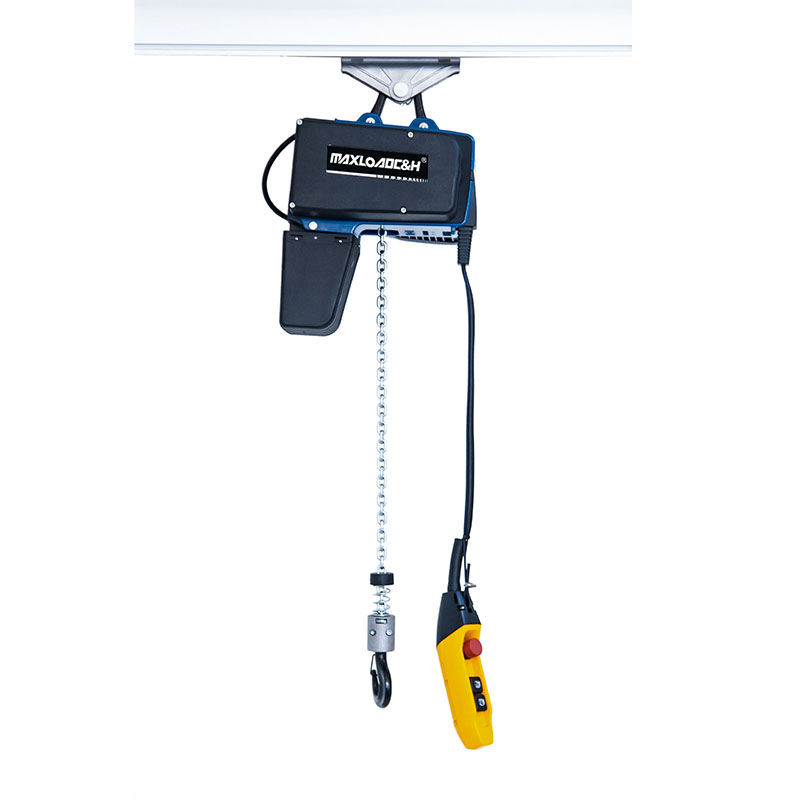
Determine the "Movement": The Logic of Installation and Travel Modes
Does the workstation require the hoist to "stand still" or "travel around"? This determines the equipment's structural framework.
If only for fixed-point lifting—for example, loading/unloading parts next to a machine tool—a lug-mounted or suspension-fixed installation is sufficient. If movement along a straight track is needed, a hand-pushed or motorized trolley should be equipped. If coverage of a rectangular area is required, a single-girder or double-girder crane is necessary. One easily overlooked detail: when the tonnage is large or the travel frequency is high, a double-girder structure offers greater stability than a single-girder, effectively reducing sway during hoist travel—making it suitable for workstations requiring precise positioning.
Confirm the "Control": Comfort and Precision of Human-Machine Interaction
How the hoist is controlled significantly impacts operator fatigue and positioning accuracy.
Traditional wired pendant control offers stable signals, but the operator must stand directly under or next to the load, which restricts visibility and poses a tripping hazard from the cable. For workstations involving wide-range movement or complex lifting paths, wireless remote control is a powerful tool that frees the operator, allowing them to choose the best vantage point to observe the lifting path and avoid hazardous areas.
For precision assembly workstations requiring millimeter-level alignment, standard inching control often fails to provide fine adjustments. In such cases, a hoist equipped with variable frequency drive (VFD) or dual-speed control should be selected, enabling slow creeping for precise positioning and preventing workpiece collision damage. Some advanced models even support dual-mode switching between wired pendant and wireless remote control, accommodating different process requirements.
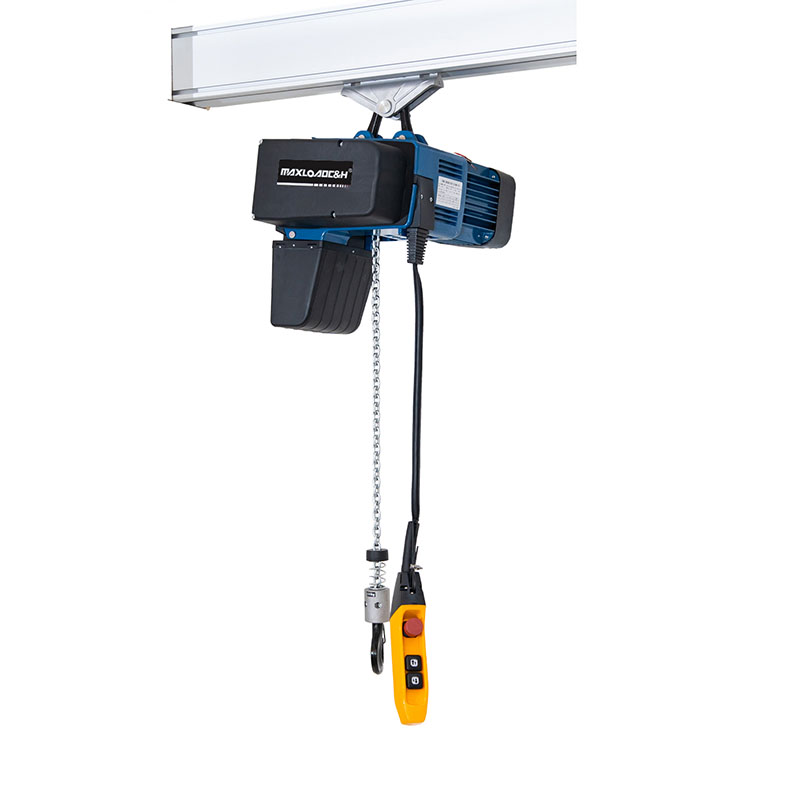
Double-Check the "Power Supply": An Easily Overlooked Compatibility Issue
Finally, and most fundamentally: power supply compatibility. Industrial power in China is predominantly three-phase 380V, but some older workshops or residential settings may only have single-phase 220V. Failing to confirm this parameter may leave the equipment "all dressed up with nowhere to go" upon arrival, potentially requiring the additional purchase of a bulky transformer.
Conclusion
Selecting an electric hoist is essentially about finding the optimal balance among safety, applicability, and economy. Remember, the numbers on the specification sheet are only the entry threshold. The actual usage frequency, environmental risks, and operating habits at the workstation are the key factors that determine long service life and low failure rates. It is recommended to first draw up a detailed workstation environment checklist, and then review every item point-by-point with the supplier's technical engineer—ensuring the equipment truly serves the production process.
 0086 156 1824 5535
 0086 156 1824 5535