How to Precisely Select an Electric Hoist Based on the Working Environment
Many companies tend to focus habitually on the two most intuitive parameters—tonnage and lifting height—when selecting an electric hoist. This approach may work for rough, general-purpose operations, but when we turn our attention to specific workstation conditions, this "one-size-fits-all" selection logic reveals obvious flaws. A device that runs perfectly in Workshop A may prove inefficient—or even hazardous—at Workstation B. True professional selection begins with an in-depth understanding of the workstation environment, not with a simple accumulation of specifications.
Beyond Parameters: Workstation Cycle Time and Positioning Accuracy
Tonnage is fundamental, but it is far from everything. Many purchasers fall into the trap of "choosing bigger rather than smaller," believing that higher capacity means greater safety and durability. However, while it is certainly dangerous to overload a small-capacity hoist over the long term, blindly opting for an excessively large capacity is equally unwise. A larger-capacity hoist has greater dead weight, and when its motor operates chronically under light loads, efficiency actually decreases, while unnecessary internal wear accelerates, shortening the machine's overall service life. The correct approach is to reserve a margin of 10%–20% above the actual material weight.
Even more critical than tonnage is the workstation's operating cycle. If the workstation requires frequent lifting—tens or even hundreds of operations per day—then the duty classification becomes a more important indicator than tonnage. The duty classification reflects the equipment's comprehensive capacity to withstand load intensity and frequency. Class M3 is suitable for occasional use, such as equipment maintenance, whereas assembly lines and frequent warehouse loading/unloading require Class M5 or higher. If a light-duty hoist is used in a heavy-frequency application, motor overheating and accelerated wear of components may shorten its service life from an expected five years to just one or two.
Similarly, the choice of lifting speed should serve the workstation cycle. For operations requiring precise positioning—such as mold installation or precision component assembly—two-speed or variable-frequency stepless speed control offers distinct advantages over single-speed units, as slow inching movement effectively prevents workpiece collisions. If the workstation only needs simple up-and-down transport, a high-end variable-frequency system is simply an unnecessary expense.
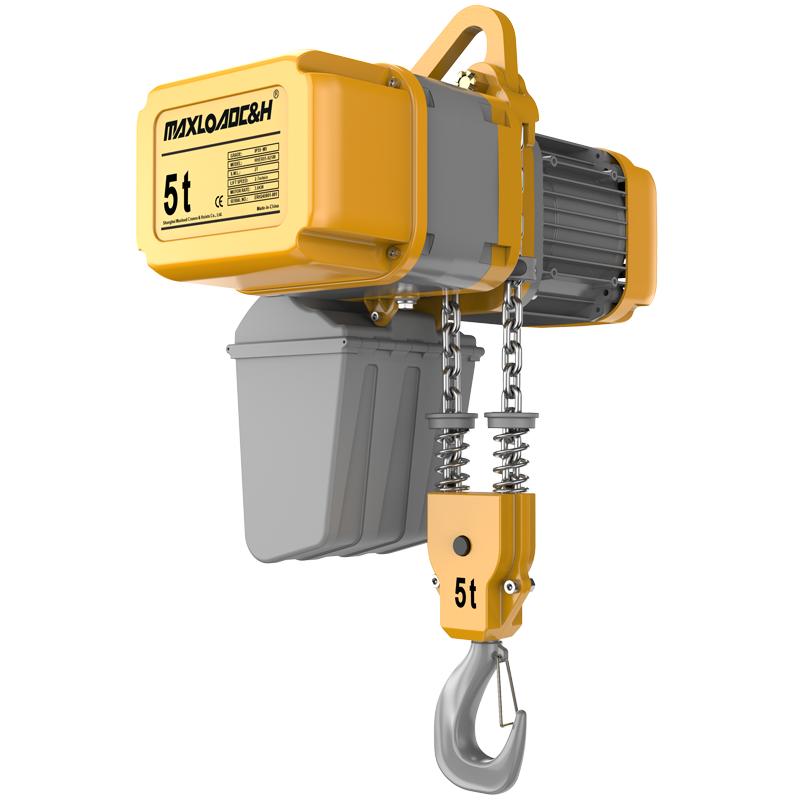
Space and Environment: Objective Conditions That Determine Equipment Survival
The physical space and environmental conditions of the workstation constitute another set of hard constraints.
Space limitations: In older workshops with limited ceiling height or in low-headroom workstations, low-headroom electric hoists are a key solution for increasing effective lifting height. This design optimizes the hoist body structure to reduce the space occupied by the equipment above the hook, thereby gaining greater operational travel within the same building height.
Environmental challenges: This is the most easily overlooked but potentially most consequential factor in selection.
Dusty environments: Equipment with standard protection ratings cannot prevent dust ingress, which can cause internal component wear or even short circuits. In such cases, products with protection ratings of IP54 or higher must be selected to ensure motor and electrical enclosure sealing.
Humid/outdoor environments: High-humidity environments require not only higher waterproof ratings but also, for high-power motors, the possible addition of preheating/drying devices to prevent condensation. Corrosion-resistant treatment of cables and copper terminals should also be considered.
Corrosive environments: Equipment surfaces must undergo special anti-corrosion treatment, and critical components should be designed with isolation measures. Ordinary carbon steel will rapidly corrode in acid-laden atmospheres.
Explosion-proof requirements: In chemical plants, oil depots, and similar sites, explosion-proof electric hoists are mandatory, with control components featuring explosion-proof sealed designs. Conventional equipment must never be substituted, as doing so poses a major safety hazard.
In addition, the workstation's power supply voltage is a fundamental condition that must be confirmed in advance. In China, common options are three-phase 380V and single-phase 220V; mismatched selection will render the equipment uninstallable and inoperable.
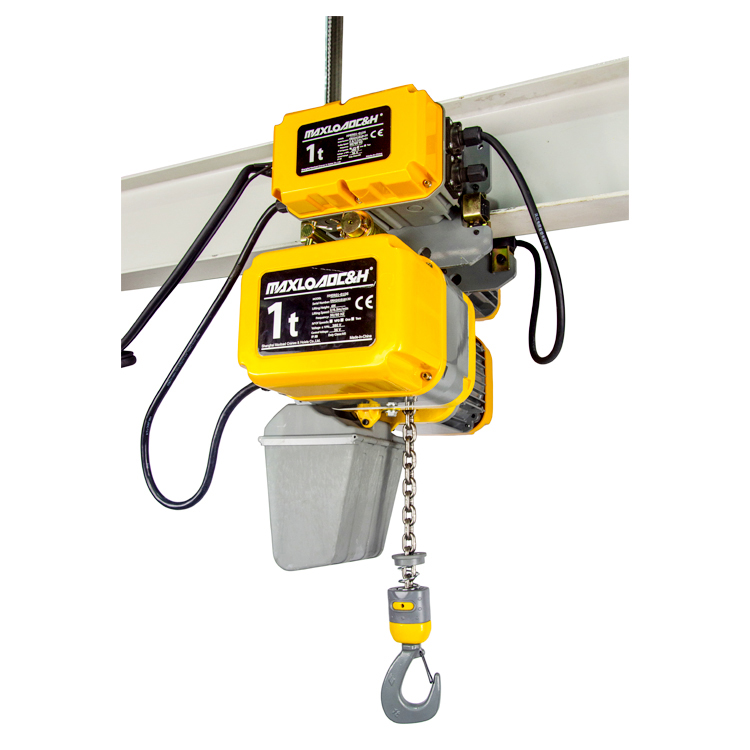
Control and Safety: Adapting to Operating Habits and Risk Prevention
The choice of control method directly affects operational convenience and safety. In open workstations or overhead working scenarios, wireless remote control frees the operator from a fixed position, allowing them to stay clear of hazardous areas beneath the load, improving visibility and safety. For conventional indoor workstations, reliable pendant push-button control remains an economical and practical choice.
Safety configurations leave no room for negotiation. Beyond standard limit switches and emergency braking, overload limiters should be configured according to workstation risk levels to prevent accidents caused by miscalculation of material weight. In high-risk scenarios such as lifting molten metal or dangerous goods, redundant safety designs such as dual brakes may even be necessary to ensure load retention in the event of service brake failure.
Conclusion
Selecting an electric hoist for a workstation is, in essence, a precise match between equipment specifications and operational requirements. After determining the two basic indicators of tonnage and lifting height, we should invest more effort in examining the workstation's usage frequency, spatial constraints, environmental conditions, control requirements, and safety risks. Paying attention to these "beyond-the-parameters" details is what enables the chosen equipment to truly integrate into the workstation, becoming a reliable partner that enhances efficiency and ensures safety—rather than a source of conflict.
 0086 156 1824 5535
 0086 156 1824 5535