Field Decision-Making Path for Electric Hoist Configuration
A common misconception in the selection of industrial lifting equipment is to focus excessively on the two core parameters—rated lifting capacity and lifting height—while overlooking the deeper impact that the workstation environment has on the long-term operational reliability of the equipment. As a frequently used workstation-level lifting tool, the actual performance of an electric hoist is closely related to the operating space, power supply conditions, frequency of use, and surrounding medium environment at the installation site. The following outlines a practical selection decision-making path based on six on-site dimensions.
Installation Space Constrains the Choice of Hoist Body Configuration
The clear height of the structural space above the workstation is the first hard indicator that must be confirmed. For low-clearance workstations, priority should be given to hoist bodies with compact structural designs. In such models, the drum and motor shaft are arranged in parallel, resulting in a shorter axial dimension that maximizes the effective lifting stroke within the limited height. For workstations with ample clearance, standard-profile models can be selected, where ease of maintenance becomes a more prominent consideration.
The horizontal swing radius of the operating area is also worth attention. When the hoist runs on an I-beam track, the body width must match the track's bending radius; otherwise, there is a risk of travel jamming or derailment on curved sections. It is recommended to measure the actual track curvature radius before selection and cross-check it against the allowable curve-passing data of different models.
Power Supply Type Determines Control Mode Selection
The on-site distribution capacity and voltage system directly define the range of electrical options for the electric hoist. Three-phase 380V/50Hz is the standard industrial power supply, and the vast majority of models are configured on this basis. However, for some older factory areas or temporary workstations where only single-phase 220V power is available, it is necessary to select dedicated models with single-phase capacitor-run motors or to add a variable-frequency power supply unit.
The routing and length of the power supply cable should not be overlooked. When the hoist travel track extends to several tens of meters, the voltage drop in the trailing cable can cause insufficient motor starting torque. As a general rule, when the power supply distance exceeds 50 meters, it is advisable to increase the cable cross-section or choose a control box with voltage compensation. For extreme cases where the supply distance exceeds 100 meters, it is recommended to adopt a wireless remote control combined with a fixed-point power supply scheme, avoiding the series of poor-contact issues associated with sliding contact power take-off.
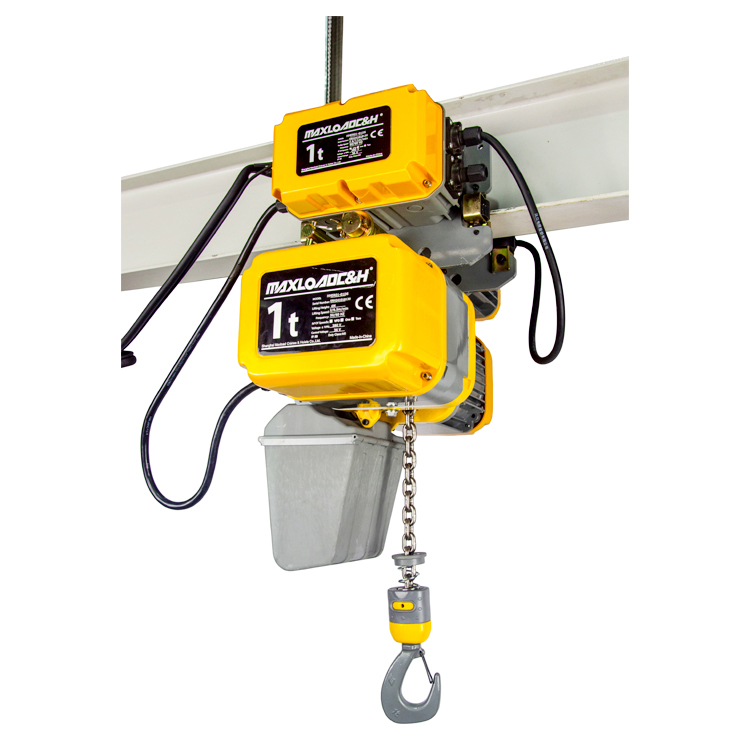
Lifting Load Characteristics Affect Mechanism Selection
The shape of the objects to be lifted at the workstation determines the choice of duty class for the hoisting mechanism and travel mechanism. For workstations with uniform loads and low lifting frequency, selection according to duty class M3 is sufficient. However, when the workstation involves frequent spot loading/unloading, impact loading, or prolonged suspended waiting, the duty class should be raised to M4 or even M5. The corresponding gear precision of the reducer and the friction-pair lifespan of the brake are substantially different at these higher classes.
Load eccentricity is an issue that is easily overlooked in workstation environments. Some workpieces, due to their asymmetric structure, have a center of gravity that does not align with the lifting point during hoisting, generating horizontal forces. If the eccentricity is too large, the wire rope will spool irregularly on the drum, accelerating rope groove wear. For such workstations, priority should be given to models equipped with dual limit switches or load-sway suppression functions, or a balancing beam should be added at the spreader end to correct the load attitude.
Operating Mode Matches Operator Work Habits
The operator's position and field of view at the workstation are directly related to the choice of remote control method. For workstations where floor operation is predominant, it is recommended to use handheld remote controls with two-speed control. Such controls achieve stepless speed adjustment of lifting through the depth of button travel, offering significantly better maneuverability for precision positioning than simple single-speed control. When operators need to frequently move between different workstations, the mobility advantage of wireless remote control becomes even more prominent.
Cab operation mode is generally only applicable to high-capacity lifts or situations where the operator must travel with the load. It should be particularly noted that when the cab travels with the load, the relative position between the operator and the load remains constant, which facilitates fine operations. However, the suspension method of the cab and the vibration isolation design of the hoist body must be coordinated to prevent lifting shocks from transmitting through the hoist body to the cab, affecting operating comfort and safety.
Medium Environment Determines Protection Rating Settings
The medium environment around the workstation is often the key variable that determines the actual service life of the electric hoist. Dusty environments in metalworking shops pose a continuous threat to the motor's cooling air ducts and brake friction surfaces. For such workstations, models with a protection rating of no less than IP54 should be selected, and the motor housing should feature external cooling fins to prevent dust from blocking the ducts and causing excessive temperature rise.
For workstations exposed to acid mist, alkali fog, or salt spray, special attention must be paid to the anti-corrosion treatment of structural surfaces. Ordinary polyurethane topcoats typically develop blistering and peeling within two years in corrosive environments. For such workstations, it is recommended to additionally require a composite coating system of epoxy zinc-rich primer plus polyurethane topcoat, and all fasteners should be made of stainless steel. For workstations with explosion-proof requirements, in addition to the entire unit obtaining explosion-proof certification, it is necessary to verify whether the explosion-proof rating matches the type of flammable medium on site—there are significant differences in the flameproof gap parameters between IIB and IIC class explosion-proof structures.
Maintenance Convenience Guides Structural Detail Choices
The maintenance cost over the service life of an electric hoist often far exceeds its initial purchase price, so maintainability should be considered already at the selection stage. Details such as whether the lubrication point is easily accessible for routine greasing, whether the hoist body must be disassembled for wire rope replacement, and whether terminals inside the control box are clearly labeled should all be verified one by one during model comparison.
When the maintenance space at the workstation is constrained, priority should be given to models with a high degree of modularity. Such designs allow the lifting motor or reducer to be withdrawn separately for repair without dismantling the entire hoist, which is of great significance for reducing downtime losses. In addition, if the fleet angle of the wire rope exceeds the design allowable value in actual installation, it will significantly shorten the rope's service life. During selection, the actual fleet angle should be calculated based on the relative positions of the lifting point and the drum to ensure it is within 4°; if it exceeds this, a rope guide should be added or the lifting point arrangement should be adjusted.
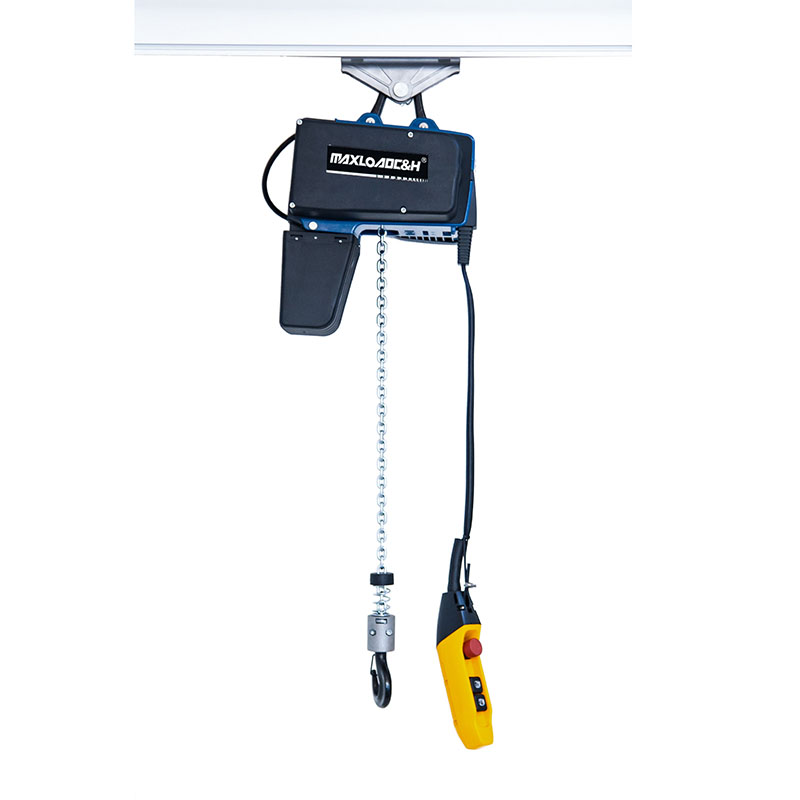
By systematically checking the above six environmental dimensions, the electric hoist selection decision is transformed from abstract parameter comparisons into specific responses to on-site conditions. It is recommended that when preparing the selection checklist, measured data and corresponding selection conclusions be recorded chapter by chapter according to the six sections—installation space, power supply conditions, load characteristics, operating mode, medium environment, and maintenance conditions—to form a complete supporting document for the selection rationale. This approach not only avoids selection deviations caused by missing parameters but also provides a clear verification benchmark for subsequent equipment acceptance, installation, and commissioning. Workstation environments vary greatly; only by grounding decisions in actual on-site measurement data—rather than empirical estimates—can we ensure that the selected equipment operates safely, reliably, and economically under the given workstation conditions.
 0086 156 1824 5535
 0086 156 1824 5535