A Practical Decision-Making Guide for Real-World Applications
In the field of industrial lifting equipment, selecting an electric hoist involves far more than matching a rated lifting capacity against a parameter table. Differences in workspace environments directly determine the equipment's safety, durability, and overall efficiency in actual use. Incorrect selection can not only lead to premature equipment failure but also create potential safety hazards. Moving beyond generic product introductions, this article systematically outlines the key considerations for electric hoist selection from the practical perspective of workspace conditions, offering an actionable reference for end users.
Basic Matching of Lifting Capacity and Lifting Height
Lifting capacity is the most intuitive parameter during selection, but a common misconception needs clarification: the rated capacity should cover the maximum load with an appropriate margin, rather than simply equaling the frequently handled load. A margin coefficient of 1.2 to 1.3 times is generally recommended. An excessively large margin, however, increases the equipment's dead weight, raises energy consumption, and reduces operational sensitivity under light loads. For example, if the maximum load at a workstation is 800 kg, choosing a 1t rated capacity hoist is reasonable; opting for 2t would be over-specification.
Determining the lifting height requires on-site measurement. The actual workshop height, the vertical distance between the lifting point and the ground operating level, plus the space occupied by the lifting attachments, collectively determine the actual lifting travel required. Many selection errors stem from overlooking the hook's own travel and the space taken by limit devices. It is advisable to add an extra 5% to 10% margin to the measured data to avoid the awkward situation where the equipment falls "just a bit short" after installation.
Duty Classification – The Overlooked Core of Service Life
This is the most easily overlooked parameter during selection, yet it has the most profound impact on equipment service life. The duty classification of an electric hoist is not determined by its lifting capacity, but by the frequency of use and load factor combined. Two hoists with identical lifting capacities can have service lives and manufacturing costs that differ by several times, purely due to different duty classifications.
A common mistake in actual selection is substituting lifting capacity for duty classification. This results in equipment that can "lift the load" but experiences issues such as rapid brake wear and abnormal gearbox temperature rise shortly after being put into service. For workstations with more than 50 lifting cycles per day, it is recommended to choose at least Class M5 or higher; for continuous production line operations, Class M6 or above should be considered directly.
Practical Impact of Environmental Factors
Differences in the workspace environment directly determine the equipment's structural design and protection ratings.
Temperature is the primary factor to consider. Standard configurations suffice for normal temperature environments. However, in high-temperature environments, heat protection measures are essential. Heat radiation can lead to poor motor heat dissipation, accelerated lubricant degradation, and reduced reliability of electrical components. For such workstations, equipment with heat shields or high-temperature-resistant configurations is recommended. Low-temperature environments require consideration of low-temperature lubricants and material brittleness; for conditions below -20°C, dedicated low-temperature configurations are advised.
Humidity and corrosive factors also demand attention. Humidity in standard workshops is generally controllable, and conventional surface coatings meet anti-corrosion requirements. However, if the workstation is located near acid washing lines, electroplating stations, or in coastal high-humidity areas, a higher corrosion protection level is necessary. Attention should be paid to the anti-rust treatment of surfaces, the material of fasteners, and whether the protection rating of electrical components reaches IP55 or above.
Dust environments require differentiated handling. Ordinary dust can be managed with enclosed structures and added dust covers. However, when conductive or combustible dust is present, explosion-proof electric hoists meeting the appropriate standards are required, involving integrated explosion-proof treatment of the motor, electrical controls, brakes, and other components.
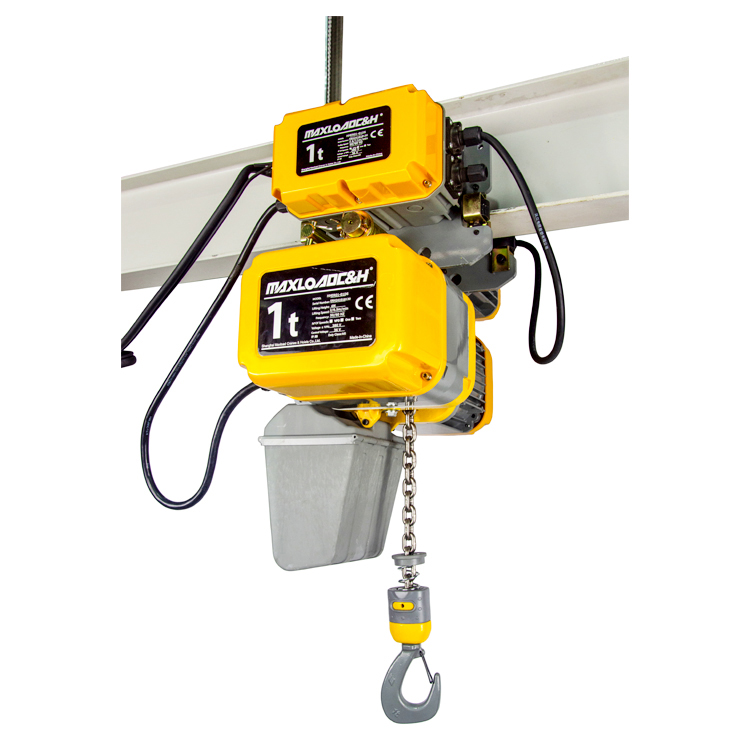
Space constraints often dictate the structural selection. When the workshop clear height is low, preference should be given to low-headroom electric hoist designs, which optimize the relative position of the drum and motor to reduce the equipment's own space occupation for the same lifting height. When the operating area is restricted and the lifting point cannot be directly above the load, a traveling trolley is necessary to achieve positioning via rail movement.
Human-Machine Adaptation of Control Modes
The choice of control mode directly affects operational efficiency and safety and should be based on the workstation's actual operating frequency and environmental conditions.
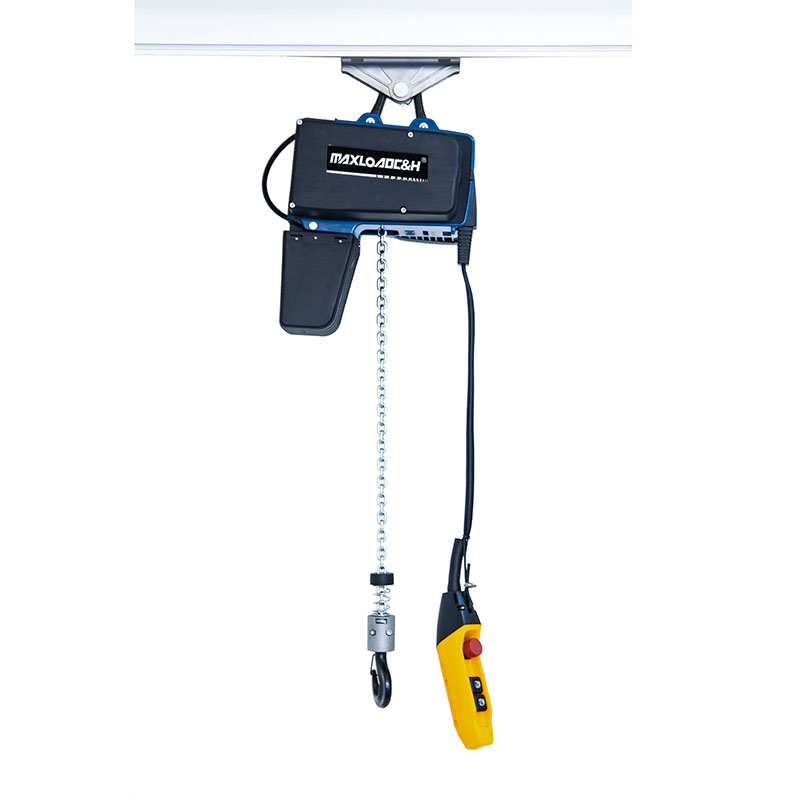
A wired pendant control is the most basic option, suitable for workstations with low operating frequency and relatively fixed operator positions. Its advantages include low cost and reliable signal transmission; its limitation is the restricted range due to cable length.
Wireless remote control is increasingly widely used in current work environments. It allows operators to choose safe observation positions freely, avoiding hazardous areas beneath the lifting path. It is particularly suitable for large-span workstations or operations involving frequent movement. However, in workstations with strong electromagnetic interference, signal stability must be carefully evaluated.
Cab operation is only applicable to large overhead bridge cranes and is not common for standard electric hoist selection.
Regardless of the control mode chosen, the emergency stop device must be appropriately positioned and reliably responsive. For workstations involving multi-person collaboration, audible and visual warning devices should be considered to clearly signal the start and end of lifting operations.
Practical Constraints of Power Supply and Installation Interfaces
The existing power supply configuration at the workstation directly determines the motor selection parameters. Three-phase 380V/50Hz is the standard for domestic industrial workshops, but some older facilities or special areas may have significant voltage deviations. In such cases, the motor's wide-voltage adaptability or the need for a voltage stabilizer should be considered.
The compatibility of the installation interface also requires prior confirmation. The connection method between the electric hoist and the existing runway or suspension beam – whether flexible suspension or rigid fixing – requires clear specification of interface dimensions and load-bearing capacity during the selection phase. Many on-site installation problems arise precisely because the equipment arrives only to find that mounting hole distances or rail profiles do not match the site conditions.
A Practical Framework for Comprehensive Decision-Making
Given the multi-dimensional factors above, the following practical process is recommended to support decision-making:
Collect on-site data. This includes maximum load and typical load distribution, expected daily lifting frequency, actual lifting height requirements, workshop temperature, humidity, and dust conditions, available clear height dimensions, and existing power supply parameters.
Establish priorities. Safety-related factors are non-negotiable and take precedence. Factors affecting service life are core configuration items. Factors influencing operational convenience are optimization items.
Balance comprehensively and confirm installation. Allocate costs according to priority within the budget; core configuration items should not be compromised. The final decision should also weigh supplier delivery timelines, after-sales support capabilities, and parts commonality, and must include final confirmation of installation interface details before placing the order.
The selection of an electric hoist is essentially about finding the optimal balance among safety, reliability, service life, and economy. Without considering the actual constraints of the workspace environment, any parameter configuration risks being purely theoretical. It is hoped that this article provides a valuable reference for practical selection work. Special note: This article is intended solely as a guide to selection thinking; final decisions regarding specific working conditions must always be based on relevant standards and on-site evaluation by professional engineers.
 0086 156 1824 5535
 0086 156 1824 5535