How to Precisely Select a Jib Crane and Electric Hoist Combination Based on Site Conditions
On the workshop floor, we often see scenes like this: a jib crane installed at a workstation, where the operator has to twist sideways to avoid the column while working; or an electric hoist that swings violently during lifting, making it difficult to align the workpiece with the assembly position. The root cause of these problems is often not poor equipment quality, but rather insufficient understanding of the workstation environment during the selection process.
The combination of a jib crane and an electric hoist seems simple—a column, a jib, and a hoist. However, to make this equipment "feel right" for a specific workstation, we need to conduct a thorough on-site evaluation from three dimensions: space, structure, and load.
I. First, Assess the Space: The Hard Constraints on Jib Structure Selection
The first step in selecting a jib crane is not looking at specification sheets, but taking a tape measure and a distance meter to thoroughly survey the surroundings of the workstation.
Clear height determines the jib structure. When the factory clear height is less than 4 meters, overhead cranes are generally not an option, but jib cranes still offer multiple solutions. If the clear height is below 3 meters, a supported-type jib is a structure worth prioritizing. In this design, the jib is mounted at the top of the column, with a support block underneath to bear the load, resulting in minimal loss of lifting height—ideal for low-ceiling workshops. In contrast, a tie-rod type jib uses square tubes or channel steel as diagonal bracing, making the structure simple and cost-effective to fabricate. However, the bracing occupies the mid-to-upper space, which sacrifices some lifting height, making it suitable for workshops with higher ceilings and less demanding height requirements.
Swing space determines the boom length and angle. A column-mounted jib crane typically has a 360° swing range, while a wall-mounted type offers 180° to 270°. But there is an easily overlooked issue: when the jib crane rotates, the entire boom sweeps across a full fan-shaped clearance zone. If the workshop has many columns or densely arranged equipment, the jib is very likely to collide with surrounding fixtures during rotation. A practical rule of thumb: if there are two or more fixed obstacles within the working range, a knuckle boom solution should be considered. A knuckle boom crane has two or more articulated sections connected by hinge joints, each capable of independent rotation and luffing. In dense workshops with equipment spacing of less than 1.5 meters, it can achieve "obstacle-clearance" operations that a straight jib crane cannot.
Installation location determines the column type. If there is an existing steel or concrete column with sufficient load-bearing capacity in the work area, a wall-mounted type should be prioritized, as it takes up zero floor space. If not, a column-mounted type is used, anchored to a concrete foundation via foundation bolts. A critical caution: column-mounted jib cranes have strict foundation requirements. They cannot be installed directly on ordinary flooring; typically, C20 or higher grade concrete is required, with the foundation thickness and specifications calculated by the manufacturer based on the load. Never skip this step.
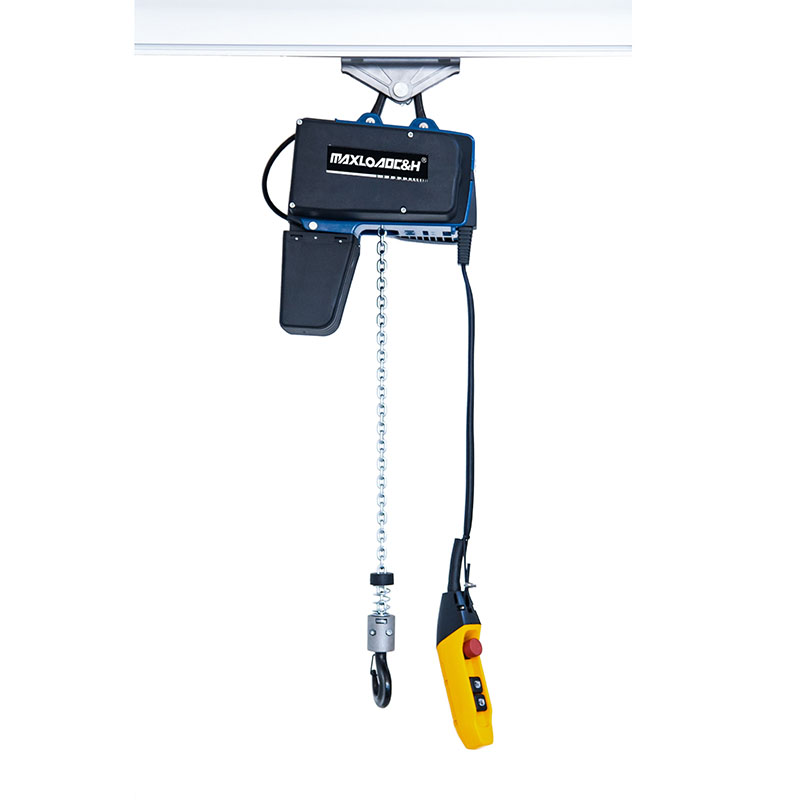
II. Next, Examine the Load: The Matching Logic for Electric Hoist Selection
The jib crane's boom is just the "skeleton"; the real work is done by the electric hoist. If the hoist is not properly selected, even the best boom is useless.
Lifting capacity is the first threshold. Miniature wire rope electric hoists are commonly paired with column-mounted and wall-mounted jib cranes for light-load applications. Once the load requirement is determined, it is essential to strictly adhere to the principle that "the rated load of the electric hoist must not be less than the rated load of the jib crane" to avoid overload hazards or oversizing. Also, pay attention to the inverse relationship between boom length and load capacity: for a given column and slewing system strength, the safer lifting capacity decreases the farther the lifting point is from the column. The manufacturer should provide a boom-length-versus-load curve; during selection, always cross-check against the actual working radius.
Duty cycle determines the hoist type. For workstations with high assembly frequency, a hoist with soft-start and soft-brake functions is recommended to ensure smooth lifting and lowering of workpieces. For operations requiring precise positioning, a two-speed hoist is more suitable—the slow speed for fine-tuning alignment, and the fast speed for empty-hook lifting, balancing efficiency and precision.
Environmental conditions determine the protection rating. In flammable or explosive atmospheres, an explosion-proof hoist is mandatory. In high-temperature, stuffy environments, a model with good heat dissipation should be selected. Special applications in chemical, foundry, or other harsh conditions may require anti-corrosion or high-temperature-specific configurations. Overlooking these details can lead to retrofitting costs far exceeding the initial investment.
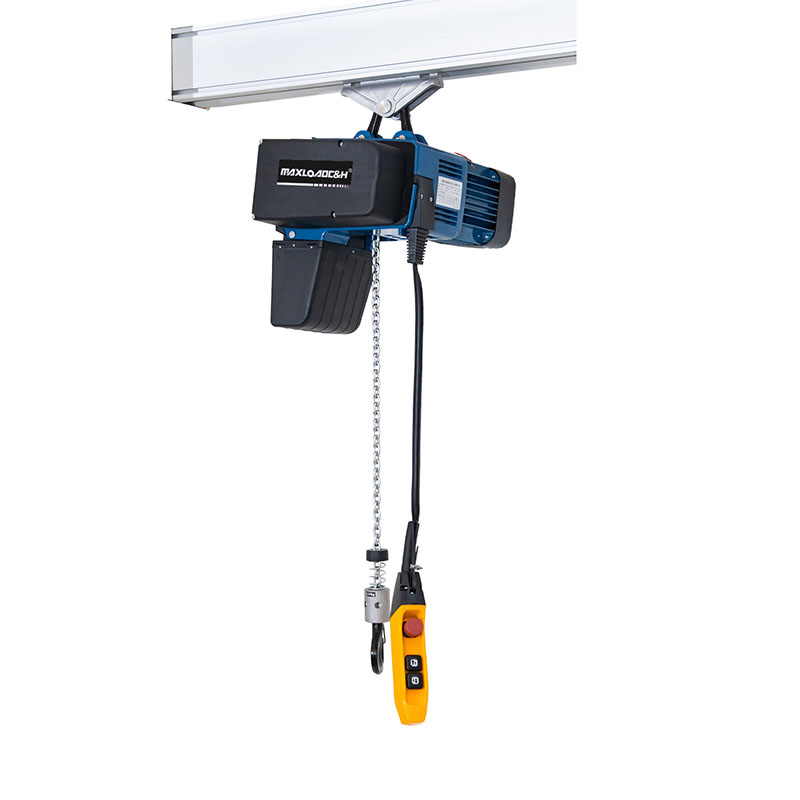
III. Quick Selection Guide by Workstation Scenario and Common Pitfalls
Machine tool loading/unloading is the most typical jib crane application. Workpieces vary widely in weight, the workstation is fixed, and the duty cycle is high. A column-mounted jib crane paired with a chain electric hoist, covering a radius of 2 to 4 meters, is recommended to meet high-frequency operation needs. Key point: ensure foundation bearing capacity is adequate to avoid instability caused by long booms and excessive weight.
Precision assembly workstations demand high positioning accuracy. For assembling components like engines and transmissions, workpieces must be gently and precisely inserted into housings. In this case, a hoist with "float" functionality or an intelligent balance manipulator is recommended, allowing operators to control the load in three-dimensional space with the ease of using a hand tool, avoiding hard impacts.
Obstacle avoidance in dense equipment areas is the "Achilles' heel" of straight jib cranes. When equipment spacing is tight, columns abound, and operations require reaching inside machinery while bypassing obstacles—this is where the knuckle boom crane shines. At the same installation radius, the effective working coverage of a knuckle boom crane is approximately 40% greater than that of a straight jib crane.
Mobile scenarios are suitable for workstations that are not fixed and need to be rotated across different areas. Both mobile jib cranes and mobile knuckle boom cranes require no fixed foundation, but mobile jib cranes still require a full swing radius, whereas mobile knuckle boom cranes can operate in confined spaces.
There are two common pitfalls in selection worth noting. First, focusing solely on price while ignoring working condition compatibility: the initial cost of a jib crane is indeed lower than that of a knuckle boom crane, but if the working conditions are mismatched, the losses from later modifications or idle equipment far exceed the price difference. Second, neglecting production line change factors: for a permanently fixed production line, a jib crane is more stable and durable; for production lines with frequent layout changes requiring flexible equipment reuse, a knuckle boom crane is more convenient to stow away and costs less to relocate and reinstall.
Conclusion
Selecting a jib crane and electric hoist is essentially about providing a "handy" material handling tool for the workstation. It comes down to three core tasks: clear height determines the structure, swing space determines the boom length and type, and the load conditions determine the hoist. Once you have a thorough understanding of these three factors, your selection will not go astray.
If you are unsure about the working conditions, the safest approach is to have the manufacturer's technical staff visit the site with measuring tools—record column positions, equipment spacing, and workpiece flow paths, and bring the data back for calculation. This is far more reliable than any theoretical selection.
 0086 156 1824 5535
 0086 156 1824 5535