Workstation Jib Crane Selection: Key Decision Points for Matching with Electric Hoists
Selecting a jib crane isn't just about buying a rotating beam; it's about configuring a handling node that precisely covers the workstation and works in synergy with the electric hoist. An incorrect match can reduce efficiency and even create safety hazards. Starting from the actual conditions of the workstation, here are five core issues to consider during selection.
Determine the Jib Type: Column-Mounted, Wall-Mounted, or Portable?
This step determines the "base" of the jib crane. Based on the installation method, there are three common types:
Column-mounted is the most common. It is fixed to a concrete foundation using anchor bolts, offering the best stability, greater lifting capacity, and longer boom length potential. It is suitable for fixed workstations with high-frequency operations. The drawback is the complexity of foundation work; once installed, it is difficult to move.
Wall-mounted is installed on factory columns or load-bearing walls, taking up zero floor space. It is ideal for tight spaces or workstations near walls. A prerequisite is that the load-bearing capacity of the wall or column must be verified through calculation.
Portable units have casters and counterweights, require no foundation, and can be pushed around, offering maximum flexibility. The trade-off is that the lifting capacity and boom length are significantly smaller than those of a column-mounted type of the same tonnage. Also, the outriggers must be firmly set and wheel brakes locked before operation. It is suitable for maintenance areas, temporary workstations, mold-changing points, and other non-fixed locations.
A practical consideration: If the workstation won't be moved within three years, prioritize the column-mounted type; if lifting points change frequently, choose the portable type.
Determine Boom Length and Load Capacity: Understand the Load Chart – Don't Be Misled by "Maximum Lifting Capacity"
The maximum lifting capacity and the maximum boom length of a jib crane cannot be achieved simultaneously – this is a common oversight in the selection process.
The longer the boom, the further out the lifting point is, and the greater the bending moment at the boom root. Therefore, the safe lifting capacity must be reduced accordingly. Reputable manufacturers provide load chart curves (e.g., 1000 kg at 3 meters, but possibly only 500 kg at 5 meters). During selection, you must check this curve to ensure the capacity meets requirements at the furthest coverage point you need.
Also, ensure an adequate safety margin. National standards recommend matching the rated load by a factor of × 1.25. Continuously operating near the limit will accelerate structural steel fatigue – this is not an exaggeration.
Slewing Method: Manual or Electric? Depends on Frequency and Tonnage
The rotation of the boom around the column can be manual (push by hand) or motor-driven.
Manual slewing has a simple structure, low cost, and requires no power supply. It is suitable for light loads and low-frequency slewing applications. The operator pushes the boom to the target point, and speed is controlled by feel.
Electric slewing is suitable for heavy loads, long booms, or high-frequency workstations requiring hundreds of rotations per day. It is motor-driven with push-button control, reducing labor intensity and providing more stable positioning. Note whether the start and stop are smooth to avoid load swinging due to inertia.
Simple guideline: Light load, low frequency, budget-sensitive → Manual; Heavy load, high frequency, pursuit of efficiency → Electric.
Matching the Electric Hoist: Chain, Wire Rope, or Intelligent Balance Hoist?
This is the "execution end" of the entire system; choosing the wrong type directly affects operation.
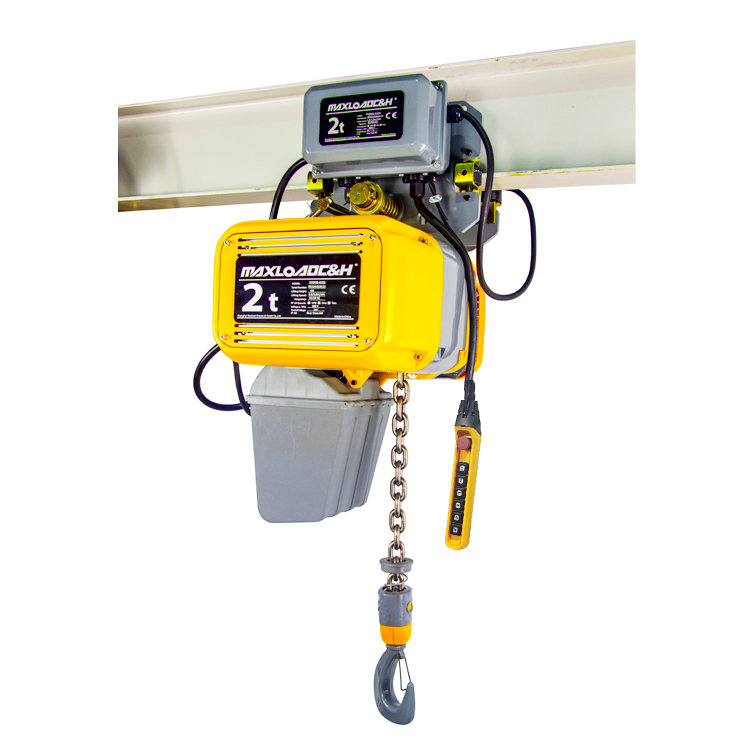
Chain electric hoists are currently the most common match. The chain is compact, wear-resistant, and has low maintenance costs. It offers adjustable speeds and a compact structure, suitable for frequent lifting in most workstations. The disadvantage is a slightly higher cost compared to wire rope hoists.
Wire rope electric hoists are faster and have lower initial costs. However, the wire rope is prone to wear and burrs, and the rope guide and steel tape can be relatively fragile. They also have a larger physical size. Suitable for applications with high lifting heights, high speed requirements, and limited budgets.
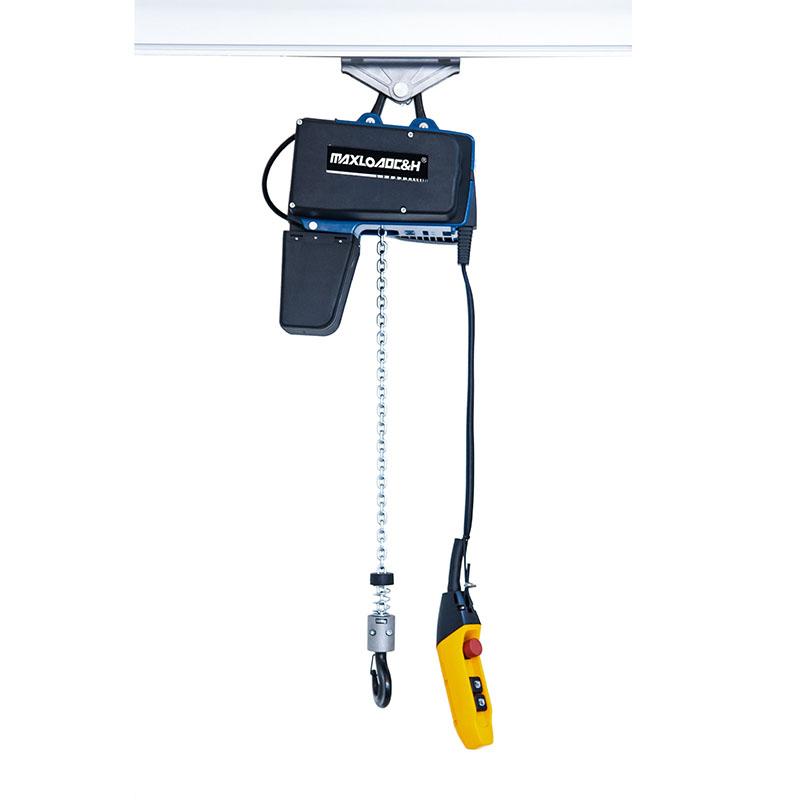
Intelligent balance hoists are in a different league. They offer "floating" operation – the operator can control lifting and fine adjustments by directly pulling the hook, enabling precise positioning with almost no felt load inertia. However, they are expensive and usually only cost-effective for precision assembly or applications requiring millimeter-level positioning.
Two additional special options:
Pneumatic hoists: Used in environments without a power supply or with extremely high explosion-proof requirements, provided the workshop has a compressed air system.
Explosion-proof electric hoists: Mandatory in environments with flammable or explosive gases, such as paint shops or chemical plants. This is a non-negotiable safety requirement.
Don't Forget Two Hard Constraints: Space and Environment
Last but not least, two hard constraints must be verified before final selection:
Spatial Interference: Using drawings or on-site measurements, map out the 360° slewing range and boom movement path of the jib crane. Check the rotation path for columns, equipment, pipes, and walls. Many installation accidents happen because an "apparently inconspicuous" corner was overlooked.
Foundation and Environment: Column-mounted jib cranes have specific foundation requirements, typically needing C20 or higher concrete with depths calculated based on the load. It is absolutely forbidden to simply use expansion bolts on ordinary flooring. Additionally, cold storage environments require low-temperature-resistant materials and special lubricants; damp or corrosive environments require hot-dip galvanizing or heavy-duty anti-corrosion coating.
In summary, the logic for selecting a jib crane is not overly complicated: First, define the nature of the workstation → Then, outline the required coverage area and maximum load → Next, determine the slewing method → Finally, match the hoist type based on operational precision and budget. Following these steps sequentially is far more reliable than guessing based on parameter tables. It is recommended to have the manufacturer provide detailed operational calculations for your specific conditions, confirming safety factors and installation requirements in writing before making the final decision.
 0086 156 1824 5535
 0086 156 1824 5535