From "Able to Lift" to "Pleasant to Use": The Engineering Logic Behind Jib Crane Selection
Many factory workshops treat a jib crane as just "a piece of equipment that can lift things" – they look at the rated load, check the boom length, and place an order. Only after installation do they realize: either the rotation is too stiff and operators avoid using it, the lifting point doesn't cover critical positions, or the hoist lifting speed doesn't match the production cycle. When it comes to selection, engineering logic matters more than parameter sheets.
Understand the "Personality" of Your Workstation
Jib cranes are not one-size-fits-all. Different workstations have completely different operational characteristics, which determine the selection direction. Start by categorizing your workstation:
High-frequency single-station operation – e.g., machine tool loading/unloading, fixed-point handling on assembly lines. Key features: relatively fixed workpiece weight, high lifting frequency, strong repetitive operation. Selection priority: stability and ease of operation. A fixed-column jib crane is the first choice; the boom length only needs to cover the machine table and the material staging area – no need to go longer.
Multi-station sharing/maintenance support – equipment repair areas, mold change zones, temporary lifting points. Features: low lifting frequency but variable positions; the same jib crane may need to serve three to five machines. Here, mobility is the priority – a mobile jib crane is more suitable, allowing you to push it wherever it's needed.
Space-constrained areas – wall-side workstations, between columns, workshops with limited ceiling height. If a conventional column-mounted type won't fit, consider wall-mounted or knuckle-boom types – the former saves floor space, the latter can maneuver around obstacles.
Precision assembly workstations – engine assembly, precision component mating. The operation requires not just "lifting" but "positioning accurately." The jib crane itself must have good structural rigidity and smooth rotation; more critically, the hoist should be a variable-frequency or intelligent lifting device to achieve millimeter-level fine adjustment.
Load Capacity Is Not "How Much Can It Lift," But "How Much Can It Lift at Which Position"
This is the most overlooked factor in selection – for the same jib crane, the longer the boom, the lower the rated load. You must consult the load curve chart provided by the manufacturer, not just look at the maximum capacity on the nameplate.
For example: a jib crane with a 3‑meter boom that can lift 1,000 kg may only handle 500 kg when the boom extends to 5 meters. If the farthest lifting point at your workstation happens to be at 5 meters, and you selected based on 1,000 kg, you'll face an overload risk in actual use.
Therefore, we recommend this approach during selection:
Identify the farthest lifting point within the workstation coverage area
Determine the maximum workpiece weight at that point
Multiply this by a safety factor of 1.25
Check the load curve and find the configuration that meets the requirement
Additionally, for manual-rotation jib cranes, there is an operational nuance: the closer the load is to the column, the harder it is to rotate – because the lever arm is shorter, the operator needs more force to turn it. So when laying out the workstation, try to position common lifting points in the outer half of the boom for smoother operation.
Electric Hoist – The "Other Half" of the Jib Crane, Not to Be Compromised
The jib crane is just a support structure; the actual work is done by the hoist mounted on it. If the hoist is wrongly selected, even the sturdiest jib crane is useless.
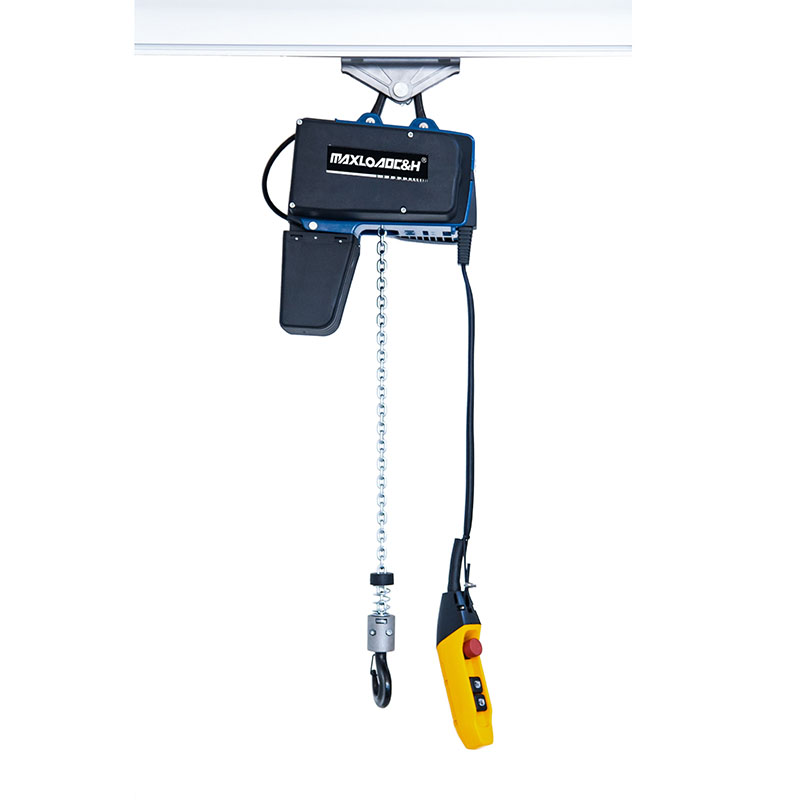
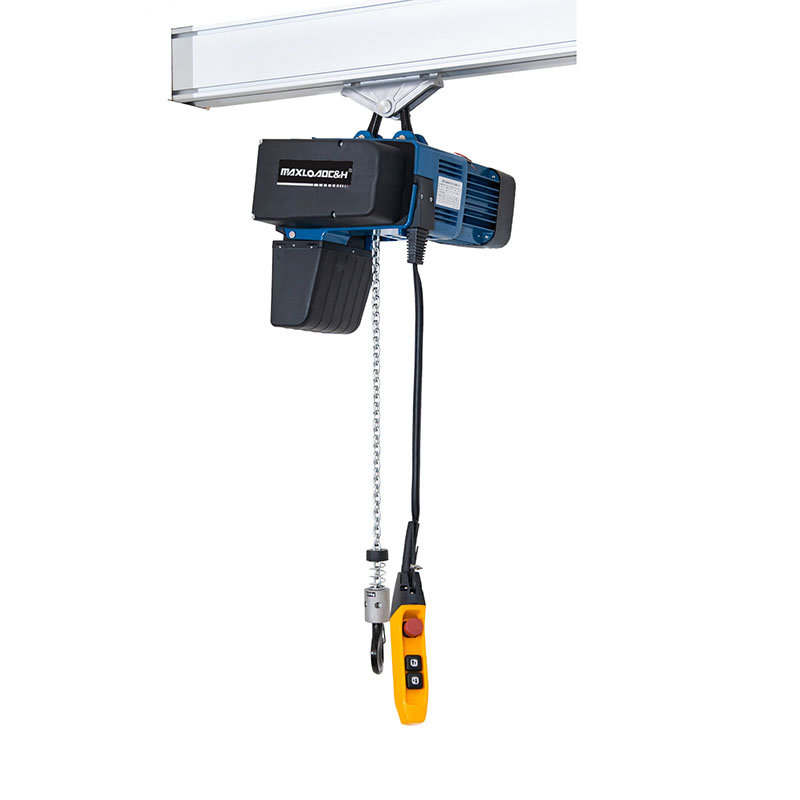
Chain electric hoist vs. wire rope electric hoist: Chain hoists are compact, have wear-resistant chains, and have low maintenance costs, making them suitable for frequent lifting in workshop settings – currently the most widely used. Wire rope hoists offer faster lifting speeds and lower initial cost, but the wire rope tends to fray, and the rope guide has limited service life – they are suitable for applications with large lifting heights where compactness is not a priority.
Single-speed, two-speed, or variable-frequency? If it's just rough handling, single-speed is sufficient. If precise positioning is needed, two-speed or variable-frequency is recommended – the slow speed allows millimeter-level inching to avoid collisions and scratches.
Should you add an intelligent balance hoist? On assembly lines where workpieces need to "float" for alignment – where the operator can finely adjust the load position up and down as if handling a tool – then pneumatic balancers or intelligent lifting devices should be considered. Ordinary electric hoists cannot achieve that kind of feel.
Site Conditions Are the Real Hard Constraints
Some workshops buy jib cranes that can't be installed, or don't work well after installation – all because site conditions were not adequately considered.
Foundation requirements: Column-mounted jib cranes require a concrete foundation – you can't just use expansion bolts on any random floor. Generally, C20 or higher concrete with a minimum thickness of 200 mm is required; the manufacturer will calculate the foundation dimensions based on load and site geology. Mobile jib cranes don't need a foundation, but they require a level and solid working surface, and the outriggers must be fully extended and wheels locked before lifting.
Clear height: The jib crane itself has structural height; add the hoist's lifting height, plus the rigging and workpiece height – the sum of all three must be less than the workshop's clear height. A common mistake is selecting based on the hoist's "lifting height" while ignoring the distance from the boom bottom to the floor.
Swing clearance: No obstacles – columns, equipment, piping – may be within the 360° rotation range of the jib crane. It's best to use CAD to draw the rotation radius and boom travel path to confirm no interference before installation.
Operating Experience Determines Whether the Equipment Gets Used
Many jib cranes meet all the specifications, but operators don't like using them because "it's too heavy to push" or "positioning is inaccurate." This aspect is often the most neglected during selection.
Manual rotation vs. electric rotation: For loads under 500 kg and low rotation frequency, manual rotation is sufficient. But above 500 kg, or when frequent spot positioning is required, electric rotation is recommended – otherwise, operators will have sore arms after a full day.
Avoid "over-selection": If the maximum workpiece is only 500 kg, but you select a jib crane rated for 1,000 kg, the added weight of the boom and hoist makes manual operation harder. The right fit is more important than "bigger."
Final Thoughts
Jib crane selection is not about stacking parameters – it's about translating workstation requirements into engineering language. Follow this logic: first clarify the operational scenario, then consult the load curve, choose the right hoist configuration, verify site conditions, and finally address the operating experience. A crane selected this way will make operators say "it feels good to use," not just "it can move things."
 0086 156 1824 5535
 0086 156 1824 5535