How to Precisely Select a Jib Crane Based on Site Conditions
When introducing a jib crane into a factory, many companies tend to focus excessively on the equipment's technical specifications while overlooking the decisive factor—the workstation environment. Whether a jib crane is user-friendly, safe, and efficient in actual operation depends 70% on proper selection and 30% on installation. The basis for selection is not the general specifications in a catalog, but rather the spatial boundaries, floor conditions, handling paths, and operational characteristics of the actual site. The following four dimensions break down the matching logic between the workstation environment and equipment selection.
Spatial Geometry: First Survey the Workstation's "Three-Dimensional Boundaries"
A jib crane is essentially a fan‑shaped or circular working envelope centered on its column, with the jib arm as the radius. The first step in selection is not flipping through catalogs, but measuring the workstation's clear spatial dimensions with a tape measure.
Clear height determines the hoist solution. The clear height from the factory floor to the ceiling directly limits the crane's lifting height and hoist type. The conventional calculation is:
Effective lifting height = Clear height – Safety clearance from jib bottom to floor – Hoist body height – Vertical length of slings/chain and spreader bar – Safety margin.
In an old workshop with a clear height below 4 meters, if a standard electric hoist is selected, the hoist may reach its upper limit while the load still hangs in mid‑air. In such cases, a low‑headroom compact hoist should be considered, or the column height and jib mounting position should be adjusted to make full use of every centimeter of vertical space.
Swing radius determines the jib length. The horizontal distance from the furthest work point to the column center, plus about 50 cm of operating allowance, gives the minimum required swing radius. However, note that for every 1‑meter increase in swing radius, the overturning moment on the column increases significantly—for a 1‑ton capacity, increasing the jib from 4 m to 6 m may require the column diameter to increase from 168 mm to 219 mm, with the total machine weight rising by about 45%. Therefore, choose the jib length that "just reaches the furthest point"; blindly extending the jib is neither economical nor conducive to easy installation.
Swing angle determines coverage. Most column‑mounted jib cranes support 270° or 360° rotation, but bigger is not always better. If the workstation is arranged against a wall and operations are concentrated within a 180° sector, opting for 270° or even 360° rotation may cause the jib tail to strike walls or adjacent equipment, complicating clearance design. The required swing angle should be determined based on the actual layout, avoiding "feature‑for‑feature's‑sake" over‑specification.
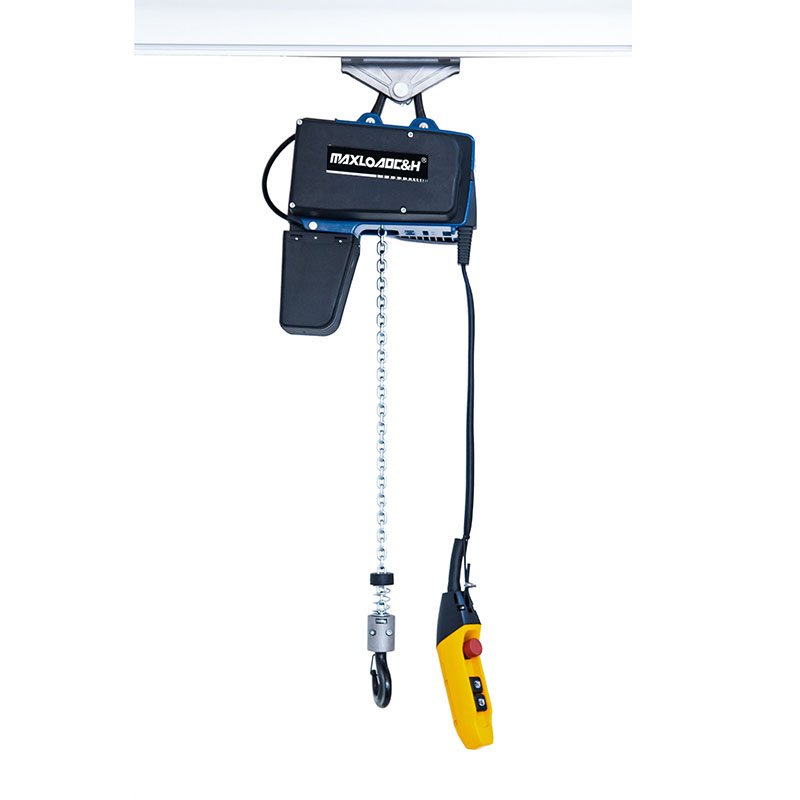
Floor and Wall: The "Hard Requirements" of the Mounting Foundation
The jib crane must ultimately be anchored to the ground or structure, and the load‑bearing capacity of the mounting foundation is a non‑negotiable hard condition. This aspect is most often overlooked and most likely to cause problems during installation.
Floor‑mounted jib cranes rely on floor load‑bearing capacity. General requirements are a concrete floor thickness of no less than 150 mm and a floor load‑bearing capacity of no less than 2 t/m², with anchoring via embedded anchor bolts or chemical anchors. If the workshop floor is only a 100‑mm thin layer or has poorly compacted subgrade, foundation settlement or even overturning may occur when lifting heavy loads. For older workshops with substandard floors, there are two alternatives: (1) locally break out and re‑pour a thickened foundation, or (2) switch to a counterweight‑type mobile jib crane that uses its own weight to balance the overturning moment, eliminating the need to damage the original floor.
Wall‑mounted jib cranes depend on the wall or structural column. If a wall‑mounted installation is chosen to save floor space, the wall material and thickness must be verified—concrete walls should be no less than 300 mm thick, or steel structural columns should have a section no smaller than H200, to provide adequate anchoring. Lightweight partition walls and hollow block walls are strictly prohibited as mounting foundations for jib cranes.
Handling Path: Map Out the "Movement Trajectory" Before Selecting
A common mistake is to consider only the lifting capacity while ignoring how the jib and hoist actually move during handling. In reality, the layout of equipment, passageways, and obstacles within the workstation directly affects the choice of crane type.
Straight‑line, reciprocating, obstacle‑free workstations → choose a basic column‑mounted model. This is the most common scenario, such as machine tool loading/unloading or mold changing areas, where the jib crane covers a fixed point, the hoist travels in a straight line along the jib, and the movement pattern is simple.
Workstations with obstacles like welders, fixtures, or storage racks → consider an articulating jib crane (knuckle‑boom type). With multiple hinged arms that fold and luff, an articulating jib crane can maneuver around obstacles to deliver loads to precise positions, offering far greater flexibility than a straight‑boom jib crane. Welding stations are a prime example—in areas with weld spatter, wire ropes and electrical components of conventional jib cranes are prone to damage; an articulating jib crane with protective covers can keep the hoist mechanism away from high‑temperature zones, reducing failure rates by over 75%.
Multiple workstations sharing one crane → check whether the swing range is sufficient. If one jib crane must serve 2–3 machine tools, full 360° rotation is essential. At the same time, verify that all stations fall within the jib's coverage radius and that the jib does not sweep adjacent equipment when rotating. When multiple jib cranes are placed side‑by‑side, their swing ranges should not overlap, to avoid interference during load handling.
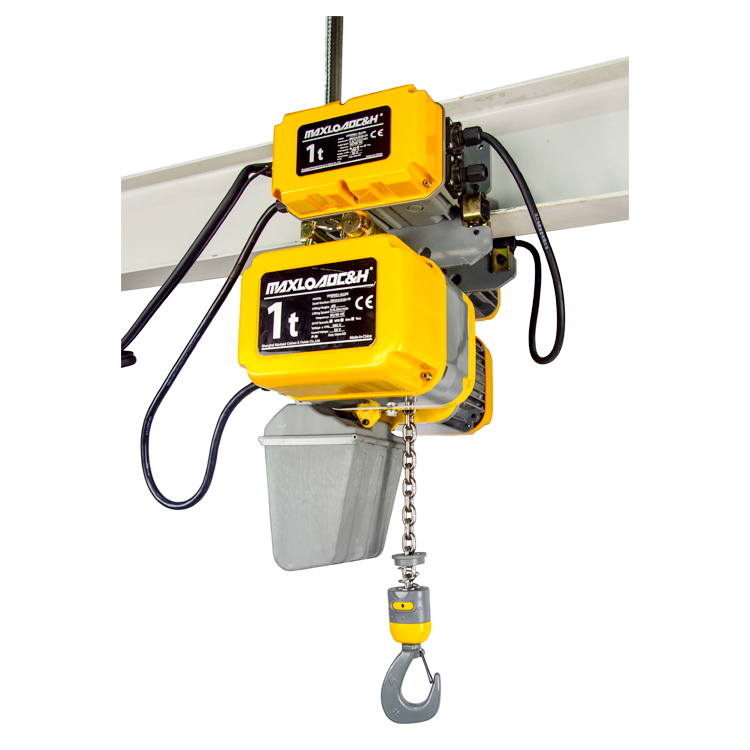
Operating Conditions: Matching Capacity, Frequency, and Hoist Type
The weight and frequency of operations at the workstation determine not only the rated lifting capacity, but also the type of electric hoist and drive method.
Lifting capacity is not just "the heaviest workpiece"—it is "heaviest workpiece + rigging weight" multiplied by a safety factor. Per GB/T 3811‑2008, the dynamic test safety factor is 1.25. For moderate‑frequency daily operations, a safety factor of 1.2 is recommended; for high‑frequency continuous operation, use 1.25. For example, if the workpiece weighs 200 kg, the rigging weighs 20 kg, and handling occurs 30 times per day, the calculated value is 264 kg; in practice, a 0.5‑t rating should be selected, rather than settling for 0.25‑t.
Hoist type: wire rope vs. chain hoist. Wire‑rope electric hoists offer high speed and lower initial cost, but the rope guide steel band is prone to cracking and the wire rope tends to develop burrs. Chain electric hoists are compact, have wear‑resistant chains, and have lower maintenance costs, though with a higher upfront price. Increasingly, users prefer chain hoists, especially in workstations with high cleanliness requirements—chains do not produce the fine metallic dust that wire ropes can generate. If the workstation is in a flammable environment (e.g., liquid filling or coating areas), a fully explosion‑proof hoist with an Ex d ⅡB T4 rating or higher must be used.
Drive method: manual vs. electric depends on frequency of use. For fewer than 20 lifts per day and a capacity ≤0.5 t, manual rotation + hand chain hoist is an option—low cost and no wiring required. For more than 20 lifts per day or a capacity ≥1 t, a fully electric solution is recommended, as the efficiency gain is significant; in high‑frequency scenarios, the investment premium can be recovered within 1–2 years.
Closing Remarks
Selecting a jib crane and electric hoist is essentially a matching process that takes the workstation environment as inputs and produces equipment specifications as outputs. Choosing equipment specifications without reference to site conditions either leads to functional redundancy and wasted cost, or poses safety and efficiency risks. It is advisable to complete the following four self‑checks before formal procurement:
Survey the clear height and swing radius of the workstation;
Verify the floor/wall mounting conditions;
Map out the handling trajectory and coverage area;
Determine the maximum workpiece weight and daily handling frequency.
Only on this basis should you discuss solutions with manufacturers, ensuring that you select equipment that truly fits your workstation.
 0086 156 1824 5535
 0086 156 1824 5535