Starting from the Workstation: Choosing the Right KBK Crane System
Many people, when selecting a KBK system, are used to starting with the product catalog, looking for specifications like "lifting capacity in tons" and "span in meters," and then placing an order directly. This approach seems efficient, but in practice, it often leads to ongoing issues: the load can be lifted, but operators find it strenuous to push; or if the workstation is slightly rearranged, the equipment can no longer cover the required area; worse yet, after installation, it turns out the lifting height is insufficient, leaving the workpiece only a few dozen centimeters off the ground, making it impossible to work properly.
The correct logical starting point for selecting a KBK system is not the equipment itself, but the workstation environment. The spatial dimensions of the workstation, material characteristics, operational tempo, and even the age of the factory building collectively determine what kind of system will actually "work well." Below, we expand on four key dimensions to help you establish a practical selection framework.
First, Look at Load and Span: The Hard Constraints That Define the System's "Skeleton"
The biggest mistake in selection is aiming for "just enough." In actual operation, lifting involves impact forces at the moment of pickup, the hoist and spreader have their own weight, and long-term, high-frequency use leads to wear. For standard operating conditions, it is recommended to reserve a safety margin of 1.25 times the rated load. For frequent operation or environments with significant vibration, a margin of up to 1.5 times is advisable.
Once the load is determined, the next step is to see how the span interacts with the load. This is where rigid KBK and flexible KBK systems diverge.
If your workstation has a load capacity of over 1 ton and a span exceeding 6 meters, a rigid KBK system is the only reasonable choice. Rigid systems use high-strength bolted connections, forming an integrated closed rigid frame without the displacement caused by hinge points. Their deflection limit is strictly controlled to 1/1000 of the span, which means structural rigidity is maintained even over large spans, and no obvious sagging or swinging occurs under heavy loads. For workstations requiring precision assembly and alignment—such as gearbox housing mating or flange centering—a rigid KBK can provide positioning accuracy of ±2 mm, which is beyond the capability of flexible systems.
Conversely, if the load is under 500 kg and operations involve manual pushing with high-frequency, short-distance transport, a flexible KBK system is often the better solution. Flexible systems use universal articulated connections, allowing some play between rails and significantly lower running resistance. For the same 500 kg load, the push/pull force for a rigid system is about 5–8 kg, while for a flexible system, it is only 2–4 kg. This difference translates to the operator experiencing "pushing with effort" versus "a light nudge," resulting in vastly different physical strain over a full workday.
Second, Consider Clear Height: Headroom Matters More Than You Think
Many workshops find that after installing a KBK, the lifting height is insufficient. The problem often stems from only calculating the rail height and forgetting to account for the hoist body, the spreader, and the workpiece itself.
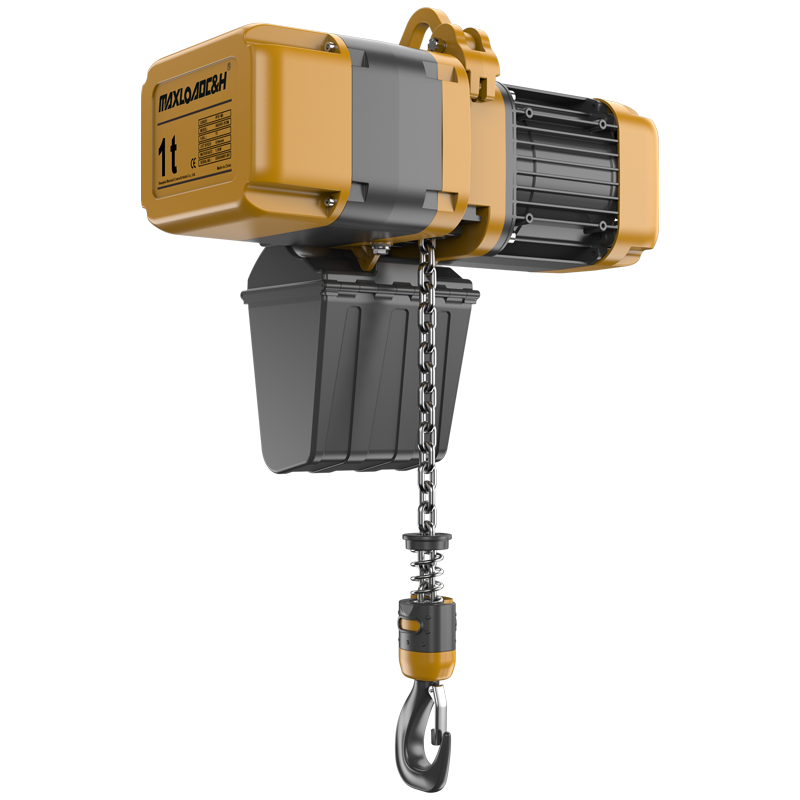
For workshops with a ceiling height of less than 4 meters, standard suspension solutions are often inadequate. In such cases, a low-headroom electric hoist is necessary. Low-headroom solutions can reduce the vertical space occupied to 250–350 mm, saving over half the space compared to standard solutions, and can gain nearly 1 meter of effective lifting height under a 4-meter ceiling.
Third, Examine Workstation Layout: Single Rail or Double Rail Depends on the Working Area
The logic for choosing between single-rail and double-rail systems is straightforward: it depends on the movement pattern required for your materials.
If the transport path is fixed—for example, picking up material from point A, moving it in a straight line to point B, or following a loop for continuous feeding—then a single-rail system is sufficient. Single-rail systems have a simple structure, are lightweight, and place less load on the building structure, making them especially suitable for renovating older factories or workstations with limited space.
However, if your workstation requires lifting at any point within a rectangular area—for instance, one piece of equipment serving multiple assembly stations, or needing flexible movement over a large mold maintenance area—then a double-rail system is mandatory. The trolley of a double-rail system travels between two parallel rails, covering a two-dimensional plane, whereas a single rail only covers a line. For spans exceeding 6 meters and multi-station collaborative operations, a single rail lacks the rigidity for stable operation—forcing its use would lead to rail deformation and unstable movement.
Environmental Factors: The Hidden Thresholds Often Overlooked
The workstation environment also includes several easily overlooked details:
Building load-bearing capacity. This is the biggest pain point in renovating older factories. The aluminum alloy rails of flexible KBK systems are much lighter than steel rails and place lower load requirements on the building structure. If your factory cannot undergo structural reinforcement, a flexible system is often the only viable option.
Operating environment. In workshops that are humid, dusty, or contain corrosive media, standard equipment will not last long. In such conditions, priority should be given to customized configurations with dust-proof, waterproof, and corrosion-resistant features. Rail material selection also matters—aluminum alloy has a surface oxide film that resists corrosion, making it suitable for humid or clean environments; steel rails are more wear-resistant and better suited for high-frequency, heavy-load conditions.
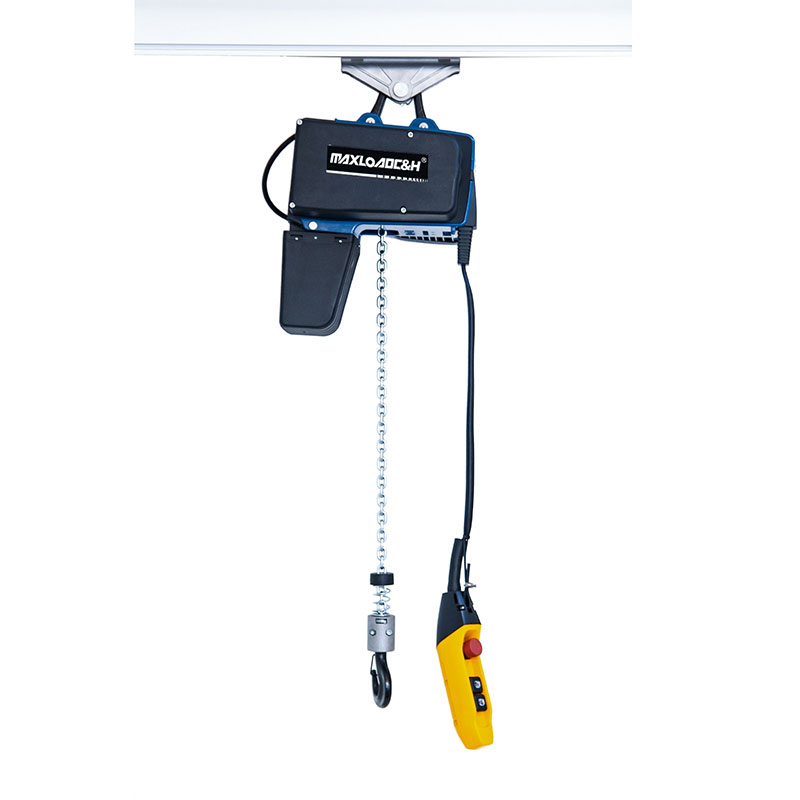
Operating frequency. For general intermittent transport, a single-speed electric hoist is sufficient, offering high cost-effectiveness and low failure rates. However, for assembly line stations or high-frequency loading/unloading, a dual-speed or variable-frequency electric hoist is essential. Slow start and stop functions prevent load swinging and impact, ensuring the safety of precision workpieces and the operator's confidence.
In Conclusion
Selecting a KBK system with an electric hoist is essentially about designing a material handling solution tailored to your workstation environment. Start by gathering the five basic data points for your own workstation: load, span, clear height, layout, and environmental conditions. Then, compare these against the applicable boundaries of rigid/flexible and single-rail/double-rail systems—the right choice will often emerge on its own. Specifications can be found in tables, but only you truly know your operating conditions. Starting from the site itself is far more effective than consulting any number of product manuals.
 0086 156 1824 5535
 0086 156 1824 5535